- Archaeological News
-
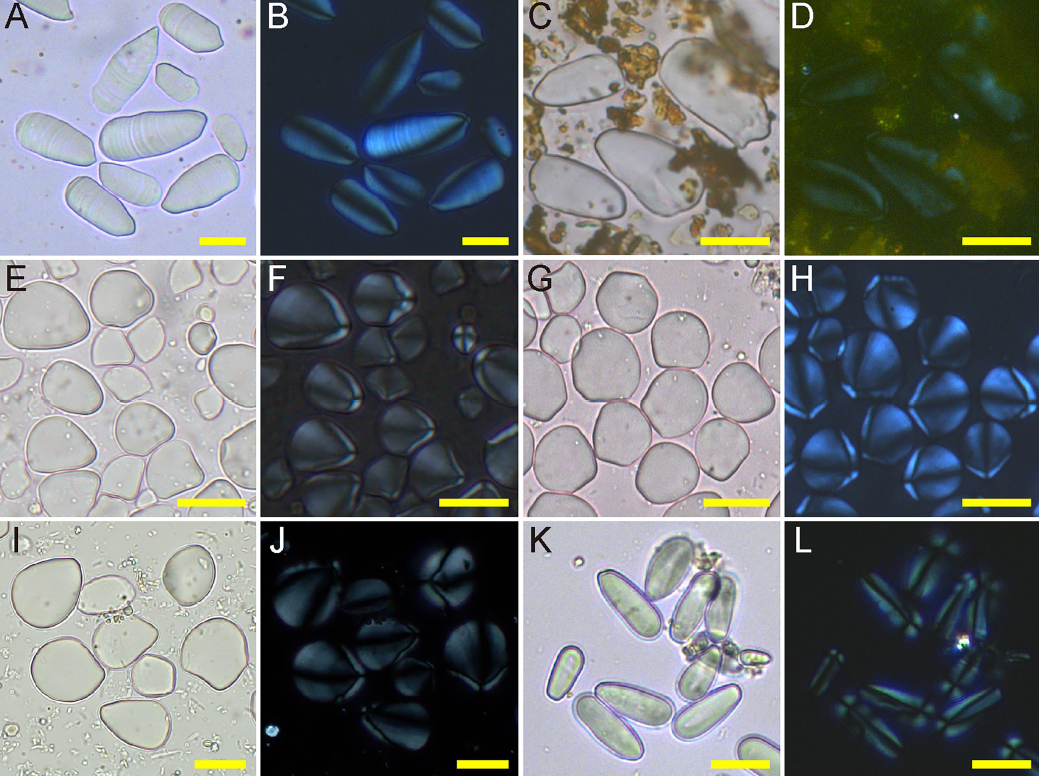
 Microscopic starch grains from turmeric, ginger, sand ginger, fingerroot and galangal, showing distinctive forms that can help archaeologists identify traces of spices in ancient food residues.
Image Credit:
Wang, Frontiers in Environmental Archaeology (2026)
Spices Under the Microscope Could Reveal Ancient Southeast Asian Cuisine
A new archaeobotanical study has created a microscopic reference collection for 14 spices widely used in Southeast Asian cooking, offering researchers a new way to identify traces of ingredients that may have disappeared from archaeological sites thousands of years ago.
Spices pose a particular problem for archaeology. Unlike grains and other staple crops, they were often used in small quantities, ground into powders or mixed with other ingredients, leaving few recognizable remains behind. Written sources describe their importance in food, medicine and long-distance trade, but direct evidence becomes much harder to find as researchers move into periods without historical records. Microscopic traces may help fill that gap.
The study examined 14 spices representing seven plant families, including turmeric, ginger, sand ginger, fingerroot, galangal, green cardamom, cinnamon, Saigon cinnamon, black and long pepper, clove, nutmeg, lemongrass and coriander. Rather than searching for a single universal marker, it documented combinations of starch grains, phytoliths, pollen, fibres, sclereids, calcium oxalate crystals and other microscopic plant tissues.
Some differences were surprisingly clear. Among rhizome spices, starch grains proved especially useful. Turmeric produced comparatively large grains with strongly off-centre, protruding hila, while ginger had smaller, typically fan-shaped grains. Sand ginger showed more rounded forms, fingerroot generally had larger grains than ginger, and galangal stood out through elongated grains with high length-to-width ratios. Grinding changed some of these features: powdered turmeric, for example, displayed flattened starch surfaces and less distinct internal structures, potentially providing clues not only to the plant itself but also to how it had been processed.
Other spices left different signatures. Green cardamom contained distinctive hardened cells enclosing rounded phytoliths. Long pepper produced elongated phytoliths described as “torpedo-like,” while lemongrass yielded characteristic bilobate forms. Cinnamon could be approached through a combination of starch, fibres, cork cells and hardened tissues, whereas nutmeg contained recognizable starch grains and reddish-brown cellular remains associated with its seed tissue. Black pepper, meanwhile, produced extremely small starch granules commonly clustered together.
The crucial question was whether these microscopic signatures would survive the kind of processing expected in real food.
To test that, the researcher prepared mixed commercial spice powders and examined them without relying on their visible appearance. Nine spices were represented in the mixtures, and microscopic evidence consistent with all nine could still be recognized after grinding and mixing: turmeric, ginger, galangal, green cardamom, cinnamon, black pepper, clove, nutmeg and coriander. Some were identified primarily from starch, while others required combinations of fibres, crystals, cork cells or distinctive tissues.
Not every microscopic trace survived equally well. Tough structures such as fibres, sclereids, cork cells and some phytoliths appeared relatively resistant to mechanical damage, whereas oil cells and certain crystals were more vulnerable. Tiny starch grains from black pepper may also be difficult to preserve or recognize in archaeological deposits, and pollen from clove and coriander wasn’t detected in the mixed samples, probably because it occurred in low concentrations.
The approach could help archaeologists reassess grinding stones, pottery residues and other food-related finds across Southeast Asia. Earlier research at Óc Eo in southern Vietnam, cited in the study, identified microscopic traces attributed to eight spices on ancient grinding tools, including turmeric, ginger, galangal, cinnamon, nutmeg and clove. Such evidence has opened the possibility of reconstructing complex spice mixtures and food traditions that otherwise leave almost no visible archaeological trace.
There are important limits. The modern study used commercial specimens, only one representative sample for each taxon, and detailed information about their exact geographic origins wasn’t always available. Closely related plants can also produce overlapping microscopic forms, so a single starch grain or phytolith shouldn’t automatically be treated as proof of a particular species. The strongest identifications will come when several independent features appear together and match the archaeological context.
For archaeologists, the value lies in seeing what the naked eye misses. A few microscopic grains, fibres or plant cells preserved on an ancient tool may eventually help reconstruct not just what people ate, but how they prepared food and how spices moved between communities across Asia.
Published on: 21-10-2026
Edited by: Abdulmnam Samakie