- Archaeological News
-
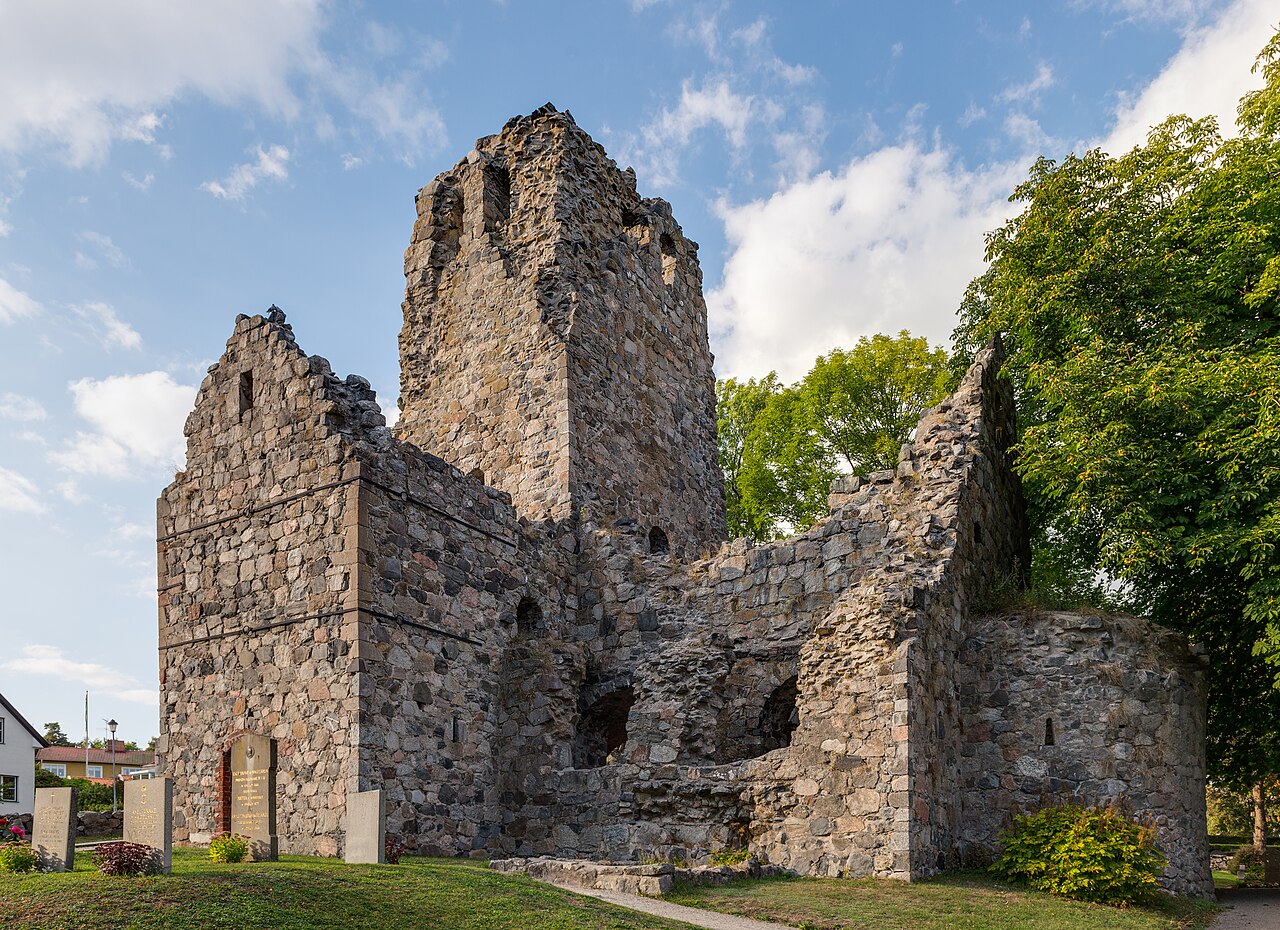
 Image Credit:
Arild Vågen, CC BY-SA 3.0, via Wikimedia Commons
Image Credit:
Arild Vågen, CC BY-SA 3.0, via Wikimedia Commons
Ancient DNA Reveals How Children Were Buried in Early Christian Sweden
A new ancient DNA study offers fresh insight into how children were treated in death during the transition from the late Viking Age to the Medieval period in Sweden.
The research focuses on early Christian burial grounds, where grave goods are usually absent and the biological sex of children is difficult to determine from bones alone. Because children’s skeletons do not yet show many of the sex-related features seen in adults, they are often excluded from studies of gender, burial customs, and social organization.
To overcome this problem, researchers analysed genomic data from 142 individuals from three sites in Sweden: Fjälkinge, Sigtuna, and Västerhus. The sample included 68 subadults and 74 adults from both single and multiple burials.
The study used genetic sex identification, kinship analysis, and broader genomic comparisons to investigate how children were placed in graves and whether people buried together were close biological relatives.
In early Christian Scandinavia, burial customs became more uniform than in the Viking Age. Graves were usually oriented east-west, bodies were placed on their backs, and grave goods were mostly absent. At some churchyards, adult men and women were also separated spatially, with men placed on one side and women on the other.
The new results show that children often followed similar spatial patterns. At Västerhus, boys and girls were generally buried in the same areas as adults of the same biological sex. This suggests that gendered burial practices could be applied from an early age.
However, the pattern was not rigid. A small number of girls were buried in areas normally associated with males, sometimes with adult men or boys. Mixed-sex burials were also more common in symbolically important or liminal areas, such as near the chancel or beneath a church porch.
One of the most important findings concerns multiple burials. Archaeologists have often assumed that adults and children buried together were close relatives, such as parents and children. The genetic results challenge this assumption.
Among multiple burials where enough DNA was preserved, close biological kinship between people in the same grave was uncommon. At Västerhus, only a small proportion of multiple burials contained first-degree relatives. At Sigtuna, close or second-degree relationships were also rare. This means that shared graves did not usually represent simple nuclear family groups.
Instead, the study suggests that multiple burials may reflect other kinds of social ties. These could include extended kinship, household membership, local community bonds, social affiliation, fostering, apprenticeship, or other relationships that are not always visible through biological relatedness.
At Västerhus, the researchers reconstructed several extended kindreds. Members of one important kin group were often buried near the church, suggesting long-standing social status within the community. One woman linked to this group was buried with a scallop shell, an unusual object in a Christian burial and probably evidence of pilgrimage to Santiago de Compostela.
This combination of genetic relatedness, burial location, and the scallop shell suggests that some individuals held special status and that mobility, including long-distance religious travel, played a role in the lives of selected members of the community.
The study also shows that kinship mattered at the level of the wider cemetery, even when people buried together were not close relatives. Many individuals shared more distant biological connections across the burial ground, indicating that extended families and local networks shaped the organization of these communities over generations.
The findings complicate the idea that early Christian burial was organized only by nuclear family ties. Instead, burial placement appears to have reflected a combination of gender, age, social status, religious norms, community identity, and extended kinship.
The researchers also note that some infants and fetuses may have been subject to different burial rules. In early Christian contexts, baptism could affect whether an individual was allowed burial in consecrated ground. Some unusual placements may therefore reflect how communities negotiated religious rules while still caring for their dead.
Overall, the study demonstrates how ancient DNA can reveal aspects of childhood and social belonging that are difficult to see through traditional archaeology alone. It shows that children in early Christian Sweden were not invisible in death: in many cases, they were placed according to the same gendered principles as adults, while also being embedded in wider networks of kinship and community.
Published on: 11-07-2026
Edited by: Abdulmnam Samakie
Source: Science Advances