- Archaeological News
-
 Image Credit:
Felix Dance, CC BY 2.0, via Wikimedia Commons
Image Credit:
Felix Dance, CC BY 2.0, via Wikimedia Commons
New Evidence Challenges Ideas About the Hunting Skills of Homo floresiensis
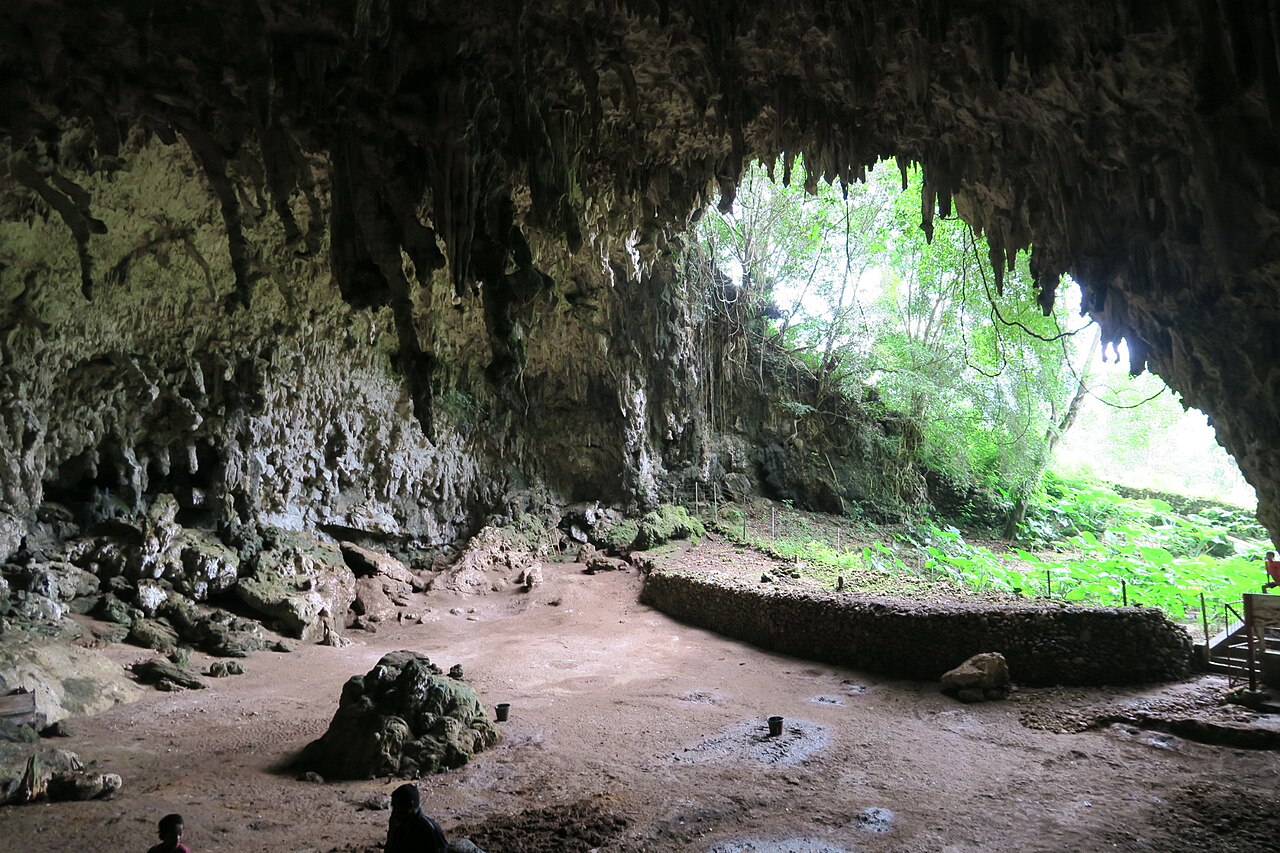
A new taphonomic study from Liang Bua cave on the Indonesian island of Flores challenges earlier claims that Homo floresiensis hunted large animals and controlled fire.
Since its discovery, Homo floresiensis—a short-statured, small-brained human species often nicknamed the "hobbit"—has been associated with surprisingly complex behaviours. Stone tools, dwarf elephant remains, and reportedly burned bones found at Liang Bua were previously interpreted as evidence that this hominin hunted large game and used fire.
The new research re-examined thousands of animal bones from cave layers associated with Homo floresiensis, dating from about 190,000 to 50,000 years ago. The researchers focused particularly on the remains of Stegodon florensis insularis, a dwarf relative of elephants, and compared marks on the bones with experimentally produced cut marks and Komodo dragon tooth marks.
To identify the distinctive damage caused by Komodo dragons, the team conducted a controlled feeding experiment using a goat carcass. The resulting tooth marks were then analysed in three dimensions and compared with traces found on the ancient Stegodon bones.
The study examined 3,155 Stegodon bone fragments, representing around 27 per cent of the known assemblage. Researchers identified 54 cut marks on 20 bones, confirming that Homo floresiensis did butcher and consume both adult and juvenile Stegodon.
However, the distribution of the marks does not support the idea that these hominins regularly hunted the animals. Komodo dragon tooth marks were concentrated on bones carrying larger amounts of meat, while the cut marks made by Homo floresiensis were found mainly on body parts of relatively low nutritional value.
This pattern suggests that Komodo dragons usually reached the carcasses first and consumed the most valuable portions. Homo floresiensis probably arrived later and scavenged the remains, removing small amounts of meat from the bones that were left behind.
The researchers found no projectile injuries or impact damage on the Stegodon bones. There is also no evidence that Homo floresiensis possessed projectile technology capable of killing such large animals. Hunting an adult or juvenile Stegodon without distance weapons would have been highly dangerous, particularly in an environment also occupied by Komodo dragons.
The skeletal evidence also supports scavenging. High-value limb bones were uncommon among juvenile remains, while distal limb bones more likely to remain after predator feeding were present and sometimes carried cut marks. Some valuable parts may have been swallowed by Komodo dragons or carried elsewhere for consumption.
The study also investigated earlier claims that Homo floresiensis used fire. Researchers examined all 3,155 sampled Stegodon bones, together with thousands of rodent remains from cave layers associated separately with Homo floresiensis and Homo sapiens.
Only one Stegodon fragment showed signs of burning, but it was found near a boundary where older deposits were exposed beneath much younger sediments associated with modern humans. The researchers therefore conclude that it was probably burned much later, after Homo sapiens began building fires in the cave.
The contrast between the rodent bones was especially clear. None of the 4,240 rodent remains from the layers associated with Homo floresiensis showed evidence of burning. By comparison, approximately 20 per cent of the rodent remains from younger layers associated with Homo sapiens had been burned.
These results suggest that controlled fire was not part of the known technological repertoire of Homo floresiensis at Liang Bua. The meat obtained from Stegodon carcasses was therefore probably eaten raw.
The study does not suggest that Homo floresiensis lacked technological ability. The species made stone tools and clearly processed animal remains. However, the evidence points to a more limited range of behaviours than previously proposed, with opportunistic scavenging rather than organised hunting of large animals and no confirmed use of fire.
Overall, the research offers a more cautious reconstruction of life at Liang Bua. It suggests that Homo floresiensis shared the landscape and its animal resources with Komodo dragons, taking advantage of carcasses after the reptiles had already consumed the most valuable portions.
Published on: 05-07-2026
Edited by: Abdulmnam Samakie
Source: Science Advances