- Archaeological News
-
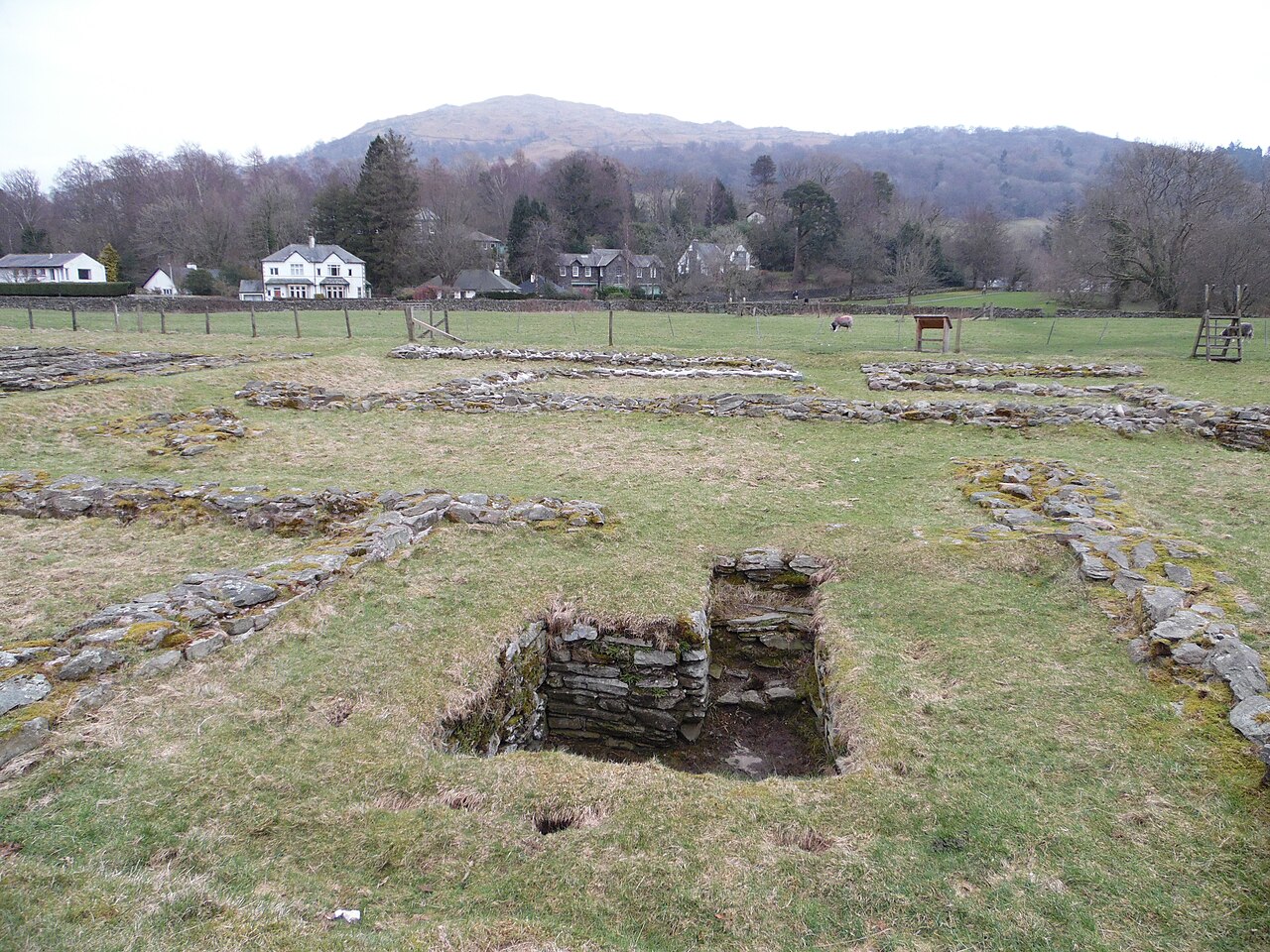
 Image Credit:
Simon Burchell, CC BY-SA 4.0, via Wikimedia Commons
Image Credit:
Simon Burchell, CC BY-SA 4.0, via Wikimedia Commons
Roman Sling Bullets Reveal an Attack on Ambleside Fort
New archaeological research suggests that the Roman fort at Ambleside in England’s Lake District was attacked by an external enemy, with the garrison defending itself by firing lead sling bullets from the fort.
The fort stands near the northern shore of Lake Windermere in Cumbria and occupied a strategic position on a Roman route connecting Brougham, Hardknott, and the port of Ravenglass. It was probably first constructed in timber and turf during the late first century AD and later rebuilt in stone, possibly during the reign of Emperor Hadrian.
Lead sling bullets have been discovered at and around the fort for more than a century. Although small groups of such projectiles may represent stored ammunition, a wider scatter across the surrounding landscape can indicate that the weapons were used during an actual confrontation.
Earlier finds at Ambleside were concentrated mainly to the north and east of the fort, the two directions from which the site could most easily be approached. Archaeologists also recovered a ballista bolt tip, while early excavations suggested that parts of the fort may have experienced destruction.
Additional evidence comes from a Roman gravestone discovered around 100 metres east of the fort. Its inscription commemorates two men, including a retired centurion and a military clerk. According to the text, one of them was “killed in the fort by enemies.” The use of the Latin word hostibus suggests an organised enemy force rather than ordinary criminals or bandits.
To test whether the sling bullets reflected a genuine battle, researchers carried out two fieldwork campaigns in 2021 and 2023. The first used systematic metal detecting across areas to the north and east of the fort. More than 1,000 metal signals were identified, including around 250 that could potentially represent lead objects.
The distribution of these signals formed an arc around the accessible northern and eastern sides of the fort. This pattern supported the possibility that numerous missiles had been fired outward from its walls and towers.
In 2023, researchers returned to examine a smaller area east of the fort in greater detail. They selected 39 buried objects for excavation based on their metal-detector signals. Seven proved to be Roman lead sling bullets, increasing the total number known from Ambleside and its surroundings from 23 to 30.
The new bullets were found within the fort’s likely firing range. Roman slingers could normally launch lead projectiles over distances of around 200 to 250 metres, while experienced soldiers may have achieved even greater ranges.
The bullets vary in shape. Some have the regular biconical form commonly associated with Roman military ammunition, while others are more irregular. The researchers suggest that the less carefully formed examples may have been produced rapidly during a period of danger or military pressure.
Preliminary isotope analysis indicates that the bullets were manufactured from at least two different sources of lead. One group resembles projectiles found at Burnswark Hill in Scotland and probably dates to the second century AD. Another group appears more irregular and may have been made from a different, currently unidentified source.
The analysis also suggests that some of the bullets were manufactured from lead available at Ambleside itself. This raises the possibility that defenders produced ammunition locally, perhaps in preparation for or during a crisis.
The exact date of the attack remains uncertain, although the form and average weight of the bullets point most strongly to the second century AD. The gravestone may also date to the late second or early third century, but researchers cannot yet confirm that the inscription and the sling-bullet scatter relate to the same event.
The identity of the attackers is also unknown. They may have been local groups resisting Roman authority, or fighters who moved south after crossing Hadrian’s Wall. It is also possible that the fort experienced more than one episode of violence during its long occupation.
Despite these uncertainties, the combined evidence strongly supports the conclusion that Ambleside fort came under external attack at least once. Roman soldiers appear to have defended the site with a barrage of sling bullets, probably fired from its ramparts and towers.
The discovery is especially significant because archaeologically documented attacks on Roman forts are rare. Ambleside therefore provides important evidence that violent resistance and military confrontation continued south of Hadrian’s Wall long after the initial Roman conquest of Britain.
Published on: 05-07-2026
Edited by: Abdulmnam Samakie
Source: Britannia