- Archaeological News
-
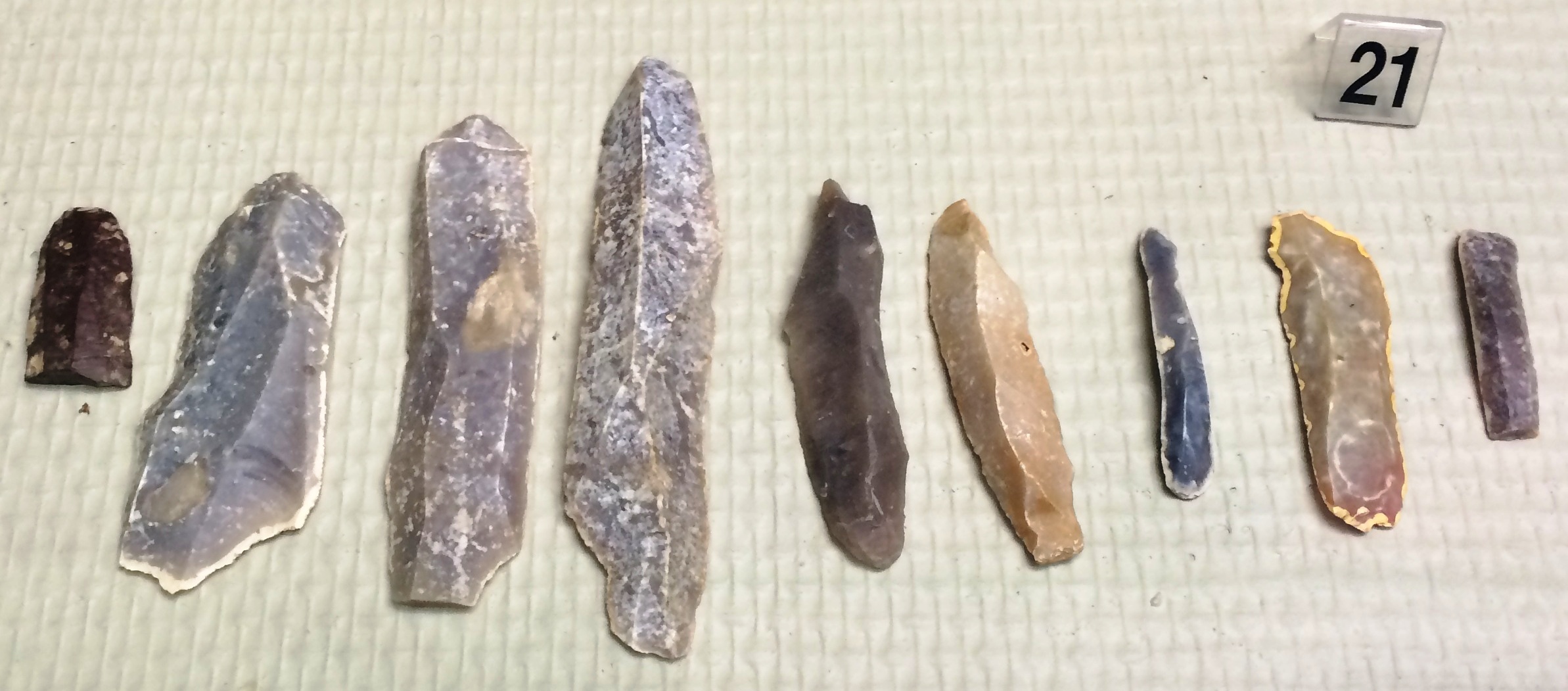
 Image Credit:
Bjoertvedt, CC BY-SA 4.0, via Wikimedia Commons
Image Credit:
Bjoertvedt, CC BY-SA 4.0, via Wikimedia Commons
Researchers Challenge the Classification of Stone Tools from Cueva Millán
A new scholarly critique questions whether stone tools from Cueva Millán in northern Spain truly belong to the Initial Upper Paleolithic, a technological tradition often associated with the early dispersal of Homo sapiens across Eurasia.
The article responds to a 2024 study that classified finds from Layer L1 at Cueva Millán as a southern European expression of the Initial Upper Paleolithic, dating broadly to between about 50,000 and 40,000 years ago.
According to the new analysis, however, the stone tools lack the technological features normally used to identify this period. Instead, the assemblage appears to preserve characteristics more typical of the Middle Paleolithic, a period closely associated in Europe with Neanderthal populations.
The Initial Upper Paleolithic is generally defined by the systematic production of elongated blades from carefully prepared, often bidirectional cores. These industries frequently include long Levallois points, standardized blade forms, and in some regions bone tools and personal ornaments.
The researchers argue that the Cueva Millán cores differ substantially from these examples. Rather than producing regular blades, many of the cores appear to follow a crossed reduction strategy that generated short triangular flakes. The cores are often flat rather than prismatic and lack the parallel removal scars expected from organized blade production.
The authors also emphasize the presence of clearly Middle Paleolithic techniques, including discoidal reduction and recurrent centripetal Levallois methods. They argue that describing these products as merely “Levallois-like” or “discoidal-like” understates their strong technological connection to established Middle Paleolithic traditions.
The proportions of blades and bladelets provide another point of disagreement. At Initial Upper Paleolithic sites such as Bacho Kiro and Temnata Cave in Bulgaria, blades form a much larger part of the assemblage and tend to show regular, parallel edges and standardized dimensions.
By contrast, laminar products make up only around 2.4 per cent of the Cueva Millán assemblage, while bladelets account for approximately 3.3 per cent. The researchers state that these proportions fall within the known range of Middle Paleolithic variation.
They also question whether many of the elongated pieces from the site qualify as true blades. Several have irregular, divergent, or asymmetrical edges and appear to have been struck from small nodules or the edges of flakes rather than from deliberately prepared blade cores.
The retouched tools also resemble Middle Paleolithic traditions more closely. Retouched flakes greatly outnumber retouched blades, while side scrapers, denticulated tools, notches, and Mousterian points are among the dominant types. Classic Upper Paleolithic tools are scarce or atypical.
The article does not deny that Neanderthal groups could produce elongated flakes, blades, or bladelets. Instead, it argues that such features could emerge independently within late Middle Paleolithic technologies and should not automatically be treated as evidence for an Initial Upper Paleolithic industry.
This distinction has wider significance because the Initial Upper Paleolithic is frequently connected with the spread of Homo sapiens. Classifying a Middle Paleolithic assemblage as Initial Upper Paleolithic could therefore incorrectly attribute local Neanderthal innovations to incoming modern human populations.
The researchers also note the absence of symbolic artefacts at Cueva Millán, despite the preservation of animal bone, and point to unresolved questions concerning the site’s chronology and stratigraphy.
Overall, the critique concludes that the Layer L1 assemblage cannot currently be assigned securely to the Initial Upper Paleolithic. Its technology, tool types, and production strategies are more consistent with late Middle Paleolithic traditions found elsewhere in southern Europe.
The debate highlights the importance of distinguishing genuine technological systems from superficial similarities. Accurate classification is essential for reconstructing the transition between Neanderthals and Homo sapiens and for understanding how innovation developed among the last Neanderthal communities of Europe.
Published on: 08-07-2026
Edited by: Abdulmnam Samakie
Source: Scientific Reports