- Archaeological News
-
 Image Credit:
Motuzaitė Matuzevičiūtė et al., Antiquity (2026)
Image Credit:
Motuzaitė Matuzevičiūtė et al., Antiquity (2026)
Medieval Graves Reveal the Mixed Origins of Vilnius’s First Christians
A new archaeological study is shedding light on the origins of some of the earliest Christians in medieval Vilnius, before Lithuania officially adopted Catholicism in 1387.
The research focuses on the Bokšto Street cemetery in the centre of Vilnius, a large medieval burial ground dated to the late thirteenth and fourteenth centuries. More than 500 intact graves have been identified there, along with many disturbed burials. The cemetery is associated with the Civitas Ruthenica, or Ruthenian city, an Orthodox Christian community that existed within largely pagan medieval Vilnius.
This discovery is significant because Lithuania remained officially pagan until the late fourteenth century, and cremation was still the dominant burial custom in many pagan contexts. By contrast, the Bokšto cemetery contained inhumation burials placed in a supine position and generally oriented east–west, following Christian funerary traditions.
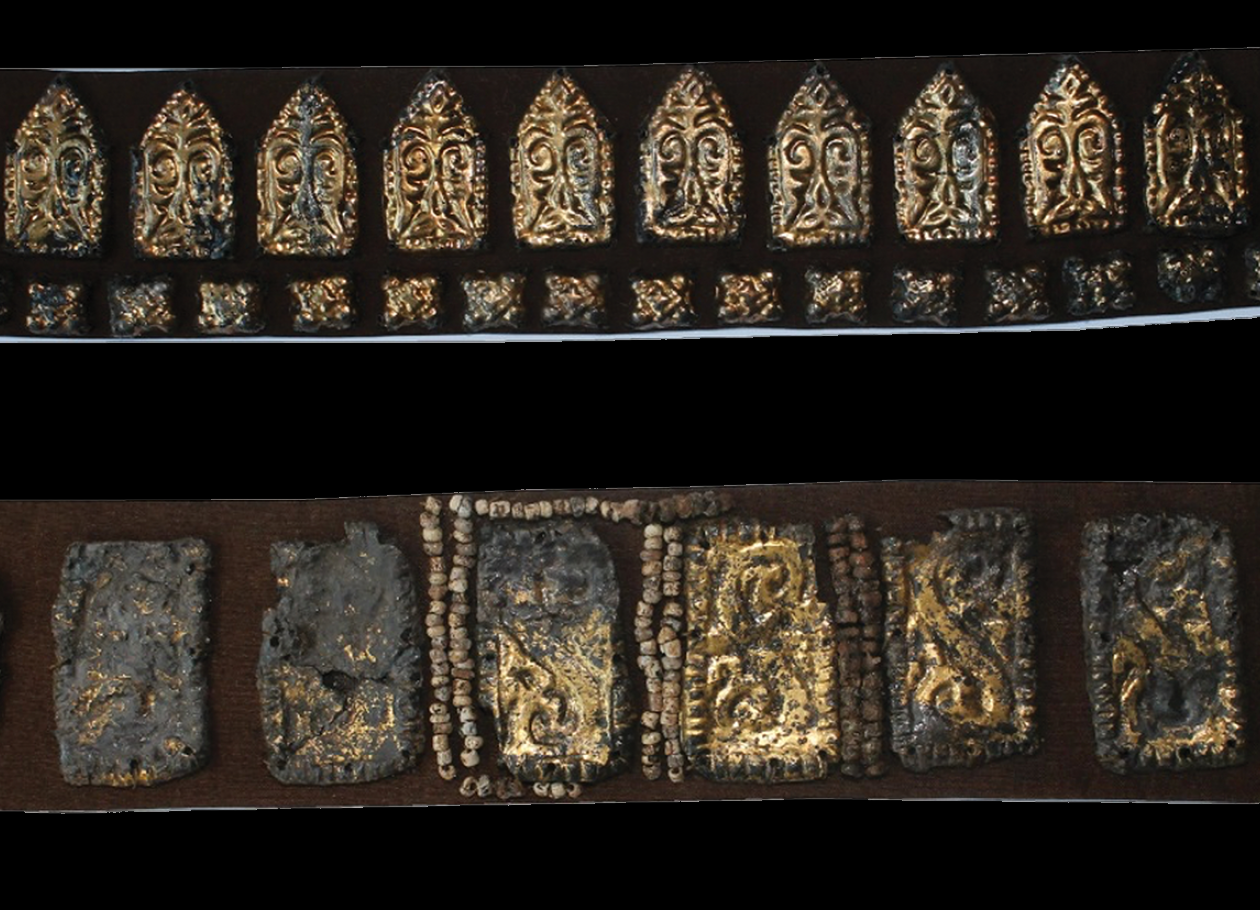
Some graves also contained Christian objects, including cross necklaces and metal enkolpions. Other items, such as glass beads, cowrie shells, rings, earrings, and head ornaments, point to long-distance connections and possible Byzantine or Kievan Rus’ influence.
To investigate whether the people buried at Bokšto were local converts or migrants, researchers analysed 15 individuals using multiple isotopic methods. They examined carbon and nitrogen isotopes from bone and dentine to reconstruct diet during different stages of life. They also analysed carbon, oxygen, and strontium isotopes from tooth enamel to investigate childhood diet, water sources, geology, and possible place of origin.
The results show that most sampled individuals had isotopic signatures consistent with a local Vilnius background and a diet based mainly on C3 plants, typical of medieval Lithuania. However, one young male from grave 311 stood out clearly in every isotopic measurement.
This individual died at around 18 years of age. His tooth dentine, which formed during childhood, showed a strong signal of C4 plant consumption, most likely millet. His bone collagen, which reflects diet in the years before death, showed a more typical local Vilnius diet. This suggests that he grew up elsewhere, eating a different childhood diet, and later moved to Vilnius.
Oxygen and strontium isotope values from his tooth enamel also indicate that he did not grow up in the Vilnius area. The researchers suggest that his childhood location may have been farther south, possibly in areas corresponding to present-day Ukraine or southern Poland. These regions were part of, or closely connected to, the wider Kievan Rus’ and Halych-Volhynia world.
This interpretation fits historical evidence. During the period when the Bokšto cemetery was in use, Lithuanian rulers maintained close relations with Ruthenian Orthodox lands. The Grand Duchy of Lithuania also expanded into regions with Orthodox populations, creating conditions for migration, trade, intermarriage, and the formation of multiethnic urban communities.
Another male, from grave 214, may also have been non-local, although the evidence is less clear. Two other males, from graves 139 and 226, had strontium values closer to the Kernavė region, an early Lithuanian capital located northwest of Vilnius. This may indicate mobility between important medieval centres within Lithuania.
The study also found that the sampled females mostly appear to have been local. Some female burials included grave goods that were unusual for strict Christian burial practice and may reflect local customs. The researchers suggest that some local women may have converted to Christianity, possibly through marriage with immigrant Orthodox men.
One female from grave 312 showed dietary differences that may indicate some C4 plant consumption. She was buried in the same grave pit as the outlier male from grave 311, raising the possibility that the two individuals were related or socially connected. However, ancient DNA analysis would be needed to test this idea.
The findings support the idea that early Christian Vilnius was not formed by a single homogeneous group. Instead, it likely developed through a mixture of immigrant Orthodox Christians, local converts, and socially mobile individuals connected to wider eastern European networks.
The study also demonstrates the value of analysing different tissues from the same individual. Teeth preserve childhood signals, while bones reflect later-life diet. By comparing them, researchers can detect movement, dietary change, and migration that would otherwise remain invisible.
Overall, the research provides new evidence for the multiethnic and multiconfessional origins of medieval Vilnius. It suggests that some of the city’s first Christians came from outside Lithuania, while others were local people who adopted Christianity within a changing urban and political landscape.
Published on: 15-07-2026
Edited by: Abdulmnam Samakie
Source: Antiquity