- Archaeological News
-
 Image Credit:
Patterson et al., Science Advances (2026)
Image Credit:
Patterson et al., Science Advances (2026)
A Forgotten Population Once Bridged Tibet and South Asia
Ancient DNA recovered from human remains in a Himalayan cave has revealed that a population living in Ladakh around 1,500 years ago descended from a much older mixture of Tibetan-related and South Asian–related groups.
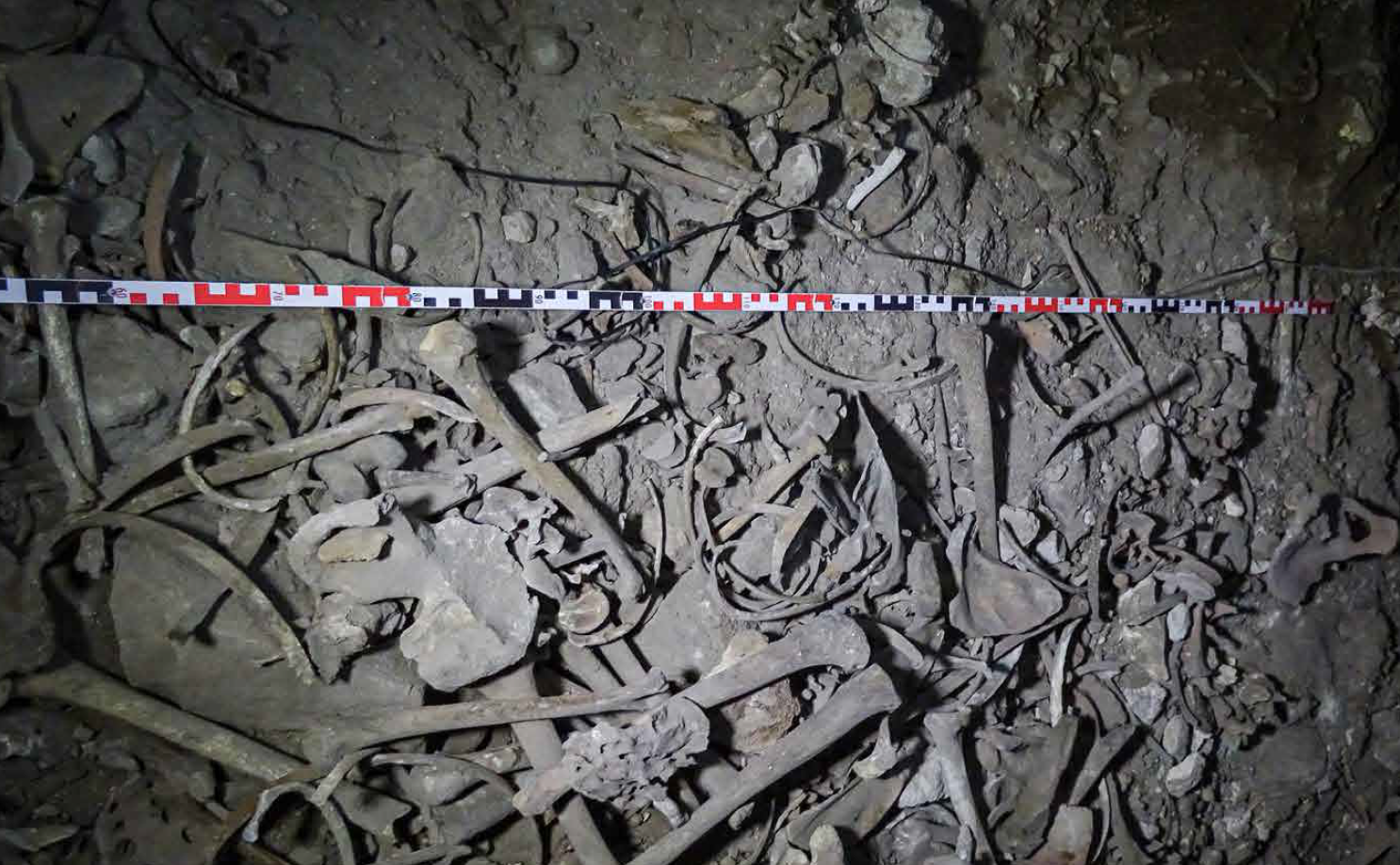
The remains were found in Old Lady Spider Cave, located about 4,000 metres above sea level near Yogma Kharbu in Ladakh. The cave contains several chambers with scattered human bones, some of which preserved naturally mummified skin, muscles and ligaments. Archaeological excavations conducted in 2021 collected samples for radiocarbon dating and genetic analysis.
Researchers successfully obtained genome-wide information from ten individuals. Radiocarbon dates indicate that the people lived approximately 1,700 to 1,350 years ago, with the strongest overlap between about 1,500 and 1,420 years before present.
The genetic results showed that the individuals formed a relatively homogeneous population. Their ancestry was divided almost equally between a group related to ancient Tibetans and another associated with populations from northern South Asia.
This ancestry profile is uncommon among modern South Asian populations. Some present-day Himalayan groups, including communities in Ladakh and nearby regions, retain partial genetic connections to the ancient population, suggesting that it did not disappear entirely.
By examining the lengths and distribution of inherited DNA segments, the study estimated that the original population mixture began around 2,800 years ago—more than a thousand years before the individuals buried in the cave lived. This indicates that the community represented a long-established population rather than a recently formed group.
The researchers emphasized that the genetic mixture did not necessarily occur in Ladakh itself. It could have taken place elsewhere in the Himalayan region, followed by the movement of the resulting population into Ladakh.
The findings provide direct evidence of ancient interaction between communities linked to the Tibetan Plateau and northern South Asia. Ladakh lies at the intersection of routes connecting Tibet, Kashmir, the Indian subcontinent and Central Asia, and its archaeological record contains evidence of cultural contacts extending back to the Bronze and Iron Ages.
The ancient genomes also contained a genetic variant associated with survival at high altitudes. This variant, inherited in part from Denisovans, is common among Tibetan populations and helps the human body function in environments with reduced oxygen. It was identified in one of the chromosomes that could be examined reliably, confirming that the adaptation was present among at least some members of the ancient Ladakh population.
However, the researchers found no indication that the variant was undergoing strong positive selection after the Tibetan- and South Asian–related groups mixed.
The results add rare genetic evidence to the study of South Asian population history, where ancient DNA remains limited because environmental conditions often hinder preservation. They also demonstrate that communities with mixed Tibetan and South Asian ancestry were established in the Himalayan region centuries before the rise of the Tibetan Empire.
Further analysis of human remains from Ladakh and neighbouring areas may help determine how widely this population was distributed, how long it persisted and which archaeological cultures were associated with it.
Published on: 26-07-2026
Edited by: Abdulmnam Samakie
Source: Science Advances