- Archaeological News
-
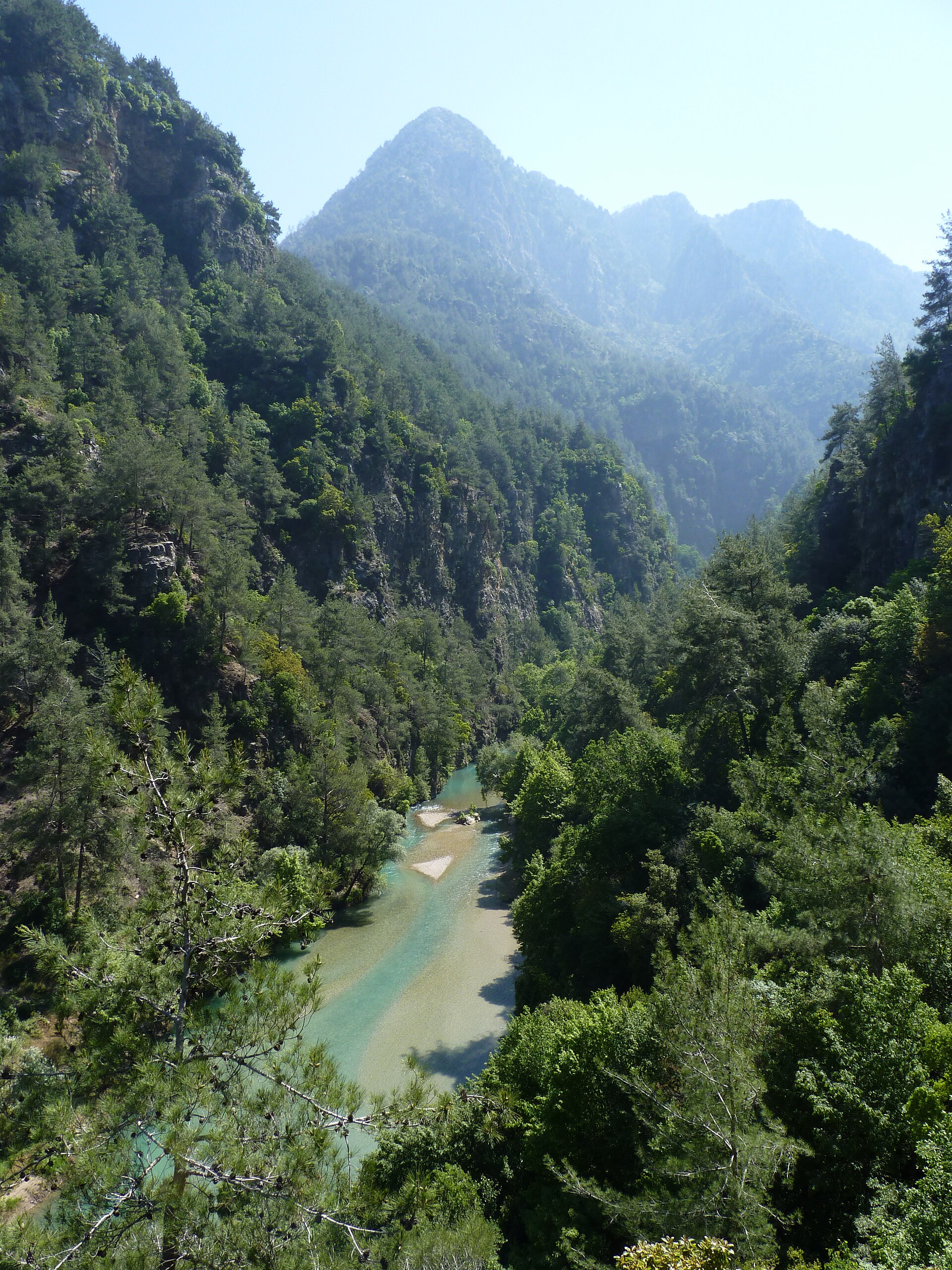
 Modern landscape of Nahr Ibrahim (Abraham River), one of the Lebanese areas examined in the study.
Image Credit:
OadrienvalentineG, CC BY-SA 3.0, via Wikimedia Commons
Ancient Animal Teeth Reveal Lebanon’s Coast as a 300,000-Year Refuge for Prehistoric Humans
Chemical signatures preserved in fossil animal teeth from three archaeological sites in Lebanon are offering a new picture of the environments encountered by prehistoric human populations moving through the Levant. The results suggest that the Lebanese coast maintained relatively stable, resource-rich landscapes for hundreds of thousands of years, even while surrounding regions experienced major climatic shifts.
The Levant formed one of the principal land corridors between Africa and Eurasia during the Pleistocene, making it central to the movement of different human populations, including later expansions of Homo sapiens. Yet much of what is known about ancient climate in the region comes from the southern Levant, while conditions farther north, particularly along the Lebanese coast, have remained less clearly understood.
To address that gap, the investigation examined carbon and oxygen isotopes preserved in herbivore tooth enamel from Naame, Nahr Ibrahim and Ras el-Kelb. The archaeological collections span roughly 400,000 to 100,000 years ago and include animals such as aurochs, wild goats, red deer, Persian fallow deer, rhinoceroses, a hippopotamus and an equid. Because tooth enamel forms gradually, its chemical composition can preserve information about the vegetation animals ate, the water they drank and seasonal changes during their lives.
The carbon-isotope results indicate that the animals relied almost entirely on C3 vegetation, the plant group typical of woodlands, shrublands and many temperate environments. Rather than representing one uniform habitat, however, the Lebanese coast appears to have supported a varied landscape. At Naame, the evidence points to a mosaic of denser woodland patches, semi-open woodland and open scrub. Different species occupied different ecological niches, with deer often feeding in shaded environments while aurochs and some larger herbivores used more open or mixed areas.
Across the three sites, this ecological diversity appears to have persisted despite the large-scale glacial and interglacial changes occurring elsewhere. Oxygen isotopes in the teeth recorded regular seasonal cycles broadly resembling the Mediterranean pattern of cool, wet winters and warm, dry summers. Although conditions differed between periods, the overall rhythm of the seasons remained surprisingly consistent.
Reconstructed rainfall also points to generally moderate or relatively humid conditions. Estimates for Nahr Ibrahim and Ras el-Kelb were close to modern precipitation levels along the Lebanese coast, while deposits at Naame associated with the last interglacial indicate wetter conditions. The data also suggest that Nahr Ibrahim was relatively drier than Naame, showing that long-term stability did not mean that climatic conditions remained completely unchanged.
Temperature estimates reveal a similar picture: noticeable variation without eliminating the broader pattern of ecological continuity. Nahr Ibrahim produced mean annual values close to modern coastal conditions, while Ras el-Kelb was somewhat cooler. Naame during the last interglacial appears warmer, although the relatively small number of specimens means individual temperature estimates should be treated cautiously. A much younger tooth from Naame, dating to around 18,000 years ago, recorded distinctly colder and drier conditions during the last glacial period.
The animal communities themselves reinforce the picture of long-term habitat diversity. Different herbivores continued to occupy separate dietary and environmental niches over multiple climatic cycles. Between about 400,000 and 100,000 years ago, the Lebanese coast may therefore have resembled a temperate Mediterranean mosaic of humid woodland, river corridors and open scrub rather than the more open and climatically variable landscapes documented at several sites farther south.
This stability would have mattered to prehistoric humans. Ras el-Kelb and Nahr Ibrahim preserve evidence associated with human presence during the Middle Pleistocene, while Naame documents later occupation during the last interglacial. Landscapes with dependable water, vegetation and prey would have provided recurring opportunities for settlement and movement along the eastern Mediterranean.
The findings therefore suggest that coastal Lebanon functioned as an ecological refuge within the wider Levantine corridor. Rather than simply serving as a passage between continents, the region may repeatedly have offered predictable resources that helped sustain human populations as they occupied and moved through the eastern Mediterranean over hundreds of thousands of years.
Published on: 16-09-2026
Edited by: Abdulmnam Samakie