- Archaeological News
-
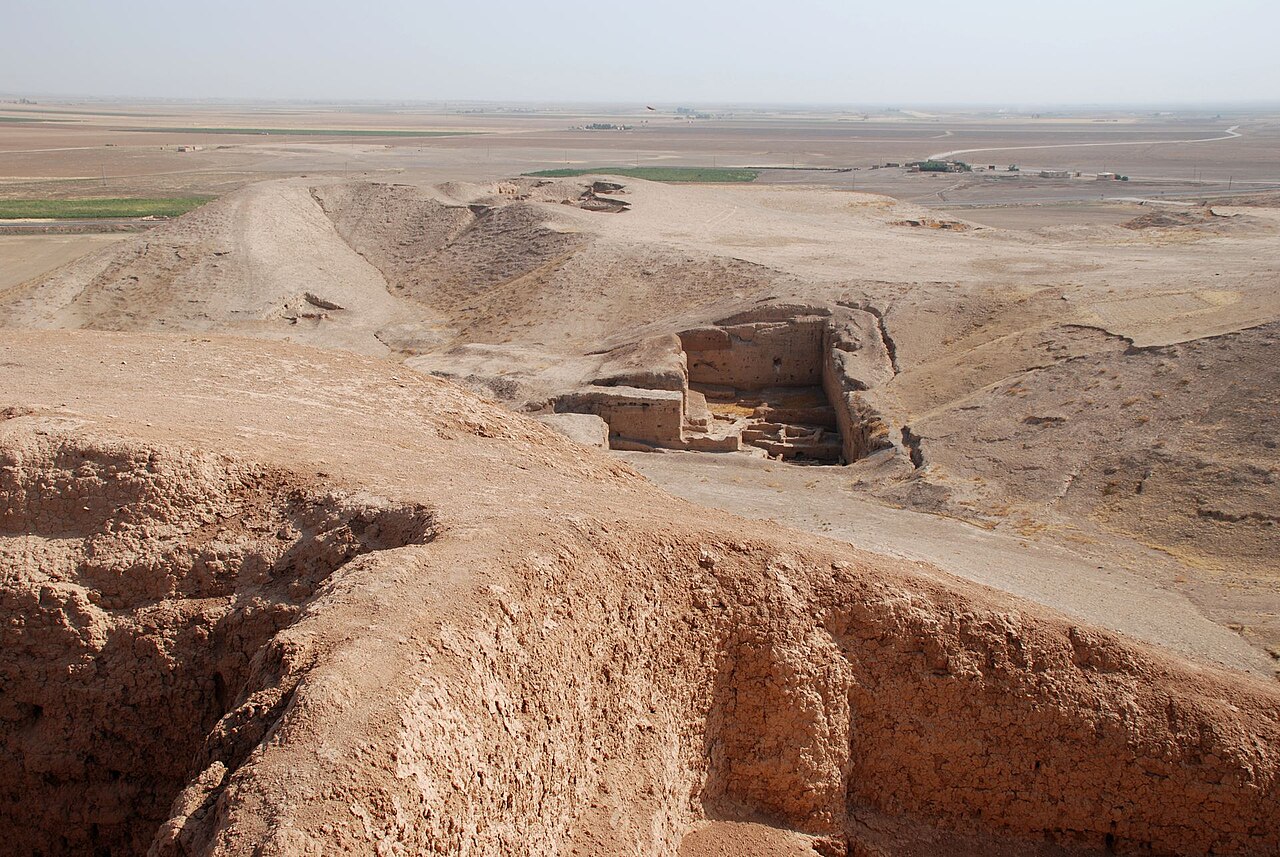
 Tell Brak in northeastern Syria, one of the ancient settlements included in the study.
Image Credit:
Bertramz, CC BY 3.0, via Wikimedia Commons
Tell Brak in northeastern Syria, one of the ancient settlements included in the study.
Image Credit:
Bertramz, CC BY 3.0, via Wikimedia Commons
Ancient Cities in Southwest Asia Began to Scale in the Bronze Age
A new archaeological study suggests that some of the social and economic patterns associated with urban life did not emerge automatically when people began living in larger settlements. Instead, they became clearly established only with the rise of increasingly integrated cities during the Bronze Age.
The research examined the long-term development of settlements across Southwest Asia, one of the world’s earliest centres of urbanisation. Researchers analysed the sizes of 1,852 residential buildings from 80 archaeological sites, covering more than 12,000 years from the Late Epipalaeolithic to the Iron Age, approximately 13,100 to 580 BCE.
The sites are distributed across a broad region that includes parts of modern Turkey, Syria, Lebanon, Jordan, Israel-Palestine, Cyprus and Iraq. The dataset follows communities from early sedentary settlements through the emergence of cities and later Bronze and Iron Age urban systems.
The study applies Settlement Scaling Theory, a framework used to examine how characteristics of settlements change as population increases. In modern cities, larger populations often generate systematic changes in infrastructure, economic activity and social interaction.
For the archaeological analysis, house size was used as an indicator of the long-term productive capacity of households. The researchers then compared residential size with the overall size of settlements to determine when predictable scaling relationships appeared.
The results reveal a striking chronological pattern.
During the Neolithic, researchers found no consistent relationship between settlement size and average house size. The Chalcolithic evidence was more uncertain, partly because the available sample contains relatively few residential buildings from some of the period’s major emerging urban centres.
Clear scaling appeared only in the Bronze Age and continued into the Iron Age. The researchers argue that this may indicate that sufficiently integrated networks of social and economic interaction became firmly established only alongside more developed urban systems.
The Chalcolithic remains an important area of uncertainty. Several major Late Chalcolithic centres in southern Mesopotamia, where early urbanisation was developing, are poorly represented in the residential dataset. The absence of clear scaling during this period could therefore reflect limitations in the available archaeological evidence rather than a genuine absence of such relationships.
Another major finding concerns the long-term growth of houses.
Regardless of whether settlement scaling was present, the predicted baseline size of residences increased from about 16.9 square metres in the Neolithic to 41.8 square metres in the Iron Age—more than doubling over time.
The researchers interpret this trend as evidence of broader technological or organisational improvements rather than simply a consequence of people living in larger settlements. In other words, households appear to have increased their residential capacity over the millennia independently of the productivity effects associated with urban concentration.
The study also examined an issue closely associated with the development of cities: economic inequality.
Using differences in house size as an indicator of inequality between households, the researchers found that larger settlements were not automatically more unequal.
A relationship between settlement size and residential inequality appeared mainly in politically complex societies and, within those systems, particularly in major administrative or commercial centres. Smaller or less politically complex communities showed no comparable pattern.
This suggests that inequality was shaped not simply by urban growth itself, but by the institutions governing how resources and economic benefits were distributed.
The study found no clear connection between settlements performing better than expected under the scaling model and greater inequality within them. Productivity gains and their distribution therefore appear to have been governed by different processes.
Researchers also used the data to investigate ancient population density. Their calculations indicate that residential density changed substantially through time, declining markedly between the Chalcolithic and Bronze Age before partially recovering during the Iron Age.
The research offers a broader perspective on the emergence of urban life in Southwest Asia. Cities were not simply larger versions of earlier villages. According to the results, some characteristic effects of concentrated settlement appeared only after communities developed sufficiently interconnected social and economic networks.
At the same time, the findings show that urban productivity and inequality did not necessarily develop together. While larger and more integrated settlements could generate new economic advantages, political and institutional structures played a major role in determining who benefited from them.
The study therefore suggests that some fundamental features of city life familiar today have deep roots in the Bronze Age, when urban communities across Southwest Asia began functioning as increasingly integrated networks rather than simply concentrations of people and buildings.
Published on: 21-08-2026
Edited by: Abdulmnam Samakie
Source: PLOS One