- Archaeological News
-
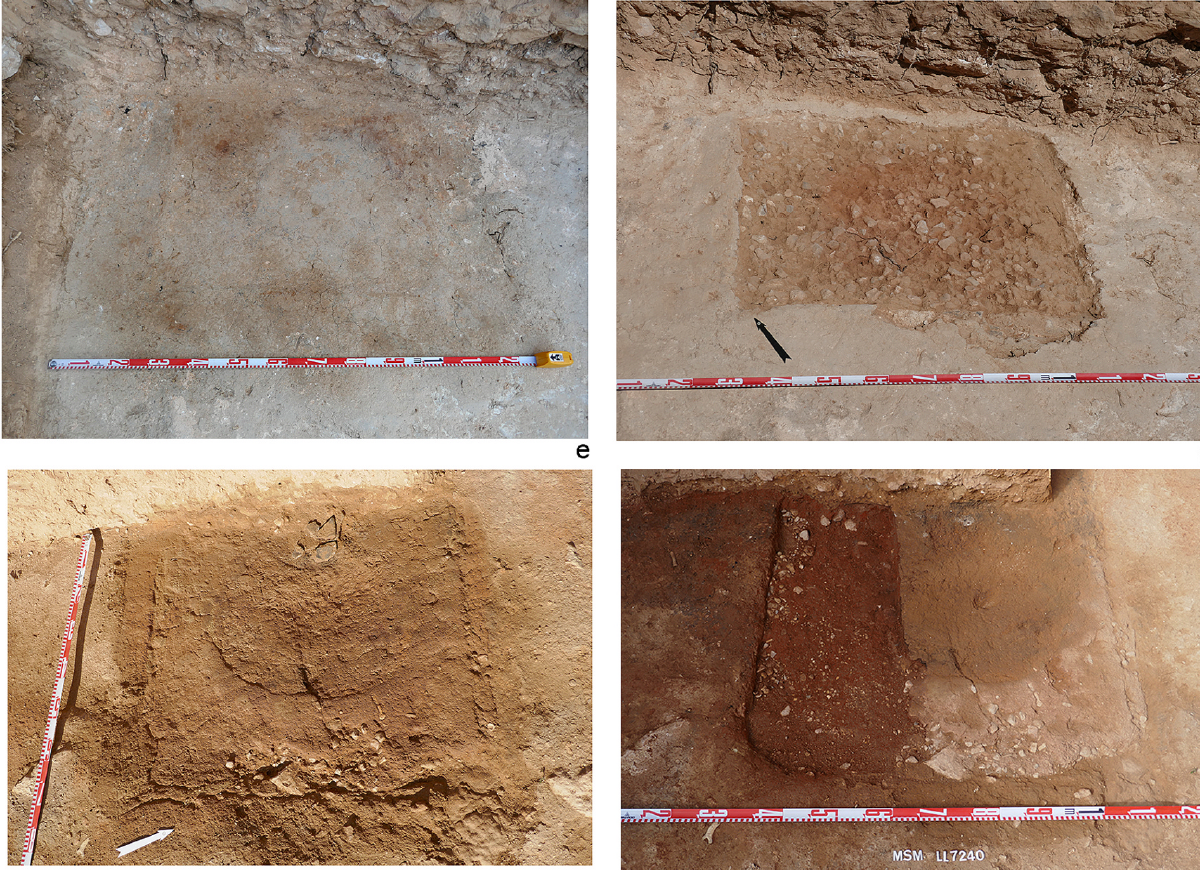
 Selected Iron Age hearths from sites in Catalonia, shown before and after excavation of their combustion surfaces.
Image Credit:
Belarte et al., Journal of Archaeological Science: Reports (2026)
Selected Iron Age hearths from sites in Catalonia, shown before and after excavation of their combustion surfaces.
Image Credit:
Belarte et al., Journal of Archaeological Science: Reports (2026)
Iron Age Hearths Reveal More Than Cooking in Ancient Iberian Homes
A new archaeological study of Iron Age hearths in northeastern Iberia suggests that domestic fire installations served a wider range of purposes than cooking alone, offering new insights into how ancient households organized everyday activities.
The research focuses on combustion structures from Iberian settlements along the Mediterranean coast of present-day Catalonia, dating mainly between the late sixth and third centuries BCE. These communities belonged to the broader Iberian cultural world, which included settlements ranging from large urban centres to small rural sites.
Hearths are among the most common features found inside Iberian houses and have traditionally been used by archaeologists to identify cooking areas. They were often positioned in the centre of rooms, although examples placed along walls or in corners are also known.
Yet fire could serve many functions. In addition to preparing food, hearths may have provided heat and light, helped dry materials or supported craft activities. Rooms containing more than one hearth may therefore have been multifunctional spaces rather than simple kitchens.
To investigate these possibilities, researchers analysed 17 archaeological hearths from five sites in present-day Catalonia. The structures varied considerably in shape, size and construction. Some were circular or oval, others square or rectangular, while several had irregular forms.
Their construction also differed. Some consisted simply of a fire surface placed directly on the floor, while others were built within shallow depressions and included preparation layers of gravel, pebbles or pottery fragments beneath the combustion surface.
The team combined archaeological excavation with micromorphology, which examines microscopic thin sections of sediments, and experimental archaeology. Microscopic analysis revealed traces of repeated heating that are difficult to recognize with the naked eye. These included hardened and reddened sediments, blackened layers, microscopic cracks caused by heating and, occasionally, tiny remains of ash or charcoal.
The analysis also showed that materials used for constructed hearth surfaces were carefully selected and prepared. Fine sandy or sandy-clay sediments with few coarse inclusions appear to have been deliberately mixed and compacted, producing surfaces capable of withstanding repeated exposure to fire.
Researchers then compared the archaeological examples with experimental hearths built at the reconstructed Iberian Citadel of Calafell.
The experimental fires lasted for more than five hours and frequently more than seven. Researchers burned combinations of pine and oak wood, barley, palm leaves, grasses and, in one experiment, animal dung. Ceramic vessels were also used to boil pork bones, allowing the team to observe how repeated cooking affected the structures.
The experiments produced an unexpected result. Preparation layers of stones or pottery had often been assumed to increase heat retention. However, removing a layer of pottery fragments from one experimental hearth did not significantly change its performance. Tested hearths generally remained capable of maintaining temperatures around 400°C for three to four hours, although conditions such as fuel dryness, humidity and outdoor exposure strongly affected individual fires.
This suggests that differences in hearth construction cannot be explained simply by thermal efficiency.
Instead, the researchers propose a functional distinction. Carefully built hearths with preparation layers were probably used mainly for cooking and occurred in spaces designed for food preparation. Simpler, flat hearths may have been used less frequently or for other activities such as heating or drying.
At Masies de Sant Miquel, for example, prepared hearths could be linked with cooking spaces, while some flat hearths occurred in storage or working areas where heating or drying may have been more important.
The findings therefore challenge the idea that every ancient hearth automatically identifies a kitchen.
Instead, variations in construction and location may reflect the diverse ways fire was integrated into domestic life. By combining microscopic evidence with controlled experiments and archaeological context, the study provides a more detailed picture of how Iron Age households in northeastern Iberia cooked, worked, heated their homes and organized activities around fire.
Published on: 25-08-2026
Edited by: Abdulmnam Samakie