- Archaeological News
-
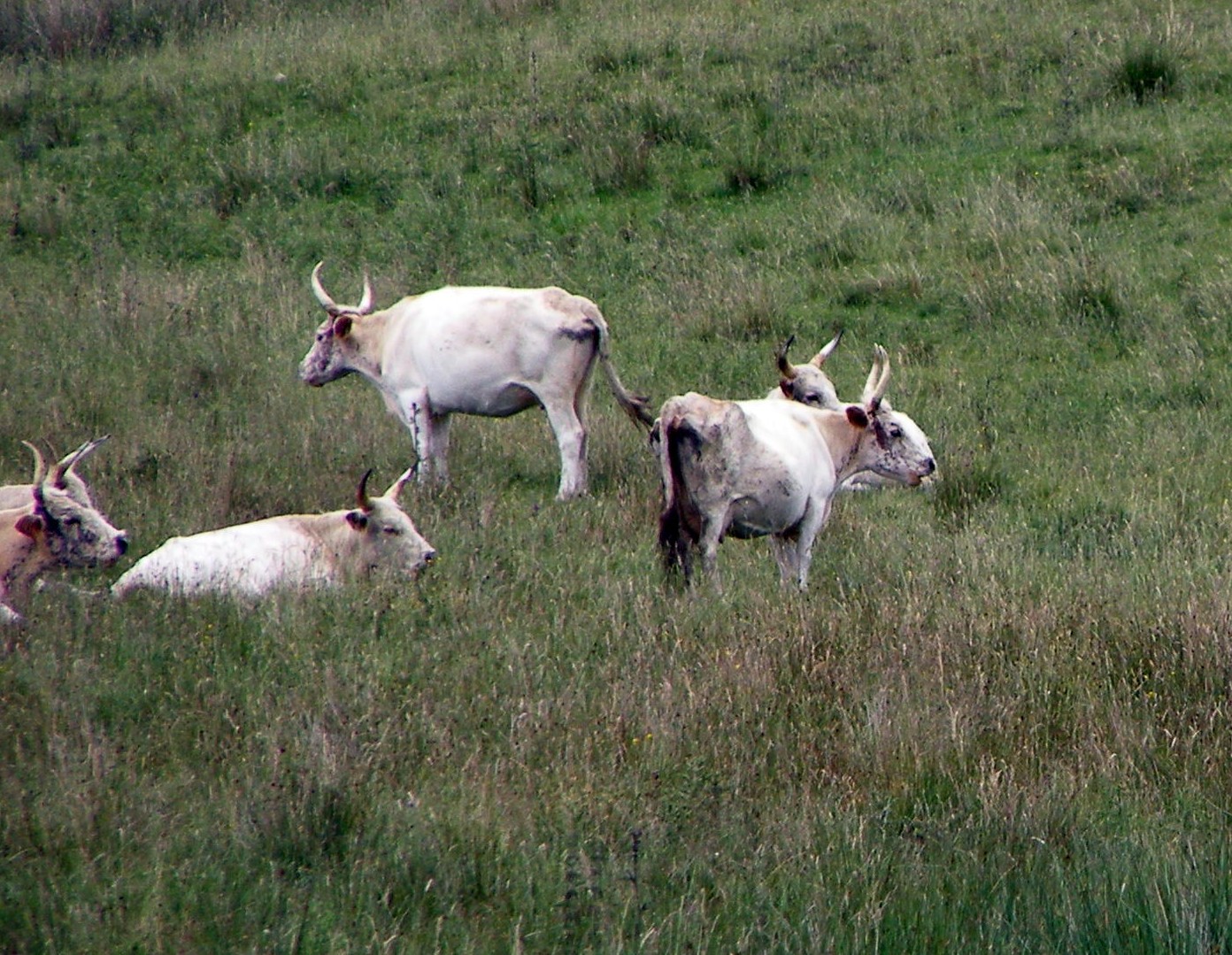
 Chillingham cattle grazing in Northumberland, England.
Image Credit:
C Michael Hogan, CC BY-SA 2.5, via Wikimedia Commons
Chillingham cattle grazing in Northumberland, England.
Image Credit:
C Michael Hogan, CC BY-SA 2.5, via Wikimedia Commons
Animal Bones Reveal a Millennium of Change in Medieval English Farming
A large zooarchaeological analysis of cattle and sheep remains from across England is providing a more detailed picture of how medieval farming changed between about AD 400 and 1400. Rather than dividing the evidence into broad labels such as “early Saxon” or “high medieval,” the research follows changes continuously through time, revealing gradual shifts in the use of livestock for meat, milk, wool and agricultural labour.
The analysis brought together 701 animal-bone assemblages from 460 archaeological sites. Most of the evidence came from cattle and sheep, the two animals that had the greatest influence on the wider farming economy. By examining the relative abundance of their bones, the ages at which animals were slaughtered and, where possible, their sex, the researchers reconstructed changing priorities in livestock management over roughly a thousand years.
During the fifth and sixth centuries, cattle dominated many assemblages. The evidence points to a largely self-sufficient mixed-farming economy in which animals were raised mainly for meat, while some were retained for milk and traction. At a small number of settlements, however, livestock patterns suggest that agricultural practices inherited from the Roman period continued into the fifth century, including the use of older cattle in arable farming.
A significant change began around the early seventh century. Sheep became increasingly important, particularly at monastic and rural sites. This rise appears earlier than the traditionally emphasized expansion of medieval wool production in the ninth century. The evidence suggests that monastic sheep farming may already have been creating wool surpluses in the seventh century, contributing to expanding exchange networks and the growth of trading centres.
From the ninth century onward, sheep continued to gain importance, while cattle were increasingly kept to older ages. Between about AD 900 and 1100, around 60 percent of cattle represented in the mortality evidence were adults at relatively advanced stages of life. This pattern indicates that many animals were no longer being raised primarily for immediate meat production. Instead, they were being retained for secondary uses such as milk and, especially, draught work.
The increasing use of working cattle is closely connected with the expansion of grain cultivation. Evidence for dedicated draught cattle becomes particularly clear from the ninth century and peaks between the eleventh and twelfth centuries. Together with growing sheep numbers, this suggests that arable production became increasingly important as medieval populations expanded and towns created greater demand for food. Sheep also supported cereal farming by providing manure and grazing harvested fields, while continuing to supply wool, milk and meat.
By around AD 1000, cattle and sheep appear in roughly equal proportions in many assemblages, although cattle continued to provide much larger quantities of meat, milk and other resources per animal. Regional differences also remained important. Sheep were more common on lighter chalk and sandy soils, while cattle were particularly prominent in some northern and western areas. The archaeological record, however, is uneven, and poorer bone preservation in some regions limits how confidently these differences can be interpreted.
Another major transformation began from the twelfth century. More cattle were slaughtered at younger ages, indicating rising demand for beef, while increasing numbers of calves during the thirteenth and fourteenth centuries are consistent with greater dairy production. At the same time, horses increasingly replaced cattle as working animals in agriculture. Working horses are estimated to have risen from only a small share of draught animals around the time of Domesday to roughly 20–50 percent by AD 1400.
The broader pattern is one of gradual economic transformation rather than a series of sudden changes. England moved from largely local and self-sufficient livestock production after the Roman period toward an increasingly interconnected agricultural economy capable of supporting growing towns, international trade and a population of several million. Wool, grain production, animal traction, dairy products and meat each became more or less important at different times, showing how closely livestock management was tied to wider social and economic change in medieval England.
Published on: 03-09-2026
Edited by: Abdulmnam Samakie
Source: PLOS One