- Archaeological News
-
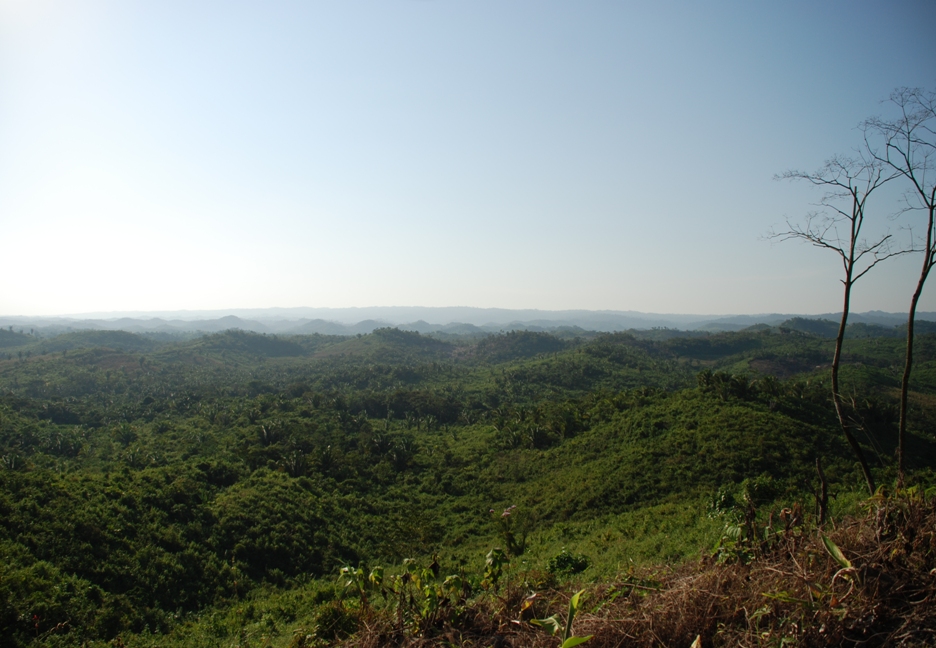
 Upland landscape around Uxbenká in southern Belize, where archaeological evidence documents the early expansion of Maya farming onto higher ground.
Image Credit:
Elelicht, CC BY-SA 3.0, via Wikimedia Commons
Upland landscape around Uxbenká in southern Belize, where archaeological evidence documents the early expansion of Maya farming onto higher ground.
Image Credit:
Elelicht, CC BY-SA 3.0, via Wikimedia Commons
From Wetlands to Hillsides: How Early Maya Farmers Reshaped the Landscape
New archaeological and environmental evidence from southern Belize suggests that early farmers in the Maya lowlands began shifting agriculture away from wetland margins and toward upland slopes much earlier than previously recognized. By combining soil chemistry, pollen, charcoal, buried soils and radiocarbon dating, the research reconstructs a long transition in which maize moved from a relatively minor crop grown near reliable water sources to an increasingly important staple cultivated across drier upland landscapes.
The earliest farming strategies in the region were closely tied to wetlands. Fertile soils along rivers, swamps and seasonally wet depressions offered dependable moisture and reduced the risks faced by small farming communities. Evidence from the Rio Blanco watershed indicates that cultivation near these environments was underway by about 6,400 years ago. Carbon-isotope values preserved in ancient soils show an increasing contribution from C4 plants, the photosynthetic group that includes maize, while charcoal deposits point to expanding land clearance.
The picture changes after about 5,000 years ago, when the regional climate entered a prolonged drier interval. Rather than abandoning farming, communities appear to have adjusted how and where they cultivated. Maize became increasingly important in diets, and improved varieties circulating through the lowlands may have offered larger cobs, more seed rows and greater resistance to some environmental stresses. By around 4,000 years ago, maize had become a major staple for some populations.
To trace this transformation, the researchers compared evidence from three settings in the Rio Blanco watershed. At a floodplain site, buried soils preserve chemical signatures indicating sustained C4 cultivation and repeated episodes of land clearing. At the Agua Caliente wetland, a sediment core contained maize pollen, disturbance-related plants and large quantities of charcoal, showing that wetland margins continued to be intensively managed. A third dataset came from upland agricultural soils near the later Maya center of Uxbenká.
The upland evidence is particularly important. Buried soils at Uxbenká dating to roughly 3,500, 2,900 and 2,500 years ago contain elevated carbon-isotope values consistent with C4 plants. The earliest of these surfaces lies above an even older soil, suggesting that upland farming may have begun soon after 4,000 years ago. These agricultural traces predate Uxbenká’s later development as a regional political center and show that farming was already reshaping the hills long before the area became densely settled.
The transition was gradual rather than abrupt. Wetland and upland cultivation overlapped for approximately 1,800 years. During this period, farmers continued using productive wetland margins while experimenting with rainfall-dependent farming on higher ground. This would have required new knowledge about planting schedules, soil moisture and erosion, as well as greater labor investment.
By about 2,500 to 2,200 years ago, however, the balance had shifted decisively. Isotopic evidence from the Rio Blanco floodplain shows a sharp decline in C4 cultivation, while pollen and charcoal from Agua Caliente also decrease. At the same time, upland settlements and farming systems were becoming more established. The researchers link this change to a combination of population growth, climate uncertainty and accumulated agricultural knowledge rather than to a single environmental event.
Moving uphill also created new problems. Clearing slopes increased erosion, while farming farther from permanent water made communities more dependent on seasonal rainfall. Over time, farmers responded through landscape management, including slope stabilization and, in later periods, terraces, walls, channels and reservoirs designed to conserve soil and water.
The findings therefore portray the rise of upland Maya agriculture as a centuries-long process of adaptation. Early farmers did not simply abandon wetlands when conditions changed. They diversified where they planted, tested new strategies and gradually invested more heavily in upland landscapes as maize became increasingly central to food production.
This long transition helped establish agricultural practices that later supported larger and more concentrated Maya communities. It also shows how decisions about crops, water, labor and risk can leave lasting archaeological traces, preserving the history of farming not only in artifacts and settlements but also in soils, pollen and microscopic chemical signatures.
Published on: 24-09-2026
Edited by: Abdulmnam Samakie