- Archaeological News
-
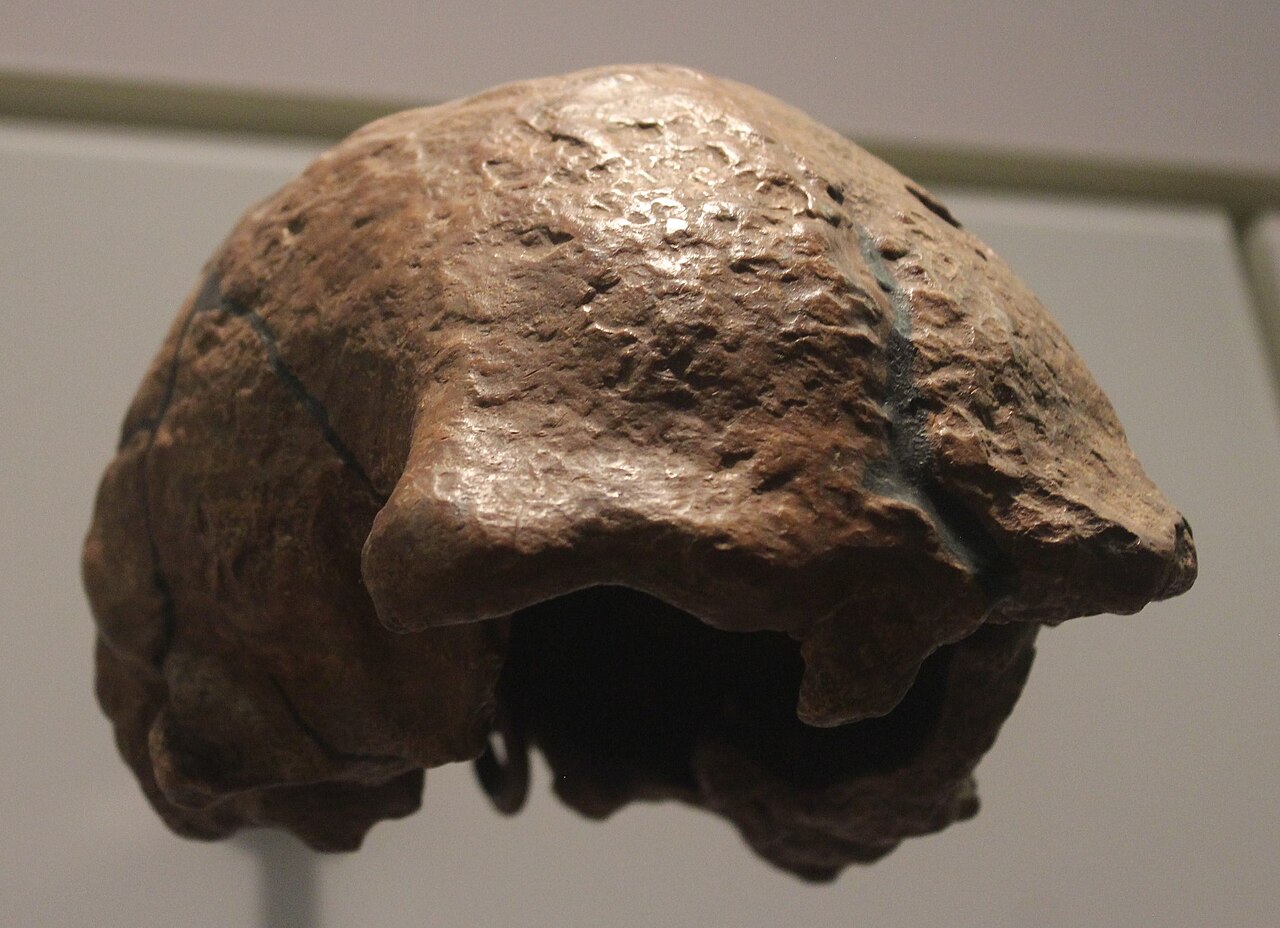
 Cast of the Ngandong 13 Homo erectus skull from Java, displayed at the Smithsonian’s National Museum of Natural History.
Image Credit:
Jonathan Chen, CC BY-SA 4.0, via Wikimedia Commons
Ancient Teeth Reveal Homo erectus Survived Far Later in Mainland East Asia
Nine ancient teeth discovered in caves in southern China are reshaping the timeline of Homo erectus in mainland East Asia. A new study finds that eight of the teeth most likely belonged to this ancient human species and date to between about 324,000 and 184,000 years ago, extending its securely documented survival on the Asian mainland much later than previously established.
The fossils were recovered from Naxian and Baxian caves near Chongzuo in the Guangxi Zhuang Autonomous Region. The two caves lie about 15 kilometres apart within the same karst landscape and contained similar sediments and animal remains. Researchers used several dating techniques on sediments, teeth and carbonate deposits, placing Baxian at approximately 324,000–184,000 years ago and Naxian at about 319,000–241,000 years ago.
In the study, the researchers combined detailed analysis of tooth shape with palaeoproteomics, a method that examines ancient proteins preserved in fossils. Proteins can survive in tooth enamel far longer than DNA under some conditions, allowing researchers to investigate biological relationships even when recoverable ancient DNA is absent.
Morphological analysis showed that eight of the nine teeth possess combinations of features characteristic of Asian Homo erectus. These include distinctive crown shapes and internal structures at the boundary between enamel and dentine. Geometric comparisons with teeth from Homo erectus, Neanderthals, modern humans and other Middle Pleistocene Asian hominins further supported the identification.
The molecular results strengthened that conclusion. The team successfully recovered ancient enamel proteins from five teeth. Four contained a particular change in the protein ameloblastin that has so far been identified only in Chinese Homo erectus specimens. Those four teeth nevertheless differed at another position in the same protein from previously studied Chinese examples, suggesting that the Naxian and Baxian fossils belonged to a Homo erectus population that had not previously been sampled using molecular methods.
This does not necessarily mean researchers have identified a new species. Rather, the protein differences suggest that Homo erectus in East Asia may have consisted of several distinct populations over its long history. The phylogenetic analysis grouped the four teeth with previously studied Homo erectus fossils while separating them into their own branch, although the authors emphasize that the available ancient protein data remain limited.
The ninth tooth, labelled PA1796, presents a different puzzle. Its shape differs from the other teeth and does not fit comfortably within the known variation of Homo erectus, Neanderthals or modern humans. Its proteins also lack the Homo erectus-associated ameloblastin change detected in the four other molecularly analyzed specimens.
Researchers therefore suggest that PA1796 may have belonged to another hominin population. One possibility is a group related to Homo longi, which the study associates with Denisovans, but the evidence is not sufficient for a firm identification. The tooth does not preserve the known protein variation associated with Denisovans, and only a limited Denisovan molecular record is currently available for comparison. Other explanations, including an unusual Homo erectus population or another unidentified lineage, cannot yet be completely excluded.
The finds are important because securely dated mainland Asian Homo erectus fossils younger than about 400,000 years had previously been lacking. The new specimens bring the mainland record closer in time to the much later Homo erectus population at Ngandong on Java, which survived until roughly 117,000–108,000 years ago.
They also add to evidence that several human lineages inhabited East and Southeast Asia during overlapping periods. The researchers suggest that Homo erectus populations in southern China may have lived geographically and chronologically close to Denisovans and other archaic humans. The unusual PA1796 tooth reinforces the possibility that more than one lineage occupied the region at the same time.
Rather than presenting East Asian human evolution as a simple succession of one population replacing another, the discoveries point toward a more complex landscape. Different hominin groups may have survived alongside one another for long periods, and the ancient proteins preserved inside their teeth are now beginning to reveal relationships that fossil shape alone could not fully resolve.
Published on: 22-11-2026
Edited by: Abdulmnam Samakie
Source: Nature