- Archaeological News
-
 Image Credit:
Gündogan & Çayır Tığlı, Antiquity (2026)
Image Credit:
Gündogan & Çayır Tığlı, Antiquity (2026)
Ancient Earthquakes Reshaped an Early Bronze Age Settlement in Western Anatolia
New archaeoseismological research at Panaztepe in western Turkey has identified evidence for at least two major earthquakes that struck the Early Bronze Age settlement during the third millennium BC. The study shows how repeated seismic destruction affected architecture, settlement planning, and community resilience in a region long known for earthquake activity.
Panaztepe is located in the Menemen district of İzmir, in the Gediz Delta. During the third millennium BC, the site was likely an island or peninsula connected to coastal and inland exchange routes. Its location was strategically important, but also geologically fragile because of active fault systems and alluvial ground conditions that could intensify earthquake damage.
The study focuses on the New Excavation Area, where Early Bronze Age houses were arranged along a street. The buildings shared walls and followed a layout known from coastal western Anatolia and the eastern Aegean. While this arrangement was efficient, it also made the settlement vulnerable: damage to one structure could affect neighbouring buildings.
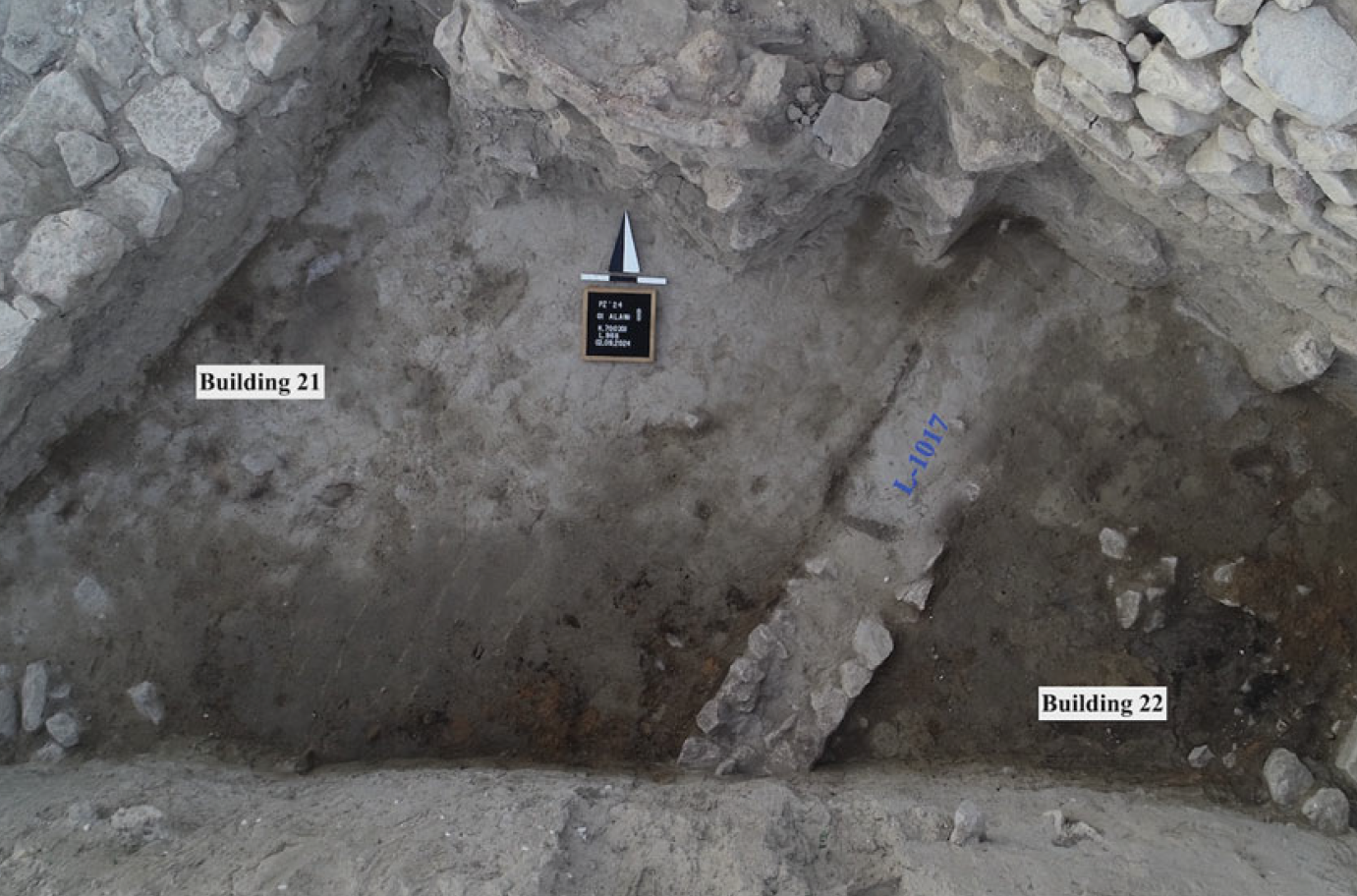
The earliest earthquake damage belongs to Phase I, dated roughly to 3000–2700/2650 BC. In buildings 21 and 22, archaeologists documented snake-like wall deformation, eastward tilting, roof collapse, and a later fire. Pottery, storage jars, animal bones, and marine shells were found in place beneath the destruction debris, suggesting a sudden event that left little time for evacuation or recovery of belongings.
After this first disaster, the inhabitants rebuilt the settlement and changed its layout. They also used thicker walls and larger stones, suggesting a conscious attempt to improve resistance against future earthquakes. No clear earthquake damage was identified in the second occupation phase, which may indicate that these changes were at least partly effective.
A second major earthquake occurred during Phase III, in the second half of the third millennium BC. This destruction was more extensive and affected buildings on both sides of the street. The study records collapsed walls, southward tilting, eastward displacement, lateral undulation, and snake-type wall deformation across several adjacent buildings.
The researchers argue that the pattern of damage is best explained by seismic activity rather than ordinary collapse. The direction of wall tilting and deformation was consistent across the excavated area, pointing to a single strong seismic event. Weak construction details, including poor interlocking between walls and reduced wall thickness in later rebuilding, likely made the damage worse.
The second earthquake appears to have exceeded the community’s capacity for recovery. Unlike after the first disaster, Panaztepe was eventually abandoned. The authors compare this pattern with other Early Bronze Age sites in western Anatolia, where some communities rebuilt, reorganised, or reduced settlement size after earthquakes, while others were abandoned after repeated destruction.
Overall, the evidence from Panaztepe shows that earthquakes were not only natural disasters, but also forces that shaped social organisation, architecture, and settlement history. The site provides one of the clearest archaeoseismological records yet documented for the Early Bronze Age coast of western Anatolia.
Published on: 19-06-2026
Edited by: Abdulmnam Samakie
Source: Antiquity