- Archaeological News
-
 Image Credit:
Einsamer Schütze, CC BY-SA 3.0, via Wikimedia Commons
Image Credit:
Einsamer Schütze, CC BY-SA 3.0, via Wikimedia Commons
Plant Remains Trace the Rise of Farming at Ancient Bubastis
Microscopic plant remains recovered from sediment cores have provided the first long-term reconstruction of vegetation and agricultural development at Bubastis, one of the most important ancient cities of Egypt’s southeastern Nile Delta.
Bubastis was founded around 3250 BCE and remained inhabited until its decline during the Roman Period. Although previous research reconstructed the city’s changing waterways, landforms and settlement areas, much less was known about the vegetation surrounding it or how farming changed as the urban centre expanded.
The new study examined 130 samples from 17 sediment cores distributed across the ancient city and its surroundings. Researchers analysed phytoliths—microscopic silica structures formed inside plant tissues that can survive after the plants themselves decay.
The results show that during the transition from the Late Pleistocene to the Early Holocene, around 9000 BCE, the Bubastis landscape was dominated by grasses, shrubs and trees. Palms occurred only occasionally, while no reliable evidence was found for either wild or cultivated cereals during this early period.
The earliest indication of agriculture appeared near the western settlement mound. Cereal phytoliths were identified in river-deposited sediments associated with pottery from the Early Old Kingdom, approximately 2850–2570 BCE.
This evidence suggests localized cereal cultivation or processing around 400 years after the earliest known occupation of Bubastis. The researchers caution that farming may have begun earlier, but the northwestern area containing the city’s oldest settlement remains difficult to investigate.
During the Late Old Kingdom, between approximately 2570 and 2180 BCE, construction intensified around the western and central mounds. Palaces and major temples were established there, including buildings associated with royal and provincial administration.
As occupation expanded, natural vegetation declined in the built-up zones. Cereal remains found near the western mound indicate that cultivation, processing or consumption continued close to important residential and ceremonial areas.
The study found much higher proportions of cereal phytoliths in later anthropogenic sediments created through human occupation. These concentrations were particularly notable in the eastern residential area known as S1, where they probably reflect the processing and storage of cereals within the settlement.
By the Late Period, between 664 and 332 BCE, Bubastis had expanded eastward. The growth of residential areas and construction near the Temple of Hermes further reduced the natural vegetation within the city.
Evidence from this period points to widespread agricultural activity or intensive post-harvest processing near the northeastern edge of S1. Grasses, shrubs and trees continued to dominate less disturbed areas east of the city and in the more sparsely occupied zone known as S2.
Urban expansion reached its height during the Ptolemaic Period. As densely built areas occupied more of the ancient landscape, cultivation was increasingly displaced toward the settlement’s outskirts.
During Roman times, evidence for farming within the studied area became limited mainly to S2. The researchers suggest that extensive agricultural land must nevertheless have existed around the city to supply its large population, even though the analysed cores did not identify every cultivated zone.
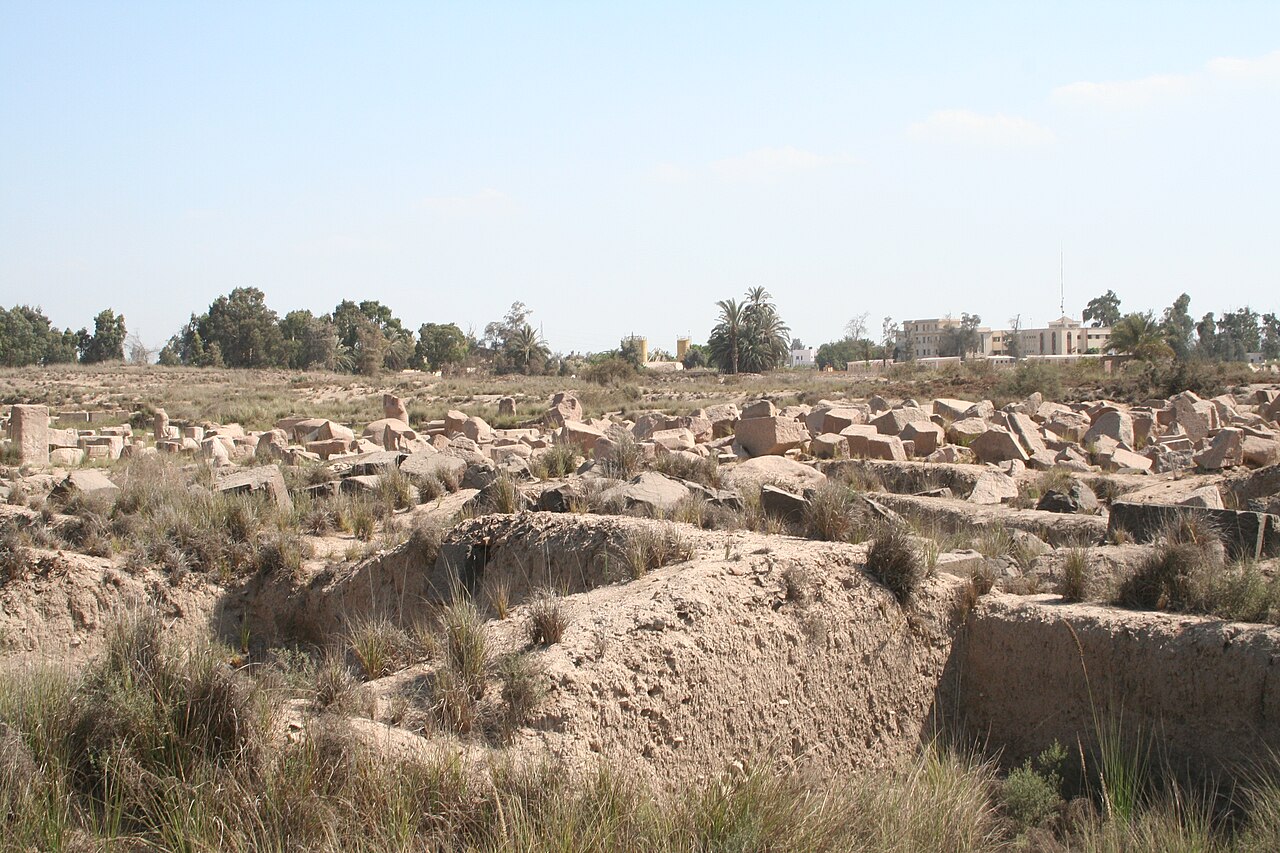
Following the abandonment of Bubastis around 200 CE, much of the landscape gradually became covered by sediment. Today, only parts of the major temples and collapsed mudbrick structures remain visible above the surface.
The findings show how the development of Bubastis reshaped its environment over thousands of years. A landscape initially characterized by grasses, shrubs and scattered trees gradually became an urban and agricultural centre in which farming shifted outward as temples, palaces and residential districts expanded.
The study also demonstrates how phytolith analysis can reveal agricultural activity even where seeds and other visible plant remains have not survived.
Published on: 01-08-2026
Edited by: Abdulmnam Samakie