- Archaeological News
-
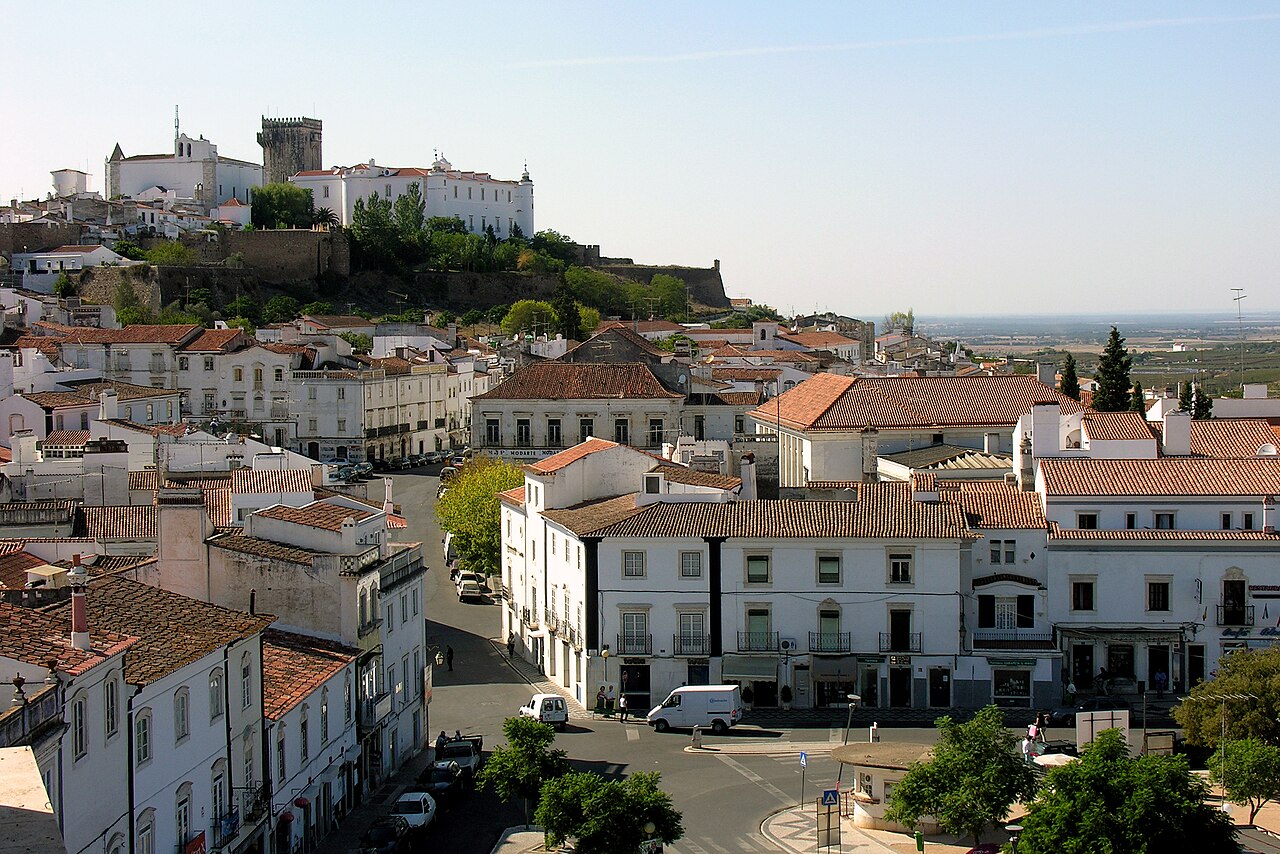
 View of Estremoz, Portugal.
Image Credit:
PhillipC, CC BY 2.0, via Wikimedia Commons
A New Way to Read Disability and Care in Ancient Lives
A healed injury or chronic disease preserved in an ancient skeleton can tell archaeologists that a person survived a serious health condition. But survival alone reveals little about how that individual actually lived.
Did they remain independent? Could they work, move through their community or participate in social life? What kind of assistance was available to them, and did their circumstances change as they grew older?
A new perspective published in Frontiers in Environmental Archaeology argues that these questions should become a more central part of the study of disease and disability in the past. Rather than treating skeletal pathology as a direct measure of disability or dependence, the proposed approach follows individuals across the course of their lives and examines how health, resources, care and social participation interacted over time.
The framework builds on the Bioarchaeology of Care, an approach developed to investigate whether people with serious impairments received assistance that allowed them to survive. That field represented an important change in archaeological thinking because it encouraged researchers to look beyond disease itself and consider the social response to it.
The new proposal extends that question further. Surviving an injury does not necessarily mean a person was completely dependent on others, just as receiving care does not reveal whether they continued working, maintained relationships or participated in community life.
The framework therefore connects six areas: impairment, functional limitations, access to resources, care and support, participation and social roles, and the individual’s changing life trajectory. These elements are not arranged as a simple sequence. A person’s resources could influence the care available to them, while support or adaptation could allow them to continue activities that might otherwise have become difficult. Social expectations and the surrounding environment could also change the consequences of the same physical condition.
Timing is particularly important. An impairment acquired during childhood may influence growth, education and later opportunities, while the same condition developing in adulthood could affect someone who had already established an occupation, family relationships and sources of support. Ageing might then alter mobility or increase the assistance required. For this reason, the paper argues that disability should not be treated as a fixed condition visible at the moment of death.
Resources matter as well. Food, suitable housing, family networks, medical knowledge, assistive devices and opportunities to perform alternative activities could all influence whether a physical limitation restricted everyday life. Two people with similar skeletal conditions might therefore have experienced very different lives depending on their occupations and social circumstances. Someone involved in craft production, for example, could face different limitations from a person whose livelihood required heavy agricultural labour.
The paper illustrates this point with a study from medieval Estremoz in Portugal. Eight adult men with and without skeletal impairments were compared using evidence for childhood stress, growth, trauma and diet. The men with impairments did not show greater skeletal stress or poorer access to food than the comparison group. Their growth was also broadly similar.
These findings do not prove that impairment had no effect on their lives. Instead, they show why skeletal pathology should be considered alongside wider evidence before assumptions are made about disadvantage or dependency.
The same principle applies to hospitals, leprosaria and other institutions. Such places did more than provide medical treatment. They could offer food, shelter, spiritual support and social networks, but they could also restrict movement or separate people from wider society. Archaeological remains therefore need to be interpreted alongside the organisation and social meaning of these institutions.
There are important limits. Bones rarely reveal pain directly, and many illnesses leave no identifiable skeletal trace. Burial practices also cannot automatically tell researchers whether someone was accepted or excluded during life. Preservation, early mortality and differences in age, sex, occupation and social status can further distort the archaeological record.
The proposed approach therefore depends on combining several forms of evidence—skeletal remains, diet and isotope analysis, archaeology, burial practices and, where available, historical documents.
Its central message is straightforward: finding evidence that someone survived disease or injury is only the beginning of the story. Understanding disability in the past also means asking what that person could still do, what resources and support were available, and how those circumstances changed over a lifetime. In that sense, ancient bones may reveal not simply how people endured illness, but how they continued to live within their communities.
Published on: 03-11-2026
Edited by: Abdulmnam Samakie