- Archaeological News
-
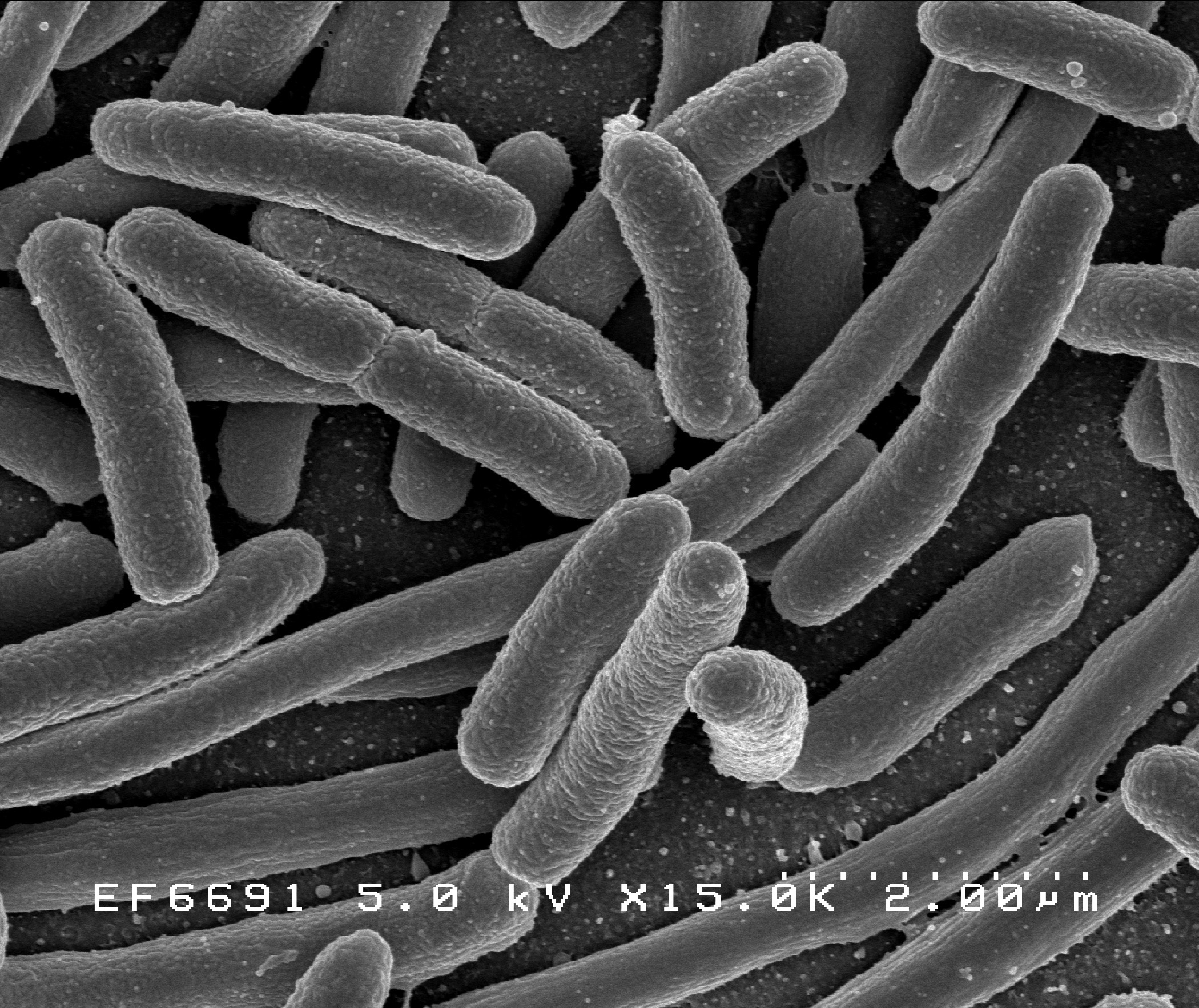
 Scanning electron micrograph of Escherichia coli, one of the many bacterial species found in the human gut.
Image Credit:
NIAID, via Wikimedia Commons
Scanning electron micrograph of Escherichia coli, one of the many bacterial species found in the human gut.
Image Credit:
NIAID, via Wikimedia Commons
Ancient Human Migrations Left a Hidden Trail in the Gut Microbiome
A new genetic study suggests that some of the microorganisms living in the human gut today may have travelled with our ancestors during prehistoric migrations, preserving a biological record of movements that began tens of thousands of years ago.
Researchers compared the gut microbiomes of the Tsimane, an Indigenous forager-horticulturalist population in the Bolivian Amazon, with those of the Hadza hunter-gatherers of Tanzania. Although the ancestors of these populations have been geographically separated for many thousands of years, their microbiomes share 1,231 microbial species. Remarkably, many of those organisms are now rare or entirely absent among people living in industrialized societies. The overlap alone couldn’t establish an ancient connection. Microbes can spread between people, move through environments and exchange genetic material, so identical species found on two continents might reflect relatively recent transmission rather than deep shared history. The researchers therefore looked beyond the species level and compared genetic differences among individual microbial strains.
The pattern was striking. Of the species identified in the Tsimane microbiome, 87.4% were also found among the Hadza, while about 60%—848 species—were rare or missing in industrialized populations. Genetic analysis suggested that many of these shared microorganisms descended from populations that existed long before the ancestors of the Tsimane reached the Americas.
To test whether the microbes had continued moving between the two populations more recently, the team analysed 636 shared species for signs of close genetic relationships. Most showed very little evidence of recent strain exchange. In fact, 545 of the 636 species—about 86%—showed no recent strain sharing between the Hadza and Tsimane under the study’s criteria, even though closely related strains remained common within each population.
That separation appears to reach deep into prehistory. One analysis estimated the median onset of genetic isolation between the Hadza and Tsimane microbial populations at about 17,090 years ago, while additional modelling of selected species produced dates broadly consistent with major periods of prehistoric human dispersal. Taken together, the results suggest that many gut microbes travelled alongside human populations as people moved out of Africa and eventually into the Americas.
The finding adds a new kind of evidence to the study of ancient migration. Archaeologists usually reconstruct prehistoric movement through artifacts, settlement patterns, human remains and ancient DNA. Gut bacteria offer something different: living descendants of microorganisms that may have accompanied humans across generations, continents and dramatic changes in environment.
Not every microbial species followed the same history. Some organisms showed signs of much more recent movement between populations and are also common in industrialized societies, suggesting that modern travel and contact have redistributed certain strains widely. Others remain common around the world but retain strong genetic differences between the Hadza and Tsimane, preserving a much older pattern of separation.
The study also highlights how industrialization may be reshaping this ancient biological inheritance. Many of the microbes showing evidence of long-term association with humans belong to groups that have declined sharply in industrialized populations. Earlier work has linked the disappearance of some of these microorganisms with changes in diet, sanitation, medication use and other features of modern lifestyles, but the new research does not establish that losing individual species directly causes disease. The consequences for human health remain uncertain.
There are other cautions. The research examines contemporary populations rather than ancient individuals, and estimates of microbial divergence depend on mutation rates and complex models of bacterial recombination. Only 636 of the 1,231 shared species had enough genomic data for the main population-genetic analyses, while the sample sizes themselves were determined by available cohorts rather than a formal power calculation. Even with those limitations, the results suggest that the human microbiome carries a surprisingly deep history. Some of the organisms disappearing from modern populations may not be recent companions at all. They may be survivors of journeys humans began in prehistory.
Published on: 09-10-2026
Edited by: Abdulmnam Samakie
Source: Nature