- Archaeological News
-
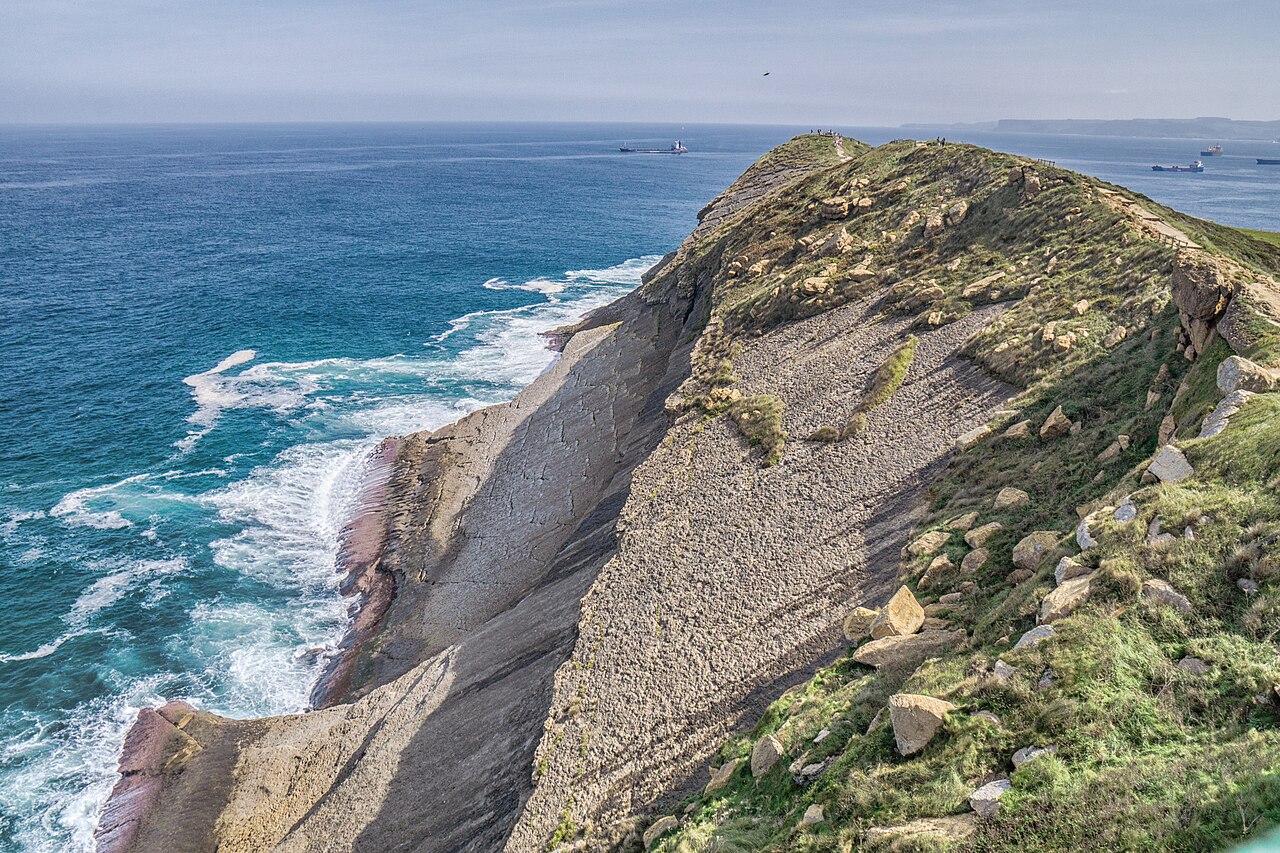
 Coastal landscape at Cabo Mayor, Santander, showing steep slopes shaped by erosion.
Image Credit:
Graeme Churchard, CC BY 2.0, via Wikimedia Commons
Coastal landscape at Cabo Mayor, Santander, showing steep slopes shaped by erosion.
Image Credit:
Graeme Churchard, CC BY 2.0, via Wikimedia Commons
Human Impact on Landscapes Began Long Before the Industrial Age
A new archaeological overview argues that prehistoric landscapes should not be understood simply as natural settings in which human history unfolded. Instead, they were continuously shaped by interactions between people, erosion, climate and land use, often leaving environmental effects that lasted for centuries or even millennia.
The article brings together research from several regions to examine how prehistoric communities both responded to changing environments and actively transformed them. It emphasizes that erosion is not merely a destructive process that removes archaeological evidence, but also an important link between human activity, landscape change and long-term environmental history.
This perspective shifts attention away from viewing ancient people only as passive victims of environmental change. Human communities could alter soils, vegetation and patterns of erosion through farming, settlement and resource use, creating environmental conditions inherited by later generations.
One example comes from Contraguda in northern Sardinia. Archaeological research there suggests that prehistoric agricultural and settlement activities contributed to erosion and soil transformation. These changes persisted after the communities responsible for them had disappeared, leaving long-lasting effects embedded in the landscape.
Evidence from northern Malawi reveals a similar pattern on a broader ecological scale.
A multiproxy environmental study identified a close relationship between the expansion of agricultural communities, increased erosion and ecological transformation around 3,000 years ago. According to the researchers, the changes exceeded what could be explained by natural climatic variation alone and continued to influence the environment for thousands of years.
Such findings add to growing evidence that humans became important agents of landscape and ecological change long before industrialisation.
Research from Cantabrian Spain provides another example. There, archaeological evidence combined with environmental modelling revealed repeated episodes of vegetation loss, erosion and pollution associated with changing systems of production and resource use.
Rather than treating these changes simply according to traditional archaeological periods, researchers examined them through changing patterns of energy use and human-environment interaction. This approach offers another way of comparing long-term environmental transformations across different societies and periods.
The relationship between people and landscapes, however, worked in both directions.
Studies of submerged Neolithic settlements along Israel’s Carmel Coast show how communities responded to rising sea levels and coastal erosion by changing settlement organization, subsistence practices and strategies for dealing with environmental risk. These examples highlight the capacity of prehistoric populations to adapt creatively to rapidly changing coastal environments.
Taken together, the studies suggest that erosion should not be seen only as a force that destroys landscapes or archaeological remains.
It can also preserve traces of past activities, reshape ecological conditions and influence where and how later communities are able to live. In this sense, landscapes are cumulative historical products shaped by repeated interactions between natural processes and human decisions.
This long-term perspective also contributes to debates surrounding the Anthropocene.
Processes often associated with the modern world—including soil degradation, accelerated erosion, ecological transformation and increasing environmental vulnerability—can have much deeper histories. Some began thousands of years ago through the cumulative effects of human land use and environmental change.
The research therefore highlights the importance of geoarchaeology for understanding how environmental legacies develop.
By tracing how human activities and natural processes became intertwined over long periods, archaeologists can examine not only how societies adapted to landscapes but also how they created environmental conditions that influenced later generations.
From this perspective, erosion becomes more than evidence of loss. It is also part of the mechanism through which past human actions are written into landscapes and transmitted through time.
Published on: 22-08-2026
Edited by: Abdulmnam Samakie