- Archaeological News
-
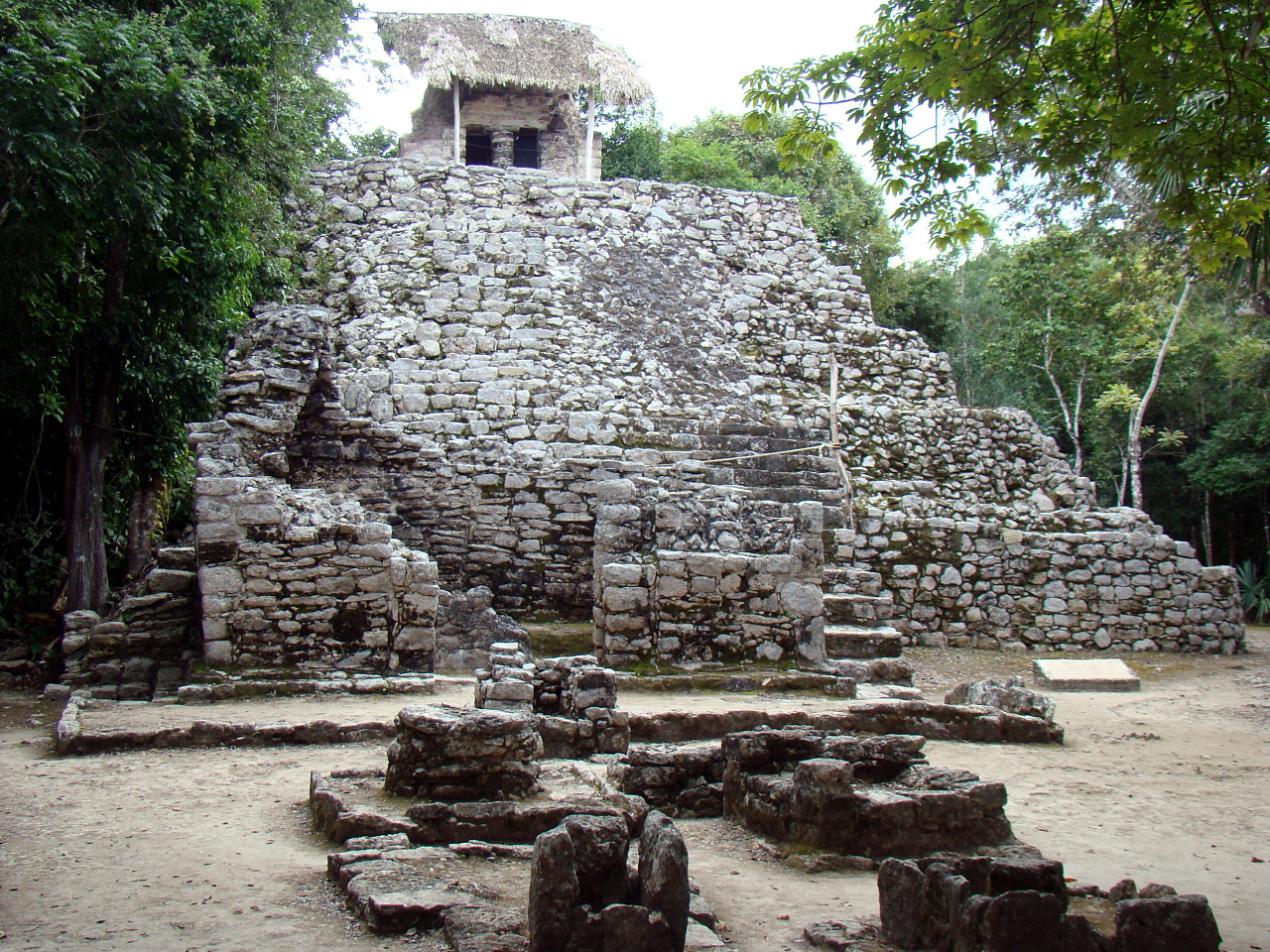
 The archaeological site of Cobá in Quintana Roo, Mexico. Sediment cores from nearby Lago Cobá revealed elevated mercury concentrations during the Classic Maya period.
Image Credit:
O.Mustafin, CC0, via Wikimedia Commons
Toxic Mercury Polluted Maya Lakes for Centuries, Ancient Sediments Reveal
For centuries during the Classic Maya period, two lakes in Mexico’s Yucatán Peninsula accumulated mercury at levels high enough to damage aquatic ecosystems, adding polluted water to the environmental pressures already faced by Maya communities.
A study analyzed sediment cores from Lago Cobá and Cenote Xcach, two water bodies beside ancient Maya settlements. The researchers found that mercury concentrations during the Classic period, roughly 250 to 920 CE, repeatedly exceeded modern sediment-toxicity thresholds. At the same time, biological evidence preserved in the sediments points to major disruption across the lakes’ food webs.
Mercury was not unfamiliar to the ancient Maya. Cinnabar, a mercury sulfide mineral prized for its brilliant red colour, was used as a pigment in burials and on pottery and buildings. Elemental liquid mercury has also been recovered from several Maya sites. Because major natural mercury sources lie outside much of the Maya lowlands, researchers have proposed that these materials entered the region through long-distance exchange.
The new study investigated whether that use left a measurable environmental impact. Researchers collected sediment cores in 2023 from Lago Cobá, next to the major Maya city of Cobá, and from Cenote Xcach, beside a smaller archaeological site. Radiocarbon dates allowed them to reconstruct changes over roughly the past two millennia.
At Cobá, mercury began rising above background levels around 40 CE and reached about 2.3 micrograms per gram between approximately 250 and 300 CE. Concentrations later declined and had returned to background levels by about 520 CE.
The pattern at Xcach was more severe. Researchers identified three episodes of high mercury, including a prolonged interval from about 535 to 820 CE. During this phase, concentrations averaged 8.4 micrograms per gram and reached roughly 18 micrograms per gram around 720 CE.
For comparison, modern freshwater-sediment guidelines identify 1.06 micrograms per gram as a concentration at which harmful biological effects are likely and 2 micrograms per gram as a level associated with severe effects. At Xcach, the latter threshold was exceeded for centuries.
Two nearby reference lakes, Polol and Chichancanab, did not show comparable mercury enrichment. This makes a broad atmospheric source less likely. Instead, the authors argue that mercury or cinnabar imported and used by Maya communities was probably deposited on the surrounding landscape and later washed into the lakes through soil erosion.
The biological record strengthens that interpretation. When mercury reached toxic concentrations, pigments associated with algae, cyanobacteria and purple sulfur bacteria declined sharply. At Lago Cobá, shells of ostracods and freshwater snails disappeared from the sediment during the high-mercury interval. At Xcach, remains of nonbiting midge larvae became less abundant and the community changed dramatically, with one formerly dominant genus nearly disappearing.
Together, these changes indicate disruption at several levels of the aquatic food web rather than a response limited to a single group of organisms. The study therefore concludes that mercury contamination contributed to an aquatic ecosystem collapse that coincided with Maya occupation.
The consequences may also have extended to people. Lago Cobá and other freshwater bodies supplied drinking water and aquatic foods, while fish and shellfish can accumulate mercury in their tissues. The researchers therefore suggest that residents living near contaminated lakes may have experienced chronic exposure through water and food. However, the study did not measure mercury directly in the people who lived at Cobá or Xcach, so the extent of any health effects remains uncertain.
The authors also did not measure methylmercury, the particularly toxic form that can develop in oxygen-poor lake sediments and accumulate through food webs. Its presence is plausible under such conditions, but cannot be demonstrated from these analyses.
The findings add water quality to a growing list of environmental challenges facing Classic Maya societies. Drought, deforestation, soil erosion and declining water availability are already well documented. The new evidence suggests that in some places, water that remained available may itself have become hazardous.
That does not mean mercury caused the wider political transformations often described as the Classic Maya collapse. Instead, the study identifies another local environmental stressor—one created partly through human use of a valued material—that could have placed additional pressure on communities already coping with changing landscapes and climate.
Published on: 10-11-2026
Edited by: Abdulmnam Samakie
Source: Science Advances