- Archaeological News
-
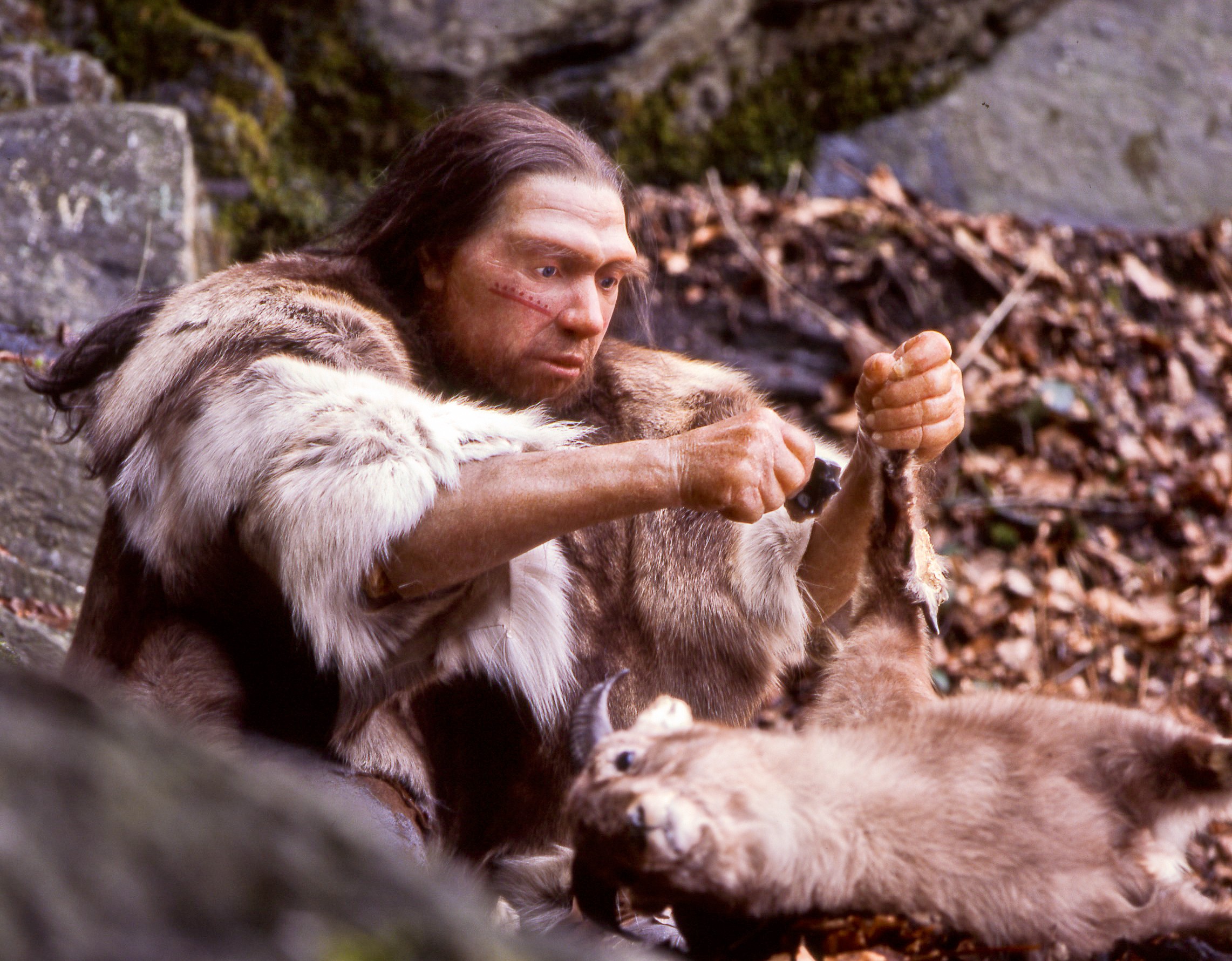
 Reconstruction of a Neanderthal, illustrating life during the Middle Palaeolithic.
Image Credit:
Neanderthal-Museum, CC BY-SA 4.0, via Wikimedia Commons
Reconstruction of a Neanderthal, illustrating life during the Middle Palaeolithic.
Image Credit:
Neanderthal-Museum, CC BY-SA 4.0, via Wikimedia Commons
Ancient Proteins Reveal Hidden Human Remains in Italy’s Grotta Guattari
A new palaeoproteomic study of fragmented bones from Grotta Guattari in central Italy has identified four previously unrecognizable specimens belonging to the genus Homo, while showing how dramatically burial conditions can affect the survival of ancient proteins.
Grotta Guattari, in the Lazio region, is one of Italy’s most important Neanderthal sites. It became famous after the discovery in 1939 of the nearly complete Circeo I Neanderthal skull, followed by additional human remains. More recent excavations, begun in 2019 in a previously unexplored area known as the Antro del Laghetto, uncovered numerous mammal bones, including known Neanderthal remains. Deposits in this part of the cave date to around 66,000–65,000 years ago.
Many of the newly recovered bone fragments were too incomplete to identify by shape alone. Researchers therefore turned to palaeoproteomics, which uses preserved ancient proteins to determine the biological origin of skeletal remains.
The team screened 690 morphologically unidentified bone fragments using two mass-spectrometry approaches. Two hundred were analysed using Zooarchaeology by Mass Spectrometry, or ZooMS, while another 490 were examined using a more detailed proteomic sequencing approach based on liquid chromatography and tandem mass spectrometry.
The results showed that preservation varied sharply depending on where the bones had been deposited.
Fragments recovered from dry areas outside the periodically flooded part of the cave generally retained proteins much better. By contrast, bones from the water-affected Antro del Laghetto showed severe protein degradation, making identification considerably more difficult.
Researchers link this poor preservation to prolonged contact with groundwater and wet sediments. Some specimens were coated with carbonate deposits and manganese oxides, while the proteins themselves showed greater fragmentation and chemical alteration.
The analytical method also made an important difference. One extraction technique failed to produce reliable taxonomic results, while a consecutive acid and ammonium bicarbonate extraction combined with LC-MS/MS produced validated classifications for 142 specimens.
These identifications revealed a diverse Ice Age fauna including bovids, deer, horses, rhinoceroses, bears and other mammals. The wider assemblage is consistent with earlier studies of the cave, which have documented reindeer, ibex, chamois, red and giant deer, wild boar, elephant and large carnivores.
The most significant result, however, was the identification of four fragments assigned to the genus Homo.
One specimen passed the study’s standard quality-control criteria directly, while three others required additional assessment. Multiple lines of proteomic evidence ultimately supported their identification as probable hominin remains. Two further possible specimens were rejected because their signals were considered unreliable.
Importantly, the researchers do not identify the four fragments specifically as Neanderthal.
The reference database used in the analysis currently lacks a Neanderthal proteome, meaning the proteins cannot reliably distinguish Neanderthals from other members of the genus Homo. The findings therefore remain genus-level identifications, despite the strong Neanderthal context of the site.
The study also provides new insight into how the cave’s bone assemblage formed. Many remains show gnawing marks, supporting previous interpretations that cave hyenas played a major role in accumulating bones inside Grotta Guattari. Some human remains were also affected by carnivore activity.
More broadly, the research demonstrates the growing value of ancient protein analysis for archaeological material that cannot be identified visually.
Even in a highly degraded assemblage tens of thousands of years old, palaeoproteomics was able to recover biological information from fragments that otherwise offered few clues. At the same time, the results show that preservation can vary dramatically within a single archaeological site, making analytical methods tailored to local burial conditions essential for recovering evidence of ancient humans and animals.
Published on: 28-08-2026
Edited by: Abdulmnam Samakie