- Archaeological News
-
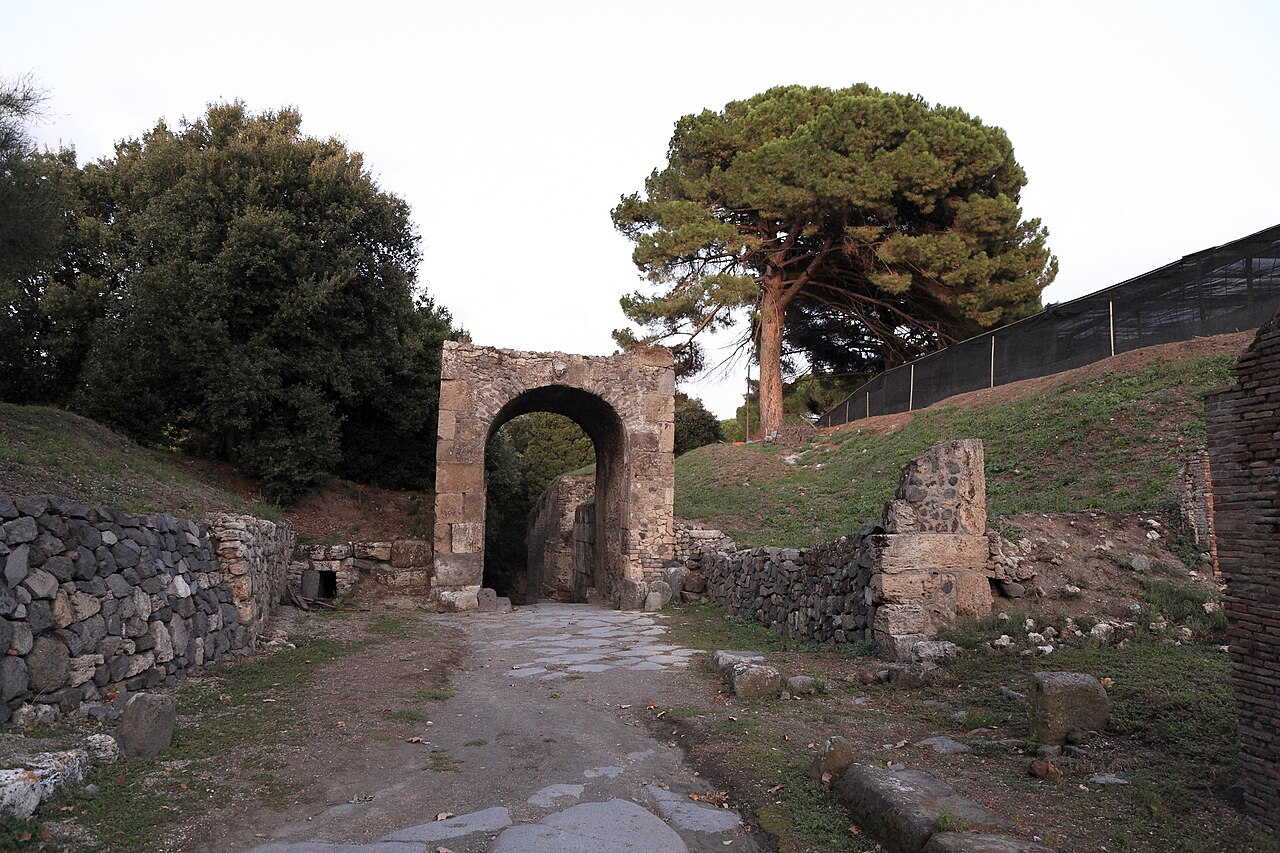
 Porta Nola at Pompeii, viewed from inside the ancient city. The necropolis outside this gate yielded funerary beds decorated with carved bone plaques bearing military imagery.
Image Credit:
Falk2, CC BY-SA 4.0, via Wikimedia Commons
Shields, Helmets and Gold: The Military Art of Pompeii’s Funerary Beds
More than 2,000 carved bone fragments from Pompeii are revealing how military imagery decorated luxurious funerary beds used in Roman cremation rituals. A new study links material from the Porta Nola necropolis with similar pieces found inside the Casa del Fabbro, suggesting connections between funerary consumption and specialized bone-working activity within the city.
The researchers examine fragments decorated with helmeted heads, shields, garlands and other military motifs. The objects came mainly from cremation burials around the tomb of Marcus Obellius Firmus at Porta Nola and from rooms in the Casa del Fabbro.
In Roman funerals, these beds were not simply places for the dead to lie. They were specially constructed pieces of furniture used to display and transport the deceased before being placed on the funeral pyre. Their wooden frames could be covered with finely worked bone plaques, many of which survived only as burned and fragmented pieces after cremation.
The Porta Nola material includes fragments from the tomb of Marcus Obellius Firmus, nearby cremation graves and ritual pits, as well as an area containing burials of Praetorian soldiers. Hundreds of worked bone fragments were recovered from individual deposits, including about 450 pieces associated with the tomb of Obellius Firmus and hundreds more from nearby cremation contexts.
Among the most distinctive decorations are small helmeted heads. Some wear idealized helmets resembling Attic types known from Hellenistic and Roman art and associated with senior officers. Other pieces show larger military profiles carved into medallions, possibly intended as repeated ornaments along a bed frame.
Shield-shaped plaques form another major group. The researchers classify them into several forms, including hexagonal, rectangular and crescent-shaped pelta shields. Incised lines imitate bindings, woven materials, animal skin and fringed edges. Some of these forms recall weapons associated with Macedonian and other Hellenistic armies, although the authors caution that the images may be idealized rather than accurate representations of real military equipment.
Other pieces strengthen the military and triumphal theme. Fragments of vegetal garlands were found at the tomb of Obellius Firmus, one preserving traces of gold leaf. A small terracotta head from Tomb A depicts a soldier wearing a Boeotian-style helmet associated with Hellenistic and later Roman cavalry.
The same visual language also appears inside the Casa del Fabbro. After the earthquake of 62 CE, the house appears to have ceased functioning primarily as a residence and was probably used partly as a workshop or storage space. Excavators found concentrations of worked bone plaques there, including helmeted heads and shields made with techniques closely resembling those from Porta Nola.
Some plaques even preserve traces of red pigment and green staining left by oxidized bronze attachment nails. Similar gouge marks and scale-like decoration on pieces from both locations suggest that craftsmen used comparable production methods.
The researchers stop short of proving that the Casa del Fabbro produced the funerary beds found at Porta Nola. The evidence is not sufficient to establish a direct workshop-to-tomb connection. However, the combination of matching military imagery and distinctive manufacturing techniques points to a meaningful relationship between luxury furniture production or storage inside Pompeii and funerary use outside the city.
The imagery itself may also have carried more than one meaning. Military trophies and triumph were popular themes from the Augustan period onward. On funerary furniture, such imagery may have symbolized victory over death while also expressing the social position, prestige or military associations of the deceased. The scarcity of surviving decorated furniture, however, makes it difficult to determine how exclusively such motifs belonged to funerary contexts.
The study places the Porta Nola material broadly between the Tiberian and Neronian periods, while the Casa del Fabbro assemblage remained in the house between the earthquake of 62 CE and the eruption of Vesuvius in 79 CE. Together, the finds show how carefully crafted furniture could turn a Roman funeral into a powerful display of status, memory and military imagery.
Published on: 19-11-2026
Edited by: Abdulmnam Samakie
Source: Journal of Roman Archaeology