- Archaeological News
-
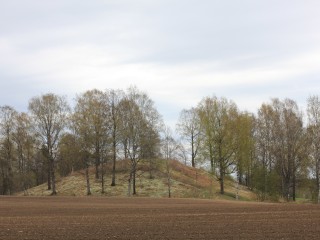 Image Credit:
Øyvind Holmstad, CC BY-SA 3.0, via Wikimedia Commons
Image Credit:
Øyvind Holmstad, CC BY-SA 3.0, via Wikimedia Commons
Largest Mound in Scandinavia Linked to a 6th Century Catastrophe
A new archaeological study has proposed a striking reinterpretation of Raknehaugen, the largest prehistoric mound in Scandinavia, suggesting that the monumental structure was not built as a royal tomb but rather as part of a collective ritual response to a catastrophic natural disaster during the sixth century AD.
Located about 40 kilometers north of Oslo, Raknehaugen measures approximately 95 meters in diameter and 13 meters in height, making it the largest prehistoric monument of its kind in the region. For more than a century, archaeologists believed the massive mound marked the burial place of a powerful Iron Age chieftain. However, a comprehensive reassessment of archaeological evidence has revealed that no burial chamber or human remains exist within the mound, challenging the long-standing interpretation of the monument as a tomb.
Excavations conducted since the nineteenth century repeatedly failed to uncover any royal burial or funerary objects. Instead, researchers documented an unusually complex internal structure composed of multiple layers of soil, turf, clay, and sand carefully separated from one another. Within these layers were three massive deposits of timber, including thousands of logs and branches arranged in deliberate structural formations and sealed beneath thick layers of earth.
Scientific analysis of the wood provided an important clue. Tree-ring studies revealed that most of the pines used in the mound were felled in the same year, indicating a large and coordinated effort to gather materials in a single season. The trees themselves were generally young and of poor quality, many apparently uprooted or broken rather than carefully cut.
Researchers also identified an unusual growth pattern in the trees: a nearly invisible growth ring formed about fifteen years before the trees were felled. This ring corresponds to the climatic crisis of AD 536, when a major volcanic eruption triggered global cooling, crop failures, and widespread environmental disruption during the period known as the Late Antique Little Ice Age.
Using high-resolution LiDAR mapping, archaeologists also identified a large landslide scar near the mound, covering roughly one square kilometer of terrain. The location corresponds closely with the area from which the timber appears to have been collected. The landslide likely resulted from unstable marine clays combined with increased rainfall and environmental stress during the climate crisis.
According to the new interpretation, the mound may have been constructed as a communal ritual intended to restore balance after the disaster. The fallen trees and soil from the devastated landscape were gathered and carefully layered within the mound, symbolically sealing the destructive forces that had reshaped the environment.
The monument’s scale suggests that hundreds of people may have participated in the project, transporting and arranging as many as 25,000 logs and branches. Rather than representing the power of a single ruler, the construction may instead reflect a community response to crisis, intended to appease natural or supernatural forces and restore cosmic order.
This reinterpretation challenges long-standing assumptions about large prehistoric mounds in Scandinavia. Instead of viewing them solely as elite burial monuments, the new research highlights the possibility that some may have served as collective ritual constructions embedded within sacred landscapes shaped by environmental catastrophe.
Published on: 13-03-2026
Edited by: Abdulmnam Samakie
Source: LBV Magazine