- Archaeological News
-
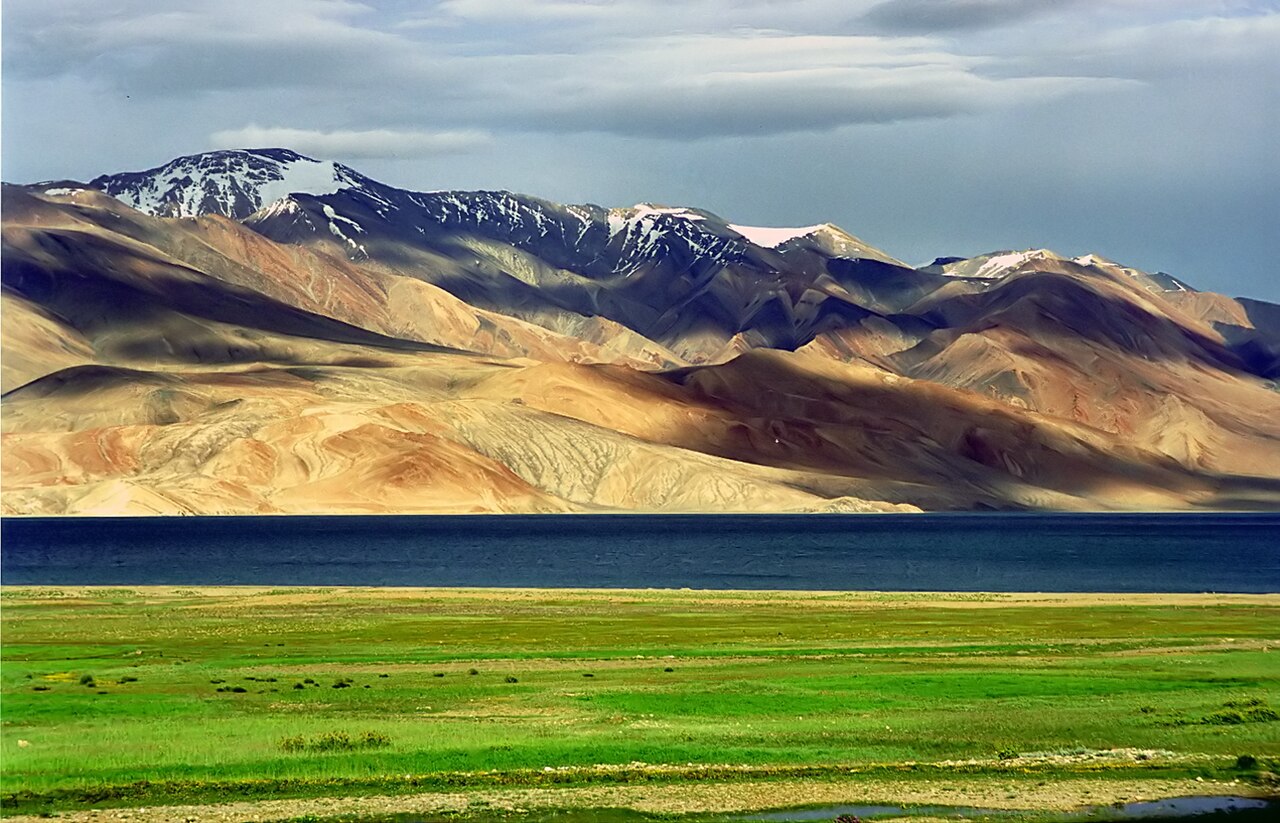
 Image Credit:
Jochen Westermann, CC BY-SA 2.0, via Wikimedia Commons
Image Credit:
Jochen Westermann, CC BY-SA 2.0, via Wikimedia Commons
Cooling Reshaped Farming on the Tibetan Plateau
A new climate and archaeological study suggests that long-term cooling on the Tibetan Plateau helped transform local agriculture from millet-based farming to systems dominated by wheat and barley.
Researchers reconstructed approximately 6,000 years of warm-season temperature change using sediment from Saiyong Co, a high-altitude lake in the central Tibetan Plateau. They combined this new record with eight previously published temperature reconstructions and compared the results with hundreds of archaeological radiocarbon dates.
The combined evidence shows a broad cooling trend across the plateau during the middle and late Holocene. Early agricultural communities, particularly between about 5,500 and 3,600 years ago, relied mainly on broomcorn and foxtail millet. These crops generally perform better under warmer conditions.
Between approximately 3,600 and 3,000 years ago, farming strategies became more diverse, with millet cultivated alongside wheat and barley. Over time, the colder and more frost-resistant wheat and barley became dominant, allowing agriculture to expand into higher and cooler parts of the plateau.
The researchers argue that falling average temperatures were important, but the speed of climatic change may have had an even greater influence on farming stability.
Periods of rapid temperature change corresponded with reduced crop activity and fewer occupied archaeological sites. One of the clearest episodes occurred between about 3,840 and 3,520 years ago, when accelerated cooling was accompanied by drier conditions. Agricultural productivity appears to have declined during this interval, possibly because communities and crops had insufficient time to adjust.
By contrast, periods of relatively stable climate were often associated with agricultural recovery or expansion. After temperatures reached a low point around 3,520 years ago, a gradual warming phase continued until approximately 2,600 years ago. During this more stable interval, evidence for both millet and wheat-barley cultivation increased.
Communities may have responded by diversifying their farming practices. Millet could be grown in warmer, lower basins, while wheat and barley were cultivated at higher elevations. The growing importance of livestock and mobile agro-pastoral lifestyles may also have helped communities manage environmental risk.
The study connects later periods of climatic stability with the emergence and growth of major political societies on the Tibetan Plateau. Relatively warm and stable conditions between about 2,500 and 1,520 years ago coincided with the development of Zhangzhung, one of the region’s earliest political entities.
Another period of climatic stability between approximately 1,330 and 1,100 years ago accompanied the rise of the Tibetan Empire. The researchers caution, however, that climate alone did not create or destroy these societies. Political institutions, trade, population movement and technological exchange also shaped their development.
The findings emphasize that ancient farming systems were affected not only by whether temperatures rose or fell, but also by how quickly conditions changed. Sudden climatic shifts may have disrupted growing seasons, water availability and crop productivity before communities could adopt new strategies.
This conclusion may have modern relevance. The Tibetan Plateau is currently warming rapidly, while millions of people continue to depend on agriculture and pastoralism in environmentally sensitive highland regions.
The study suggests that strengthening food security may require diversified crops, flexible settlement and farming systems, and improved preparation for rapid climatic variation. It also raises the possibility that heat-tolerant millet varieties could regain importance if continued warming reduces the suitability of barley and wheat in some areas.
Published on: 28-07-2026
Edited by: Abdulmnam Samakie