- Archaeological News
-
 Image Credit:
Hashesh et al., Frontiers in Environmental Archaeology (2026)
Image Credit:
Hashesh et al., Frontiers in Environmental Archaeology (2026)
Ancient Bones from Dahshur Reveal New Details About Egypt’s Royal Family
A new bioarcheological study reassesses royal skeletal remains from Dahshur, offering fresh insight into health, activity, burial practice, and elite life in Egypt during the late Middle Kingdom.
The remains come from excavations carried out at Dahshur in 1894–1895, near the pyramid complexes of Amenemhat II and Amenemhat III. The study focuses on six individuals: King Hor, Princess Noub-Hotep, Princess Ita, Princess Khenmet, Princess Itaweret, and an additional anonymous female who may be Princess Sathathormeryt.
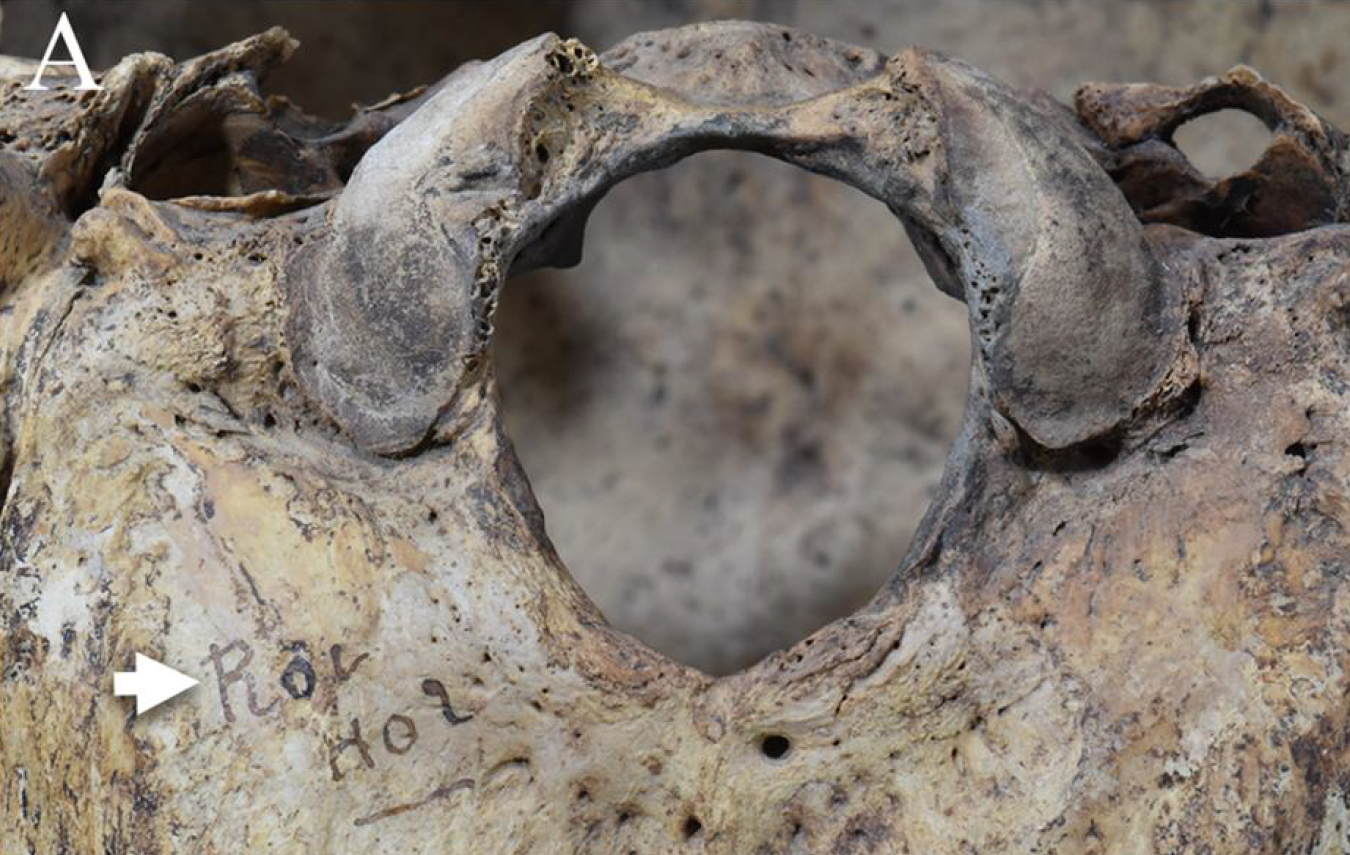
Although these burials were discovered more than a century ago, many of the skeletal remains had received little modern bioarchaeological study. Some bones still preserve nineteenth-century handwritten identifications, labels, and wrapping materials, linking them to the original excavation history. The remains are now curated in the Egyptian Museum in Cairo.
The researchers used an integrated approach combining osteological examination, radiological imaging, and Fourier transform infrared spectroscopy. This allowed them to reassess biological profiles, paleopathological conditions, non-metric traits, activity markers, and traces of embalming materials.
The study found that the skeletons were generally in fair condition, although most individuals are missing their skulls. The only surviving skull belongs to King Hor, though his maxilla and mandible are absent. This limits some aspects of identification and health reconstruction, but the preserved postcranial remains still provide important evidence.
The analysis refined the biological profiles of the individuals. Princess Ita was identified as a young adult female, probably between 20 and 34 years old. Princess Khenmet was a middle adult female, around 35–45 years old. Princess Itaweret was also a young adult female, while Princess Noub-Hotep and King Hor were both middle adults, around 40–44 years old.
The bones reveal that members of the royal family experienced physical stress and health problems despite their elite status. Several individuals showed degenerative joint changes, spinal lesions, healed fractures, abnormal bone formation, and possible signs of systemic physiological stress.
King Hor showed evidence of healed cribra orbitalia and porous lesions in the frontal region, which may reflect physiological stress during life. He also had healed cranial scars, asymmetry in parts of the skull and postcranial skeleton, and a healed fracture in the first metacarpal. These findings suggest that his body carried traces of injury, stress, and long-term physical activity.
The princesses also showed varied skeletal changes. Princess Khenmet had signs of osteoarthritic pitting, spinal Schmorl’s nodes, possible osteoporosis, and bone changes that may reflect healed inflammation or nonspecific infection. Princess Itaweret showed healed rib fractures, healed stress fractures in the foot, degenerative changes in the knees, and abnormal bone formation in the femora.
One of the most interesting aspects of the study concerns activity patterns. Several royal women were buried with objects traditionally associated with male status or martial identity, including weapons and regalia. The skeletal evidence suggests that these objects may not have been purely symbolic.
Muscle attachment markers in the upper limbs indicate repeated, high-intensity actions. In Princesses Khenmet and Itaweret, some markers are consistent with repeated bow-drawing. Princess Ita showed strong muscle attachment areas related to gripping, which the researchers associate with the habitual handling of weapons such as daggers or maces. Princess Noub-Hotep provides a particularly notable case, as her skeletal changes align with the presence of arrows in her burial.
This does not mean that the royal women were necessarily warriors in a modern sense. Rather, the evidence suggests that some may have participated in skilled martial, ceremonial, or elite physical practices involving weapons. The study therefore complicates older assumptions that weapons in royal female burials were only symbolic.
The reassessment also highlights possible familial relationships. Non-metric skeletal traits and the deliberate arrangement of the burials suggest biological and ritual connections among the royal individuals. The placement of King Hor and Princess Noub-Hotep near the Amenemhat III pyramid complex also reflects continuity in royal funerary practice between the late Twelfth and early Thirteenth Dynasties.
Chemical analysis of black resinous materials on the bones provided additional information about mummification practices. The study suggests that embalming in this context was relatively conservative and non-invasive, with resinous substances applied externally to the body rather than through more invasive techniques. This is consistent with earlier observations that the Dahshur mummified remains were poorly preserved compared with later Theban mummies.
Overall, the study shows the value of returning to old museum collections with modern bioarchaeological methods. The Dahshur remains are not only royal relics; they are biological records of lived experience. Their bones preserve evidence of health, activity, injury, social identity, and funerary treatment.
By combining skeletal analysis with archaeological and historical context, the research offers a more human picture of the Middle Kingdom royal family. It shows that even Egypt’s elites experienced physical strain, illness, trauma, and embodied roles that were more complex than burial objects alone might suggest.
Published on: 19-07-2026
Edited by: Abdulmnam Samakie