- Archaeological News
-
 Image Credit:
Hayden Soloviev, CC BY 4.0, via Wikimedia Commons
Image Credit:
Hayden Soloviev, CC BY 4.0, via Wikimedia Commons
Ancient Cattle Teeth Reveal Europe’s Earliest Livestock Journeys
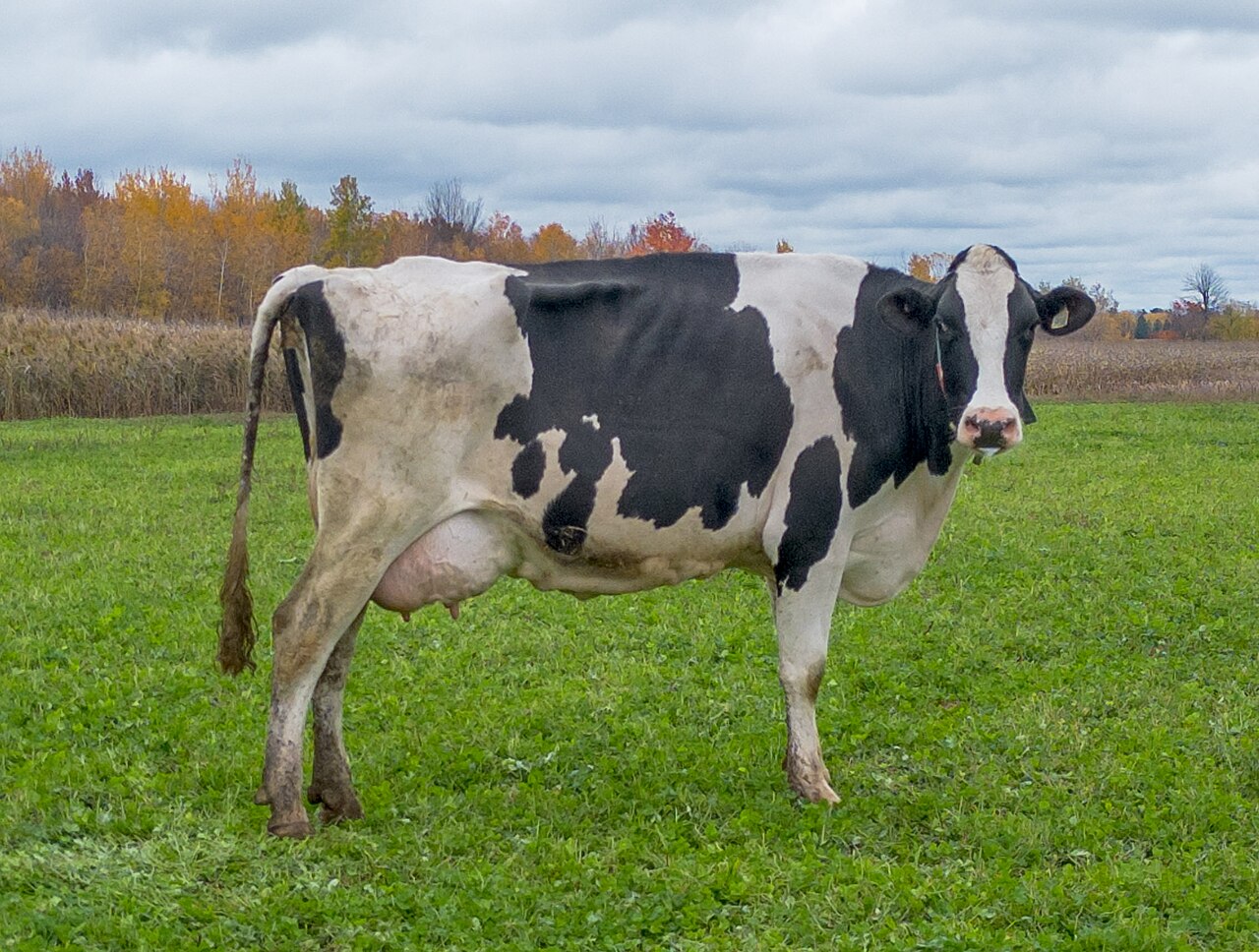
Isotope analysis of animal teeth from Early Neolithic sites in the Netherlands has uncovered the earliest known evidence of livestock mobility in northern Europe, showing that cattle and pigs were being moved between different regions more than 6,000 years ago. The findings offer a new view of how some of the first farming communities north of the main Central European agricultural zone managed their animals and maintained connections with neighbouring groups.
The evidence comes from the Swifterbant S3 and S4 sites in the Dutch wetlands, occupied between about 4240 and 4050 BC. Communities associated with the Swifterbant culture combined crop cultivation and livestock keeping with hunting, fishing and gathering. The cattle from these sites represent the earliest known domestic cattle in northern Europe, making them especially important for understanding how farming became established in the region.
Because well-preserved human remains from this period are scarce, researchers turned to livestock as an indirect way of tracing movement. They analysed strontium, oxygen and carbon isotopes preserved in the tooth enamel of cattle, sheep and pigs. Strontium isotope values vary according to local geology and can therefore help indicate where an animal spent part of its life. By taking samples from different points along cattle and sheep teeth, the analysis could also detect changes that occurred while the teeth were forming.
The results identified five cattle and one pig whose strontium values were incompatible with the local Swifterbant range, indicating that they had originated elsewhere. No non-local sheep were identified. Four of the cattle also showed substantial changes in strontium values within individual teeth, suggesting that they crossed different geological areas during their early lives. One animal appears to have moved twice between roughly two and twelve months of age.
The isotope evidence also revealed a close relationship between mobility and feeding practices. Most livestock associated with open floodplain grazing had values compatible with the local area. In contrast, four of five tested cattle previously associated with a forest-based dietary pattern were clearly non-local. This suggests that the Swifterbant herds were not managed as a single uniform group. Some animals were raised locally on open, frequently flooded meadows, while others arrived from areas with more wooded environments or were managed using forest vegetation as fodder.
Exactly where the imported animals came from remains uncertain. Some isotope values are compatible with the Veluwe region, around 40 kilometres from Swifterbant, where Pleistocene sandy soils and moraines produce suitable strontium signatures. Similar values also occur farther away, including near the modern Dutch-German border and in southern parts of the Netherlands. The German Rhineland is another possible source because comparable isotope signatures occur there and river networks could have provided routes for movement and contact. The differing values among the animals nevertheless indicate that they did not all come from one place.
The findings suggest that livestock were already embedded in broad interaction networks at the beginning of farming in the Dutch wetlands. Moving animals over considerable distances would also have required some movement of people, whether through visits, exchange, herd transfers or other forms of contact. The evidence therefore adds another dimension to the spread of agriculture: farming knowledge may have circulated not only through crops, tools and people, but also through the movement and management of animals.
Cattle were still a relatively small part of the Swifterbant animal economy at this stage, representing only a limited share of the faunal remains compared with pigs. Some cattle, however, survived well beyond the age expected for maximum meat production, and there is no evidence for dairying at this time. This raises the possibility that cattle also carried social or symbolic value in addition to their practical uses.
The isotope data cannot determine whether the movements were seasonal or occasional, nor can they identify the precise origins of every animal. Even so, the evidence demonstrates that Early Neolithic livestock management in northern Europe was already more mobile and complex than a simple model of permanently settled farmers and locally raised herds would suggest.
Published on: 06-09-2026
Edited by: Abdulmnam Samakie
Source: Scientific Reports