- Archaeological News
-
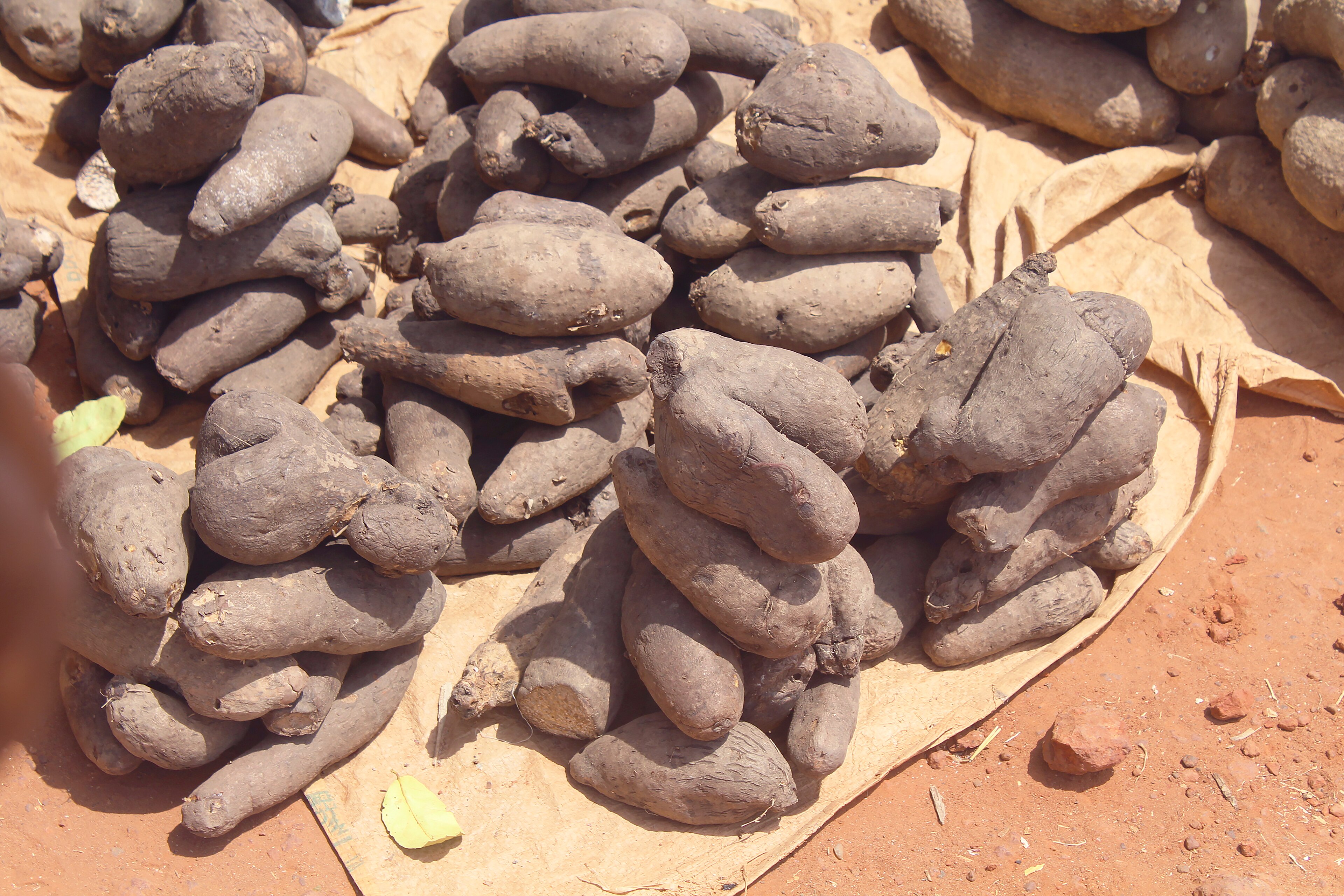
 Yam tubers, an important vegetatively propagated crop in tropical regions.
Image Credit:
Kambai Akau, CC BY-SA 4.0, via Wikimedia Commons
Yam tubers, an important vegetatively propagated crop in tropical regions.
Image Credit:
Kambai Akau, CC BY-SA 4.0, via Wikimedia Commons
Rethinking Plant Domestication Beyond Wheat, Rice and Maize
A new archaeological perspective argues that traditional accounts of plant domestication have often presented an overly simple and linear story, focusing on a small number of major crops while overlooking the wider diversity of plants—and the communities that cultivated them—throughout the past.
The study examines how archaeologists reconstruct the origins of agriculture and suggests that domestication is often treated as a process leading directly from wild plants to the major commercial crops familiar today. This approach tends to emphasize visible changes in plant form or genetics while pushing many wild relatives, local cultivars and intermediate forms into the background.
Historically, research has concentrated heavily on cereals such as wheat, maize and rice. These crops are important to modern global diets and also preserve relatively well in the archaeological record, making traits linked to domestication easier to identify.
Other crops, particularly those propagated vegetatively in tropical regions, are much harder to trace. Roots, tubers, bananas and sugarcane often leave fewer easily recognizable remains, and archaeologists must rely on techniques such as phytolith, starch and plant-tissue analysis. These methods do not yet provide a straightforward way to distinguish wild from domesticated forms in many cases.
Yet many such plants have played major roles in human subsistence. Sugarcane, bananas, potatoes, cassava, sweet potatoes and yams are among the world’s most important crops today, but their histories have received less archaeological attention than those of cereals.
The researchers argue that this imbalance can distort our understanding of early agriculture by marginalizing tropical regions and the societies that developed distinctive ways of managing plants.
Instead of viewing domestication as a single moment when a plant crossed from “wild” to “domestic,” the study proposes treating it as one stage within a much longer relationship between people and plants.
Human communities may exploit, protect, transplant, replant and gradually cultivate plants for thousands—or even tens of thousands—of years before traits conventionally regarded as signs of domestication become established. In this view, the boundary between wild and domestic can be fluid rather than absolute.
Yams provide one example. In parts of Africa, wild or feral yams can be transplanted into cultivated plots, where farmers select desirable characteristics. Plants may later escape cultivation and become difficult to distinguish from genuinely wild populations.
This produces complex geographical and genetic mosaics rather than a simple progression from one wild ancestor to one domesticated crop. Such diversity is increasingly threatened as historic local varieties are replaced by commercial cultivars.
Sugarcane offers another illustration. Modern plantation sugarcane ultimately traces part of its ancestry to wild Saccharum robustum in and around New Guinea. But its history involved numerous stages of exploitation, transplantation, selection, cultivation and hybridization.
Wild cane was used not only as food but also for construction, medicine and boundary markers. Some forms were transplanted while still essentially wild, while others developed into sugar-rich or vegetable varieties. Later movements into Southeast Asia introduced additional hybridization with other cane grasses.
The researchers argue that focusing only on the lineage that eventually produced modern sugarcane makes this history appear much more linear than it actually was.
Looking from the past forward reveals many wild plants, cultivated wild forms and local varieties existing at the same time. Some contributed to modern crops, while others remained locally important or disappeared. The study therefore calls for a broader archaeological narrative that gives greater attention to crop diversity, local knowledge and long-term human-plant relationships.
Such an approach could improve understanding not only of ancient agriculture but also of modern agrobiodiversity. By recovering the histories of neglected crops and local varieties, archaeology may help preserve knowledge of plant diversity that remains important for food security, crop improvement and cultural heritage today.
Published on: 16-08-2026
Edited by: Abdulmnam Samakie