- Archaeological News
-
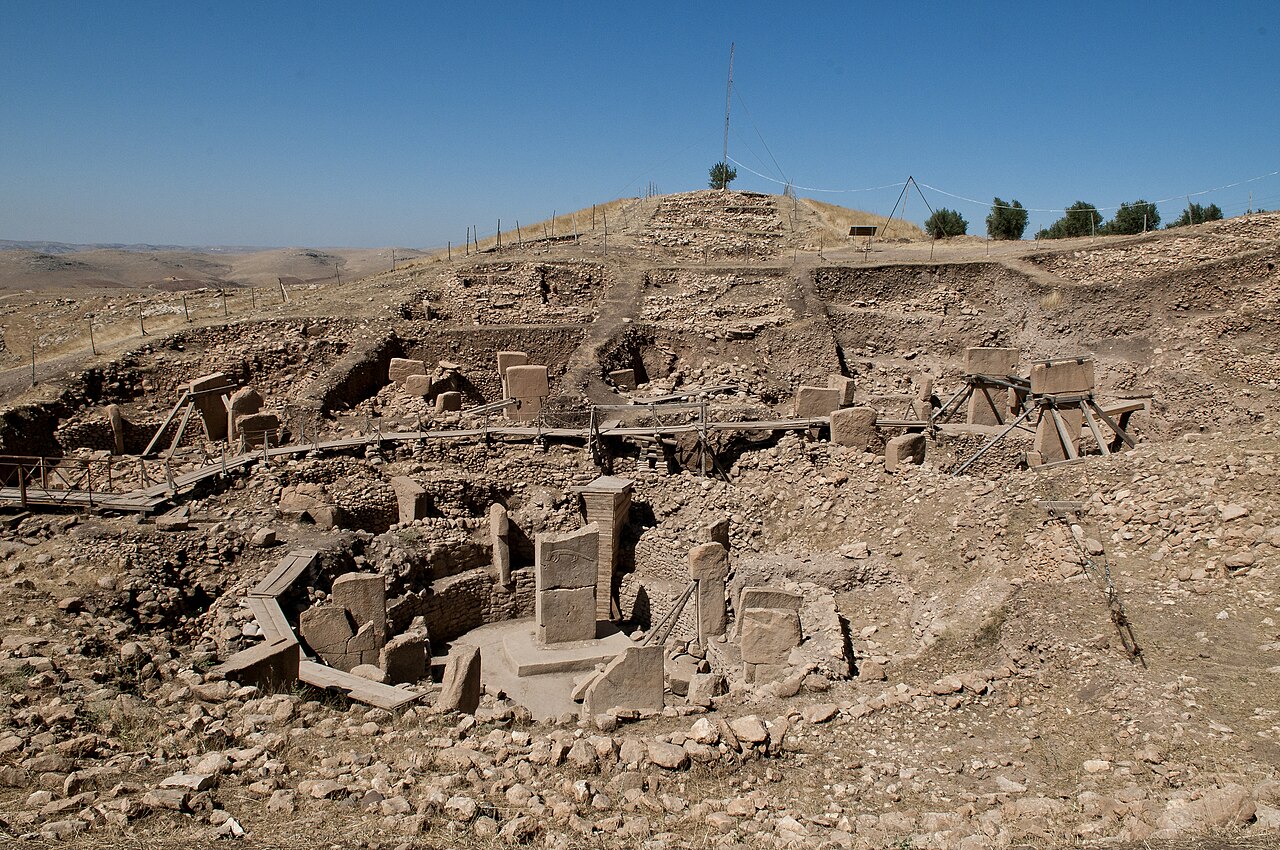
 General view of the excavated Neolithic structures and T-shaped stone pillars at Göbeklitepe in southeastern Türkiye.
Image Credit:
Teomancimit, CC BY-SA 3.0, via Wikimedia Commons
Buried Beneath the Floors: Göbeklitepe’s First Intact Graves Explain Scattered Human Bones
The discovery of the first two intact burials at Göbeklitepe in southeastern Türkiye is providing new insight into how people treated their dead at one of the most important Early Neolithic sites in Southwest Asia. Dating to the Pre-Pottery Neolithic B period, around 8700–8000 BC, the burials also offer a possible explanation for the hundreds of fragmented human bones that have long been found scattered through the fills of the site’s monumental buildings.
Göbeklitepe is best known for its massive T-shaped stone pillars, animal reliefs and monumental architecture. For many years, it was interpreted mainly as a ritual centre with little evidence of permanent occupation. More recent excavations, however, have revealed houses and domestic activities throughout the site, leading to a reassessment of that interpretation. The newly studied graves strengthen this picture because both were associated with domestic spaces and placed beneath, or probably beneath, building floors.
One burial, discovered in a rectangular building, contained the remains of at least three people and possibly a fourth. The grave was cut into a plaster floor, but the bodies were no longer in their original positions when excavated. Three skulls had been gathered in one corner, while long bones and other skeletal elements were concentrated elsewhere. The principal remains belonged to an adult woman aged at least 35, a man aged around 20–30 and an adolescent girl aged approximately 11–14.
The arrangement suggests that complete bodies were initially placed in the grave and that older remains were later moved to create room for additional burials. Small bones of the hands and feet remained present, supporting the interpretation that complete bodies or articulated limbs had originally been deposited rather than selected bones alone. The absence of cut marks also argues against deliberate removal of flesh before burial.
The second burial contained a single young adult, probably a woman aged around 20–30. The individual had been placed on the left side in a flexed position, facing east. Most of the skeleton remained close to its original anatomical position, making this an important example of a primary burial at Göbeklitepe. The body rested on a layer of stones in a small space immediately beside one of the monumental buildings.
Both burials displayed extensive damage that occurred after death. Many long bones were fragmented and their ends were missing. Thick calcareous deposits covered parts of the skeletons and sometimes penetrated the bone itself, contributing to cracking and fragmentation. Possible rodent gnawing was also recorded. Crucially, the largely undisturbed individual burial demonstrates that much of this damage could develop naturally inside a grave through soil pressure, mineral accumulation and animal activity rather than deliberate human breaking.
This is particularly important because excavations at Göbeklitepe have recovered 928 separate human bone fragments from fills and sediments across the site. Some show evidence of intentional treatment, including deep incisions on a small number of skull fragments. Many others, however, are simply broken, mixed and widely dispersed without a clear burial context.
The intact graves now provide a plausible explanation for at least part of this scattered material. Buildings on higher areas of the settlement mound may once have contained similar burials beneath their floors. Over time, erosion and slope movement could have disturbed these graves and carried fragmented bones downhill into monumental buildings situated in lower depressions. The close similarity between the damage found in the intact graves and that observed on the scattered bones strongly supports this possibility.
The findings do not mean that every scattered human bone reached the monumental buildings through erosion. Certain skull fragments carry deliberate modifications, and skull-related mortuary practices are known at other Neolithic sites in the wider region. The evidence therefore leaves room for more than one funerary tradition at Göbeklitepe.
The two burials nevertheless change the understanding of death at the site. They show that burial beneath building floors formed part of life at Göbeklitepe and indicate that natural processes after burial played a major role in producing the fragmented human remains that have puzzled archaeologists for years.
Published on: 27-09-2026
Edited by: Abdulmnam Samakie
Source: PLOS One