- Archaeological News
-
 Image Credit:
Public domain, via Wikimedia Commons
Image Credit:
Public domain, via Wikimedia Commons
Ancient Communities Responded to Illness Through Care, Belief, and Social Networks
A new editorial brings together recent bioarcheological research examining how past communities responded to illness, disability, and vulnerability. Rather than focusing only on signs of disease in human remains, the collection considers who received care, how support was organized, and how social status, belief, and community structures influenced health outcomes.
Bioarcheology has traditionally reconstructed past health through evidence of disease, injury, diet, physical stress, and violence. The studies discussed in the editorial extend this approach by examining the social responses surrounding these conditions. They show that health in past societies was shaped not only by biological exposure to disease, but also by access to resources, social belonging, institutional support, and cultural attitudes toward vulnerable individuals.
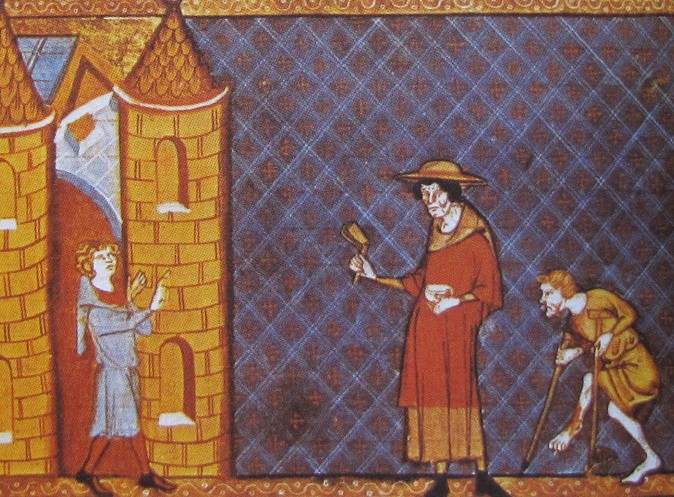
One contribution examines medieval cemeteries in Denmark to explore how people affected by leprosy and tuberculosis were treated in death. The evidence does not support a simple model of universal exclusion. Individuals with leprosy were not consistently given different burials in rural cemeteries, while their absence from some urban cemeteries may reflect the presence of separate leprosy institutions and burial grounds. Tuberculosis also appears not to have resulted in a distinct mortuary response. Instead, social status may have played a stronger role in determining burial treatment and survival.
Another study compares rural and urban populations in the early modern Netherlands. Despite showing higher rates of some pathological conditions, rural individuals appear to have lived longer than those in towns. The findings suggest that local and family-based care networks may sometimes have provided more effective or personalized support than formal urban institutions. At the same time, lower-status people in urban settings experienced shorter life expectancy, highlighting the impact of socioeconomic inequality.
The collection also considers the experiences of castrated individuals in several historical societies. These groups often occupied contradictory positions: they could hold valued roles as guards, officials, or performers, while also facing bodily harm, marginalization, and limited access to medical support. In some cases, they developed their own networks of mutual assistance, burial support, and religious or institutional protection.
Religious and cultural practices also influenced communal health. Research on medieval Christian and Muslim communities in Portugal suggests that differences in dental disease may have reflected not only diet but also culturally and religiously informed hygiene practices. This demonstrates how beliefs surrounding cleanliness and the body could produce measurable effects on health.
Taken together, the studies show that care was not distributed equally or organized in the same way across all past societies. Responses to illness depended on local customs, family and community ties, social hierarchy, wealth, religious values, and institutional structures. Support could come from households, religious foundations, specialist institutions, or networks formed by marginalized groups themselves.
The editorial argues that the study of communal health should move beyond asking who was ill to consider who was cared for, in what way, and for what reasons. By combining skeletal evidence with burial patterns, historical records, spatial analysis, and cultural interpretation, researchers can gain a more detailed understanding of resilience, inequality, and social responsibility in the past.
Overall, the collection presents health as both a biological and social experience. The physical traces preserved in human remains can reveal not only disease and injury, but also the systems of care—or failures of care—that shaped people’s lives and left lasting marks on past communities.
Published on: 02-07-2026
Edited by: Abdulmnam Samakie