- Archaeological News
-
 Image Credit:
LepoRello, CC BY-SA 3.0, via Wikimedia Commons
Image Credit:
LepoRello, CC BY-SA 3.0, via Wikimedia Commons
Ancient Seeds Reveal How Neolithic Farmers Fed a Growing Community
A new archaeobotanical study has examined how Late Neolithic farmers supported one of southeastern Europe’s early population centers. The research focuses on the tell settlement of Berettyóújfalu–Herpály in eastern Hungary, where thousands of charred plant remains were preserved inside burned houses dating to the mid-fifth millennium BCE.
The study analyzed more than 33,000 charred archaeobotanical remains from nine contemporaneous houses. These remains were preserved in a major burnt horizon, giving researchers a rare opportunity to compare stored crops and farming strategies at the household level.
Herpály was located on the Great Hungarian Plain, in a wetland landscape shaped by the Berettyó River. Although the area offered rich natural resources, arable land was limited by marshes, flooding, and poorly drained soils. As settlements grew larger during the Late Neolithic, farmers had to find ways to produce enough food while managing land, labor, and livestock resources.
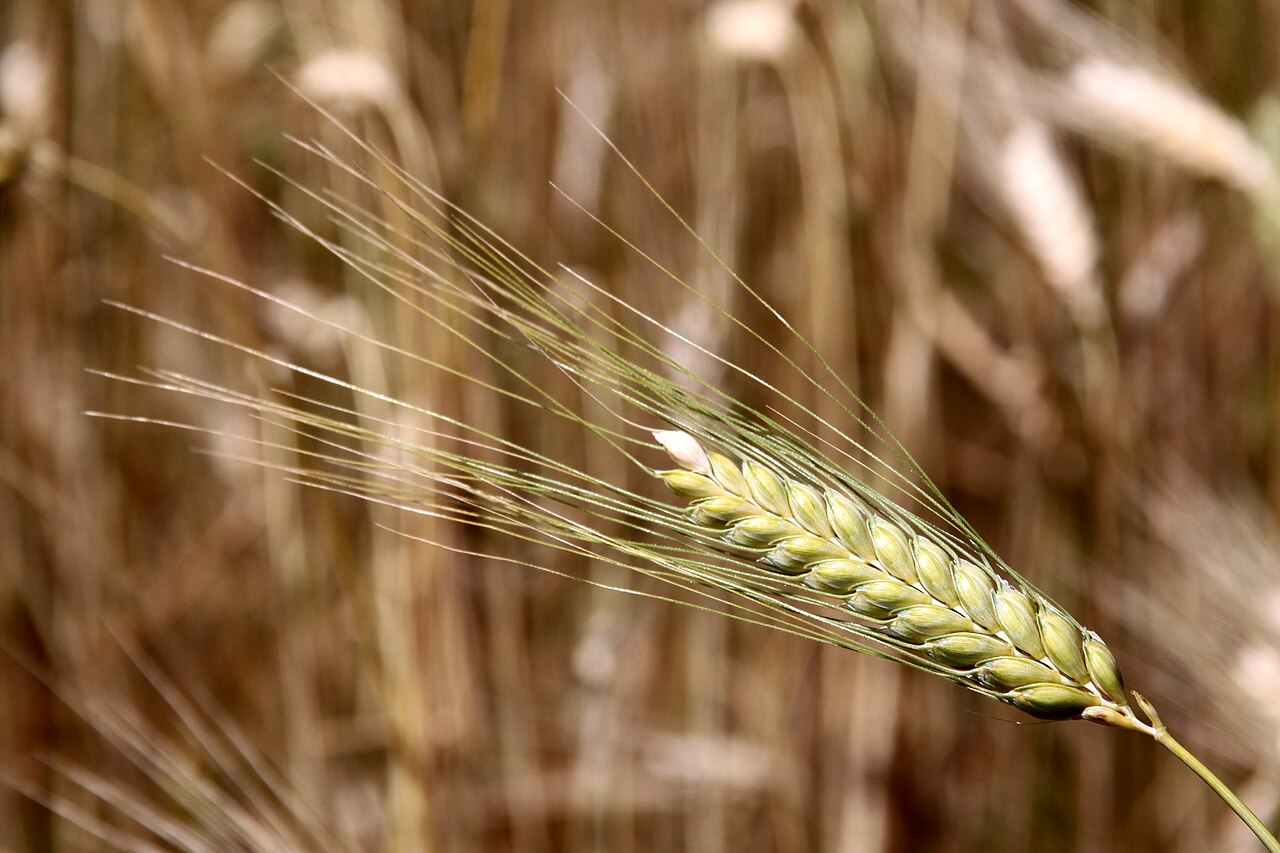
The main crops identified at Herpály were emmer wheat, barley, einkorn wheat, peas, and lentils. Emmer was the most common cereal, followed by barley and einkorn. Most of the plant remains appear to represent cleaned and stored grains, rather than early crop-processing waste.
To reconstruct ancient farming practices, the researchers combined several methods. They studied weed ecology to understand field conditions and labor input, measured cereal grain size, and analyzed carbon and nitrogen isotopes from individual grains. These methods helped identify differences in water availability, soil fertility, manuring, and crop management.
The results show that emmer and einkorn wheats were grown under relatively intensive conditions. Their high nitrogen isotope values point to sustained manuring, suggesting that households had broad access to dung resources. This indicates that livestock manure was likely an important part of crop production and that access to this resource was not strongly restricted to only a few households.
Barley appears to have been managed differently. Its lower nitrogen isotope values and associated weed communities suggest that it was grown under lower-input conditions, possibly in wetter, more distant, or less intensively tended fields. This points to a mixed agricultural system in which wheat received more care, while barley may have been used as a more flexible crop in less ideal areas.
The study also found evidence for mixed cultivation of emmer and einkorn, known as maslin cropping. This practice may have helped households reduce risk in a wetland environment where water levels, soil conditions, and harvest outcomes could vary. Growing two wheat species together could provide more stable results than relying on one crop alone.
Some differences between houses were also visible in seed size and isotope values. These may reflect household-level differences in access to labor, land, or livestock. However, the study found no strong evidence for major inequality in stored crops. Instead, the evidence suggests that cooperation and shared resources helped limit the development of lasting agricultural inequality.
Overall, the findings show that Neolithic farmers at Herpály maintained intensive cultivation while also experimenting with more extensive strategies for certain crops and fields. The settlement provides an important example of how early farming communities adapted to population growth, environmental limits, and household needs without necessarily developing major social disparities.
Published on: 20-06-2026
Edited by: Abdulmnam Samakie