- Archaeological News
-
 Image Credit:
DagdaMor, CC BY-SA 4.0, via Wikimedia Commons
Image Credit:
DagdaMor, CC BY-SA 4.0, via Wikimedia Commons
New Dates Rewrite the Early Human Story of Central Asia
A new study has established the first detailed absolute chronology for the Early Palaeolithic Karatau Culture in Tajikistan, providing important evidence for the presence and persistence of early humans in Central Asia during the Middle Pleistocene.
Central Asia is often viewed as a major corridor for early human movement between the Levant, the Caucasus, northern China, and Siberia. However, understanding its role in prehistoric migrations has been difficult because many of its earliest archaeological sites lacked reliable absolute dates.
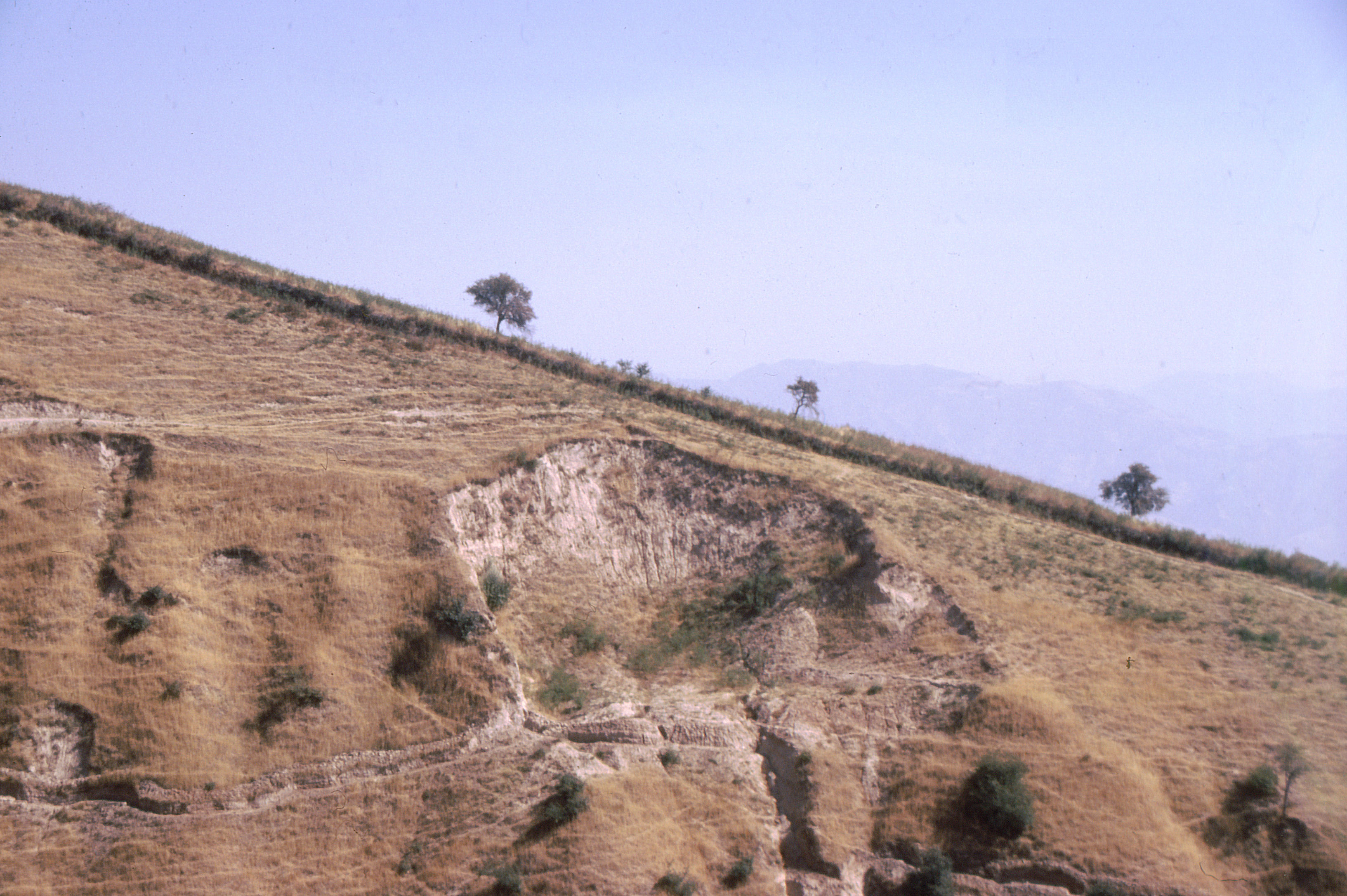
The new research focuses on the Khovaling Loess Plateau in southern Tajikistan, where thick deposits of windblown sediment preserve alternating layers of loess and ancient soils. Several of these palaeosols contain large concentrations of stone tools attributed to the Karatau Culture.
The researchers analysed three major sedimentary sections at Obi-Mazar, Kuldara, and Khonako-II. They combined 286 luminescence ages, cosmogenic aluminium-26 and beryllium-10 measurements, and palaeomagnetic evidence within probabilistic age-depth models. This multi-method approach allowed them to date the archaeological layers with much greater precision than before.
The results indicate that the Karatau Culture appeared around 580,000 years ago, flourished during several warmer interglacial periods, and continued until about 400,000 years ago. The main archaeological layers correspond to Marine Isotope Stages 15, 13, and 11, suggesting that this stone-tool tradition endured for approximately 200,000 to 250,000 years.
The study examined 3,534 stone artefacts from several archaeological layers and sites. The assemblages include choppers, simple scrapers, notched and denticulated tools, unifacial implements, retouched flakes, hammerstones, and perforators. The tools were often made from river pebbles using relatively simple flaking methods, including radial and unidirectional reduction.
Despite spanning several interglacial periods, the artefacts display a high degree of technological stability. The researchers found no strong evidence for a gradual transformation from Early to Middle Palaeolithic technology within the Karatau sequence. Instead, the culture appears to have maintained a relatively consistent toolmaking tradition over a very long period.
Environmental conditions seem to have strongly influenced human occupation. During warmer and wetter interglacial periods, the region probably supported woodland and more favourable habitats for animals and humans. Archaeological remains are much more abundant in these ancient soil layers than in the intervening cold and dry glacial deposits.
The near absence of artefacts during some glacial periods suggests that the Khovaling region was largely abandoned when conditions became colder, drier, and more open. The Karatau Culture disappeared around the beginning of Marine Isotope Stage 10 and did not return during the following interglacial period.
The researchers suggest that changes in rainfall seasonality and vegetation may have contributed to this disappearance. A possible shift from summer-dominated precipitation toward winter rainfall could have altered ecosystems, animal populations, and the resources available to early humans.
The stone tools are the only direct evidence of the people associated with the Karatau Culture, because no human or animal bones have been preserved in the loess deposits. However, chemical biomarkers found near some archaeological sites may indicate repeated fire activity. The pattern raises the possibility that early humans used fire and perhaps influenced local vegetation, although the researchers caution that habitual fire use cannot yet be confirmed.
The study also provides new ages for even earlier traces of human activity at Kuldara. Sparse stone artefacts from deeper layers are now estimated to date to approximately 930,000 years ago, making them the earliest securely dated evidence of hominin occupation currently known in Central Asia.
It remains unclear where the makers of the Karatau tools originated. Their stone technology differs from many contemporary Acheulean traditions in surrounding regions. Some similarities exist with industries in China, including the use of pebble tools and radial flaking, but the evidence is not sufficient to establish a direct cultural connection.
Overall, the research provides a reliable chronological foundation for studying the Early Palaeolithic of Central Asia. It shows that early humans repeatedly occupied southern Tajikistan during favourable climatic periods and maintained a stable technological tradition for hundreds of thousands of years.
Published on: 03-07-2026
Edited by: Abdulmnam Samakie
Source: Nature Communications