- Archaeological News
-
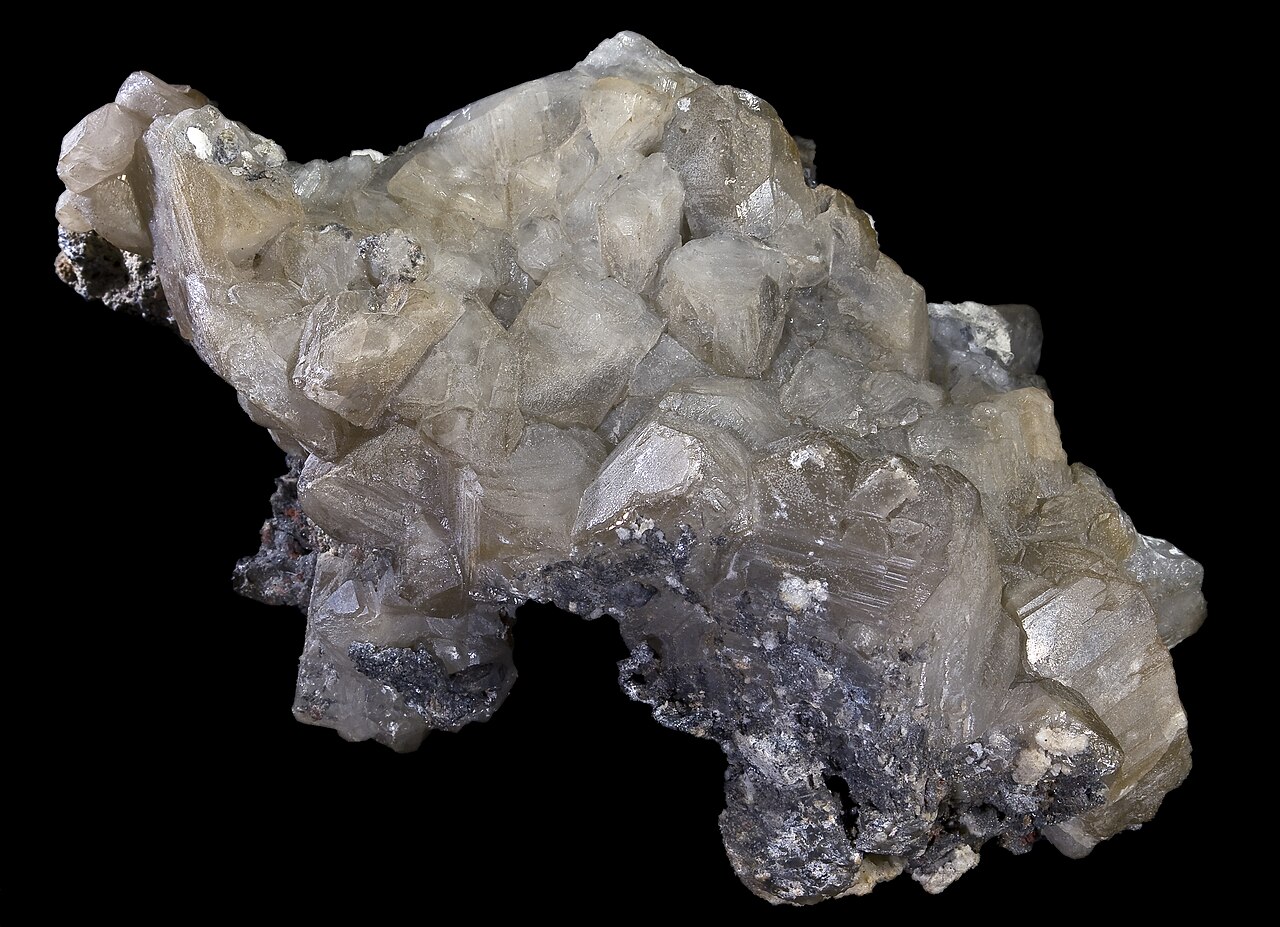
 Image Credit:
Didier Descouens, CC BY-SA 3.0, via Wikimedia Commons
Image Credit:
Didier Descouens, CC BY-SA 3.0, via Wikimedia Commons
Early Lead Smelting in Iberia Reveals a Short-Lived Prehistoric Innovation
A new study has identified the earliest direct evidence of lead smelting in the Iberian Peninsula, showing that prehistoric communities in north-east Iberia experimented with lead metallurgy much earlier than previously confirmed.
The discovery comes from the site of Minferri in Catalonia, Spain, an Early–Middle Bronze Age settlement dating to approximately 2100–1600 BC. The site has already provided important evidence for early metallurgy, including some of the earliest intentional tin-bronze production in Iberia.
Researchers analysed three small slag nodules recovered from pits and silos at Minferri. Although modest in size, weighing only between 10 and 24 grams, these residues proved highly significant. Microscopic and chemical analyses showed that they were not ordinary copper-smelting waste, but by-products of high-temperature lead-smelting activities.
The slag nodules contained high proportions of lead, sulphur, iron and other elements. Their microstructures included lead-rich phases, oxidised lead masses, sulphur-bearing prills and traces of polymetallic ores. These features indicate that lead-rich minerals were heated and processed to extract metal.
One of the nodules provides particularly clear evidence for the processing of a lead ore, probably anglesite, a lead sulphate mineral. The other two nodules appear to relate to the smelting of sulphidic copper-lead polymetallic ores, possibly minerals such as caledonite or linarite.
The researchers argue that the main product of these operations was probably lead, even though some copper may also have been present as an impurity or secondary product. This is important because copper and bronze production at Minferri used different, lead-poor ores. The lead-rich slag therefore points to a separate technological practice rather than accidental contamination from ordinary copper smelting.
The evidence suggests that metallurgists at Minferri used the same simple installations employed for copper and bronze work: open pits, open crucibles and charcoal fuel. These installations could reach temperatures of at least 1100°C, enough to process the lead-rich ores identified in the study.
The discovery raises an important question: was lead produced intentionally, or were lead minerals mistaken for copper ores? The study favours intentional production. The lead minerals identified can be visually similar to common copper ores, but the consistent selection of lead-poor copper ores for copper and bronze production argues against repeated accidental use.
Additional evidence supports this interpretation. Lead minerals had been recognised and transported in north-east Iberia long before metallurgy, from the Middle Palaeolithic through the Neolithic. A lead bead from Coveta de l’Heura, located about 40 kilometres from Minferri, also provides indirect evidence for local lead production during the Late Neolithic or Chalcolithic.
The broader cultural context is equally important. During the early third millennium BC, north-east Iberia was closely connected with southern France, where lead metallurgy is already known from Chalcolithic contexts. These links included the movement of metallurgical knowledge, objects and raw materials across the Pyrenees.
The study therefore suggests that lead-smelting knowledge was transmitted from southern France into north-east Iberia during the early third millennium BC. In southern France, lead production continued into the Bronze Age, but in north-east Iberia it appears to have disappeared after the mid-second millennium BC.
This makes the Minferri evidence especially interesting. It does not simply mark the beginning of lead metallurgy in Iberia; it also documents a case of technological discontinuation. Lead smelting was adopted, practiced for a limited period, and then abandoned.
The reasons for this rejection remain unclear. Lead may not have acquired the same social or practical value as copper and bronze in north-east Iberia. Communities may have experimented with the metal but found little reason to maintain the practice. More research is needed to explain why the same technology persisted in southern France but disappeared south of the Pyrenees.
The findings also challenge a simple linear view of technological progress. Prehistoric metallurgy did not develop only through steady adoption and improvement. Instead, communities experimented with different metals, selected some techniques, rejected others, and followed distinct regional paths.
Overall, the study shows that lead played a more important role in early Iberian metallurgy than previously recognised. It reveals a brief but meaningful episode of polymetallic experimentation, centuries before lead became more widely visible again through later Mediterranean and Phoenician connections.
Published on: 12-07-2026
Edited by: Abdulmnam Samakie
Source: Antiquity