- Archaeological News
-
 Image Credit:
kallerna, CC BY-SA 4.0, via Wikimedia Commons
Image Credit:
kallerna, CC BY-SA 4.0, via Wikimedia Commons
Medieval Pigs Show How Communities Managed Changing Landscapes
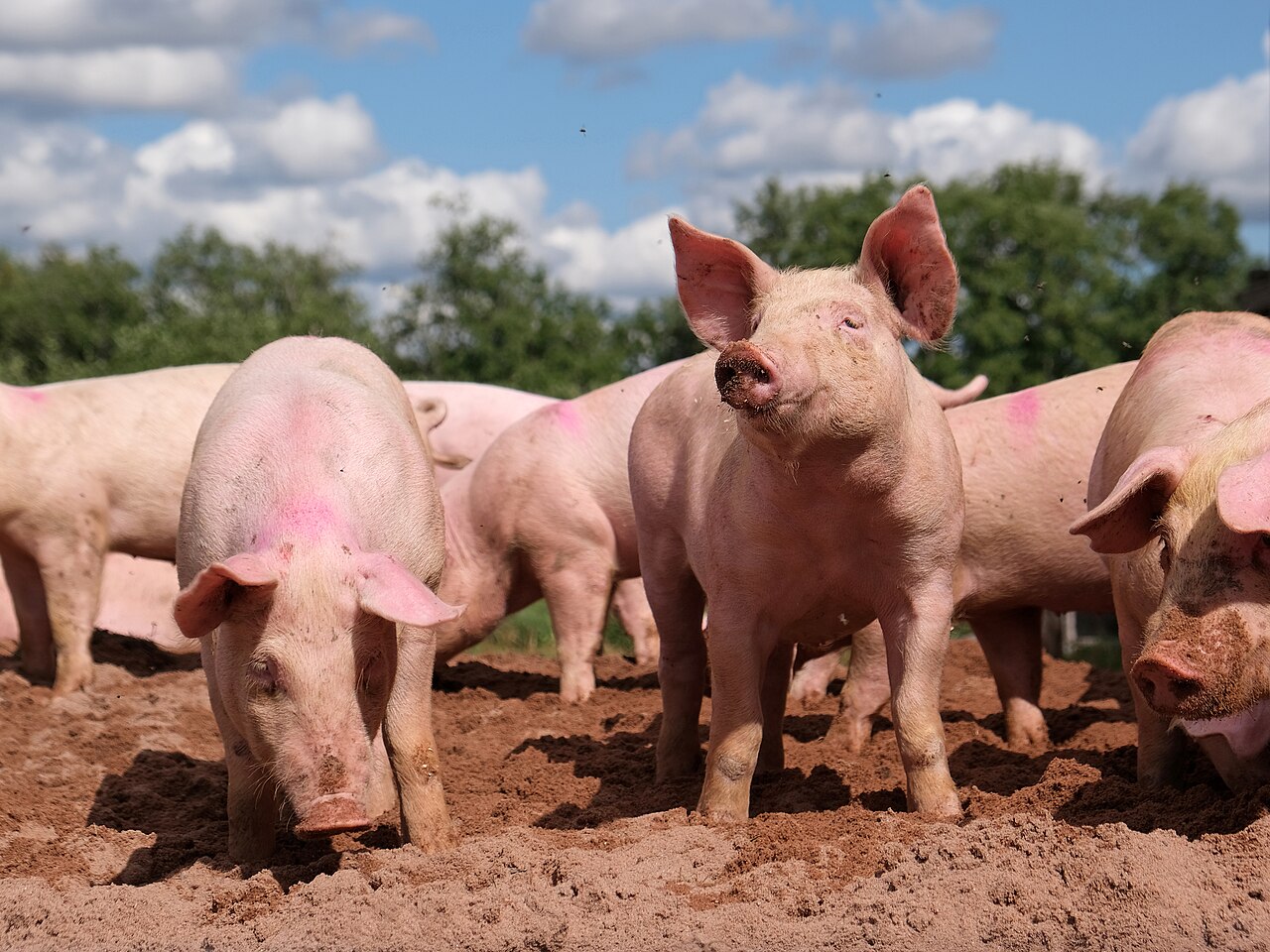
A new study suggests that pig husbandry in medieval England was more diverse and resilient than previously assumed, with free-roaming systems continuing alongside urban feeding practices for several centuries.
The research examined pig remains from seven English towns dating between the 12th and 16th centuries: Glastonbury, Grimsby, Huntingdon, Maldon, Reading, Romsey, and St Albans. Using multi-isotope analysis of teeth and bones, together with biometric and mortality data, the study investigated how pigs were raised, where they may have moved, and what kinds of landscapes they used.
Medieval pig management is often described as a shift from forest-based free-roaming systems toward more controlled urban confinement. In this model, pigs gradually moved from woodland foraging and pannage into town-based stying and feeding on household waste or agricultural by-products. However, the new evidence suggests that this transition was not simple or uniform.
The isotopic data indicate that many pigs continued to be managed through extensive, free-roaming systems. These animals likely used a range of landscapes, including woodlands, wetlands, pastures, river margins, and post-harvest fields. At the same time, some sites also show evidence for urban provisioning, where pigs may have had access to food waste or more structured feeding regimes. This points to a flexible system in which local environments and town economies shaped different husbandry practices.
One of the most important findings is the long-term stability of these practices. The study found no consistent chronological shift from free-roaming systems to confined urban management across the sites. Instead, pig husbandry remained regionally varied, with different strategies co-existing from the 12th to the 16th century.
This continuity is especially significant because medieval England experienced major crises during this period, including the Great Famine, the Black Death, recurrent plague outbreaks, and climatic instability linked to the early phases of the Little Ice Age. Despite these disruptions, the evidence suggests that pig management and landscape use in small towns were marked more by resilience than by fundamental transformation.
The study also highlights the wider ecological role of pigs in medieval landscapes. Free-roaming pigs were not simply livestock raised for meat; they were part of a broader system of woodland, wetland, and town-edge management. Their ability to forage across different environments made them valuable in a changing world, especially when labour, food production, and local economies were under pressure.
Overall, the research challenges the idea of a single linear development in medieval pig husbandry. Instead of a simple movement from forest pigs to urban pigs, it presents a more complex picture of regional adaptation, ecological flexibility, and long-term continuity. The findings show how animal bones and isotopes can reveal not only what people ate, but how medieval communities managed land, resources, and resilience.
Published on: 29-06-2026
Edited by: Abdulmnam Samakie