- Archaeological News
-
 Image Credit:
Grono et al., Frontiers in Environmental Archaeology (2026)
Image Credit:
Grono et al., Frontiers in Environmental Archaeology (2026)
Ancient Plant Remains Reveal Ritual Burning Practices in an Australian Cave
A new archaeobotanical study from Cloggs Cave in GunaiKurnai Country, southeastern Australia, provides fresh evidence for the deliberate gathering and burning of whole grass plants inside the cave over thousands of years.
Cloggs Cave is a limestone cave in East Gippsland, in the southern foothills of the Australian Alps. Archaeological work at the site has revealed a long record of human engagement, extending back at least 25,000 years. Earlier research had already shown that plants played an important role in activities carried out in the cave by GunaiKurnai Old Ancestors.
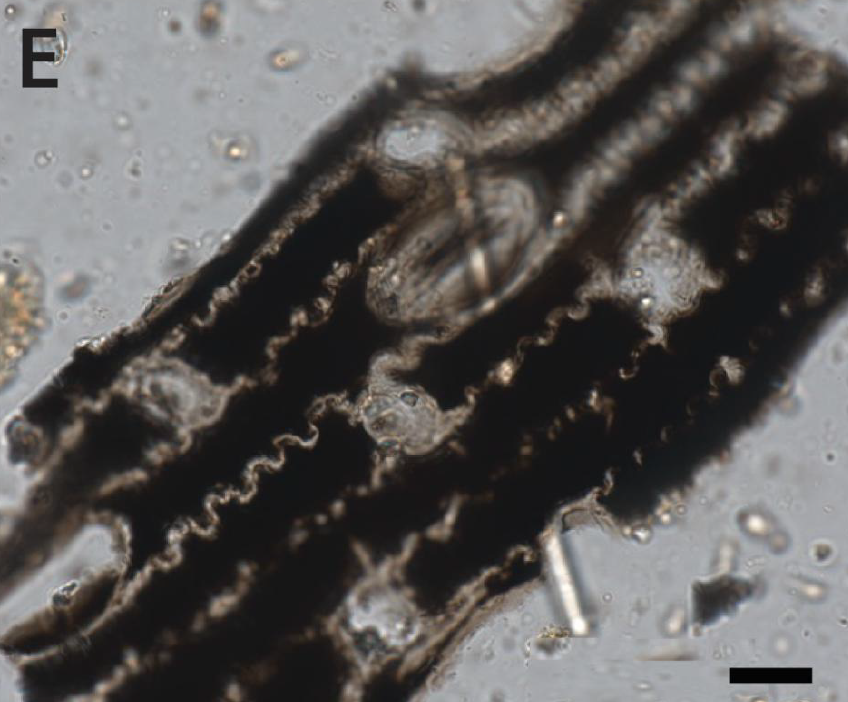
The new study focuses on phytoliths, microscopic silica bodies that form inside plants and can survive long after other plant tissues decay. Because different parts of plants can produce different phytolith forms, they can help archaeologists identify what kinds of plants were brought into a site and how they were used.
Researchers analysed phytoliths from stratified archaeological sediments in Cloggs Cave. They also studied phytoliths from preserved Common Brushtail Possum scats found in the cave, because possums also brought plant material into the deposits through their droppings. This comparison helped clarify which plant remains were more likely to be linked to human activity and which may have entered through animal activity.
The results show that grass phytoliths dominate the archaeological assemblage. In contrast, phytoliths from woody plants and ash remains associated with wood were rare or absent. This suggests that the burned plant material in the cave was not mainly wood, but soft plant matter, especially grasses.
The most important evidence comes from burnt phytoliths found in thin, laterally extensive ashy layers. These burnt phytoliths were identified from different anatomical parts of grass plants, including leaves, stems, and flowering parts. This indicates that people did not simply bring loose leaves or fragments into the cave, but likely gathered whole grass plants and transported them inside.
The study links this evidence to repeated burning practices inside the cave. Earlier excavations had identified many thin ash-rich layers, some associated with ritual installations and a standing stone. The new phytolith analysis strengthens the interpretation that these ash layers were created by the repeated burning of soft plant materials, including grasses.
This finding is important because pollen does not survive well in high-temperature burning contexts. Phytoliths, however, can preserve traces of burning, making them especially useful for understanding plant use in ancient fire-related activities.
The study also shows the complexity of interpreting plant remains in caves. In non-ashy layers, it was difficult to clearly separate phytoliths introduced by people from those introduced by possums. The researchers therefore argue that some deposits probably contain a mixture of plant remains brought into the cave by both humans and animals.
However, burnt phytoliths provide a clearer signal of human activity. Since possum scats cannot explain the repeated presence of burnt grass phytoliths in structured ash layers, these remains point to deliberate human selection, transport, and burning of grasses within the cave.
The results add another line of evidence to the growing picture of Cloggs Cave as a culturally significant place rather than an ordinary domestic occupation site. Previous research has identified miniature fireplaces, trimmed sticks smeared with fat, pollen from culturally meaningful plants, and repeated burning around a standing stone. The new phytolith evidence further supports the interpretation that plant materials were central to the activities carried out there.
Overall, the study shows how tiny plant remains can reveal large stories about past cultural practices. At Cloggs Cave, microscopic phytoliths help show how GunaiKurnai Old Ancestors gathered, carried, and burned whole grasses inside a secluded cave setting.
The research also highlights the value of combining archaeological science with Indigenous cultural knowledge. Together, these approaches provide a richer understanding of how plants, fire, place, and ritual practice were connected in the long history of Cloggs Cave.
Published on: 22-07-2026
Edited by: Abdulmnam Samakie