- Archaeological News
-
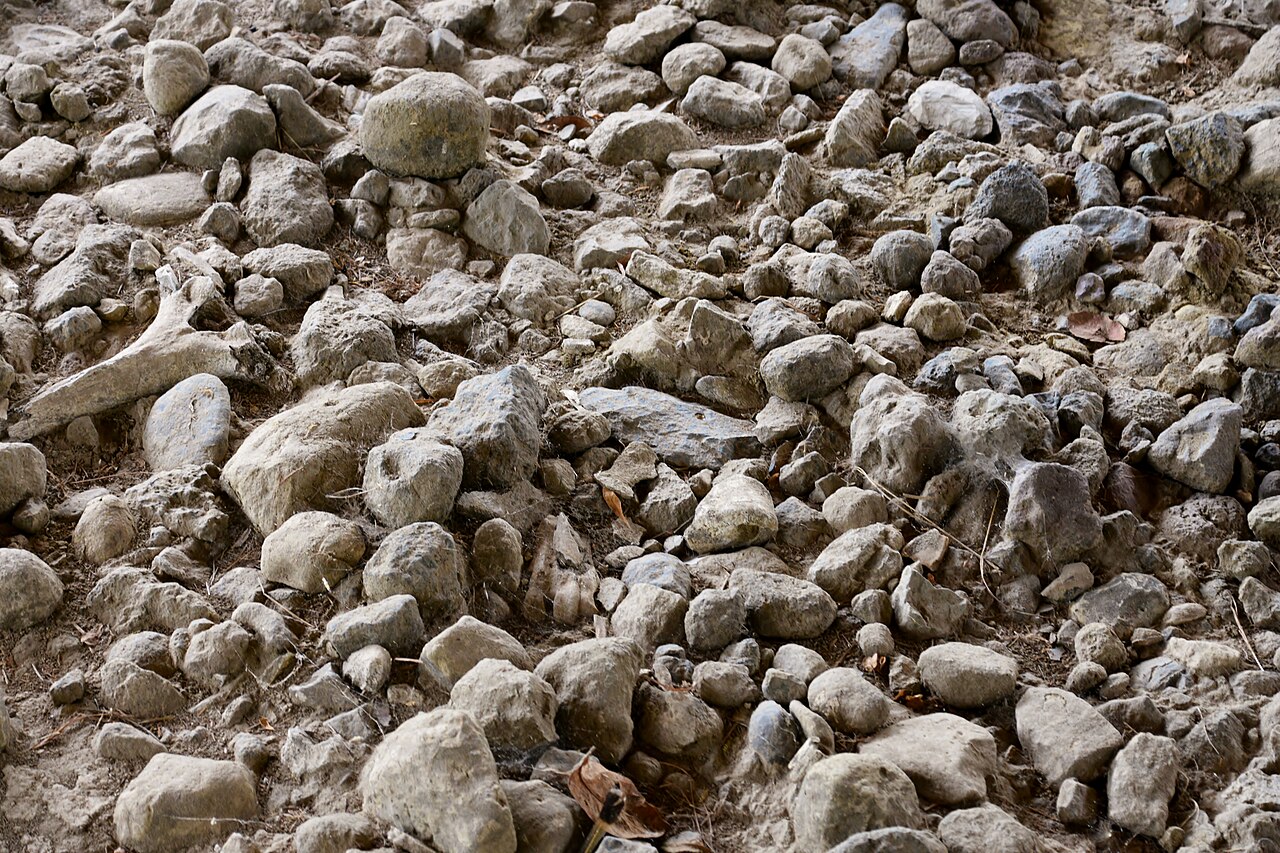
 Excavation area at the prehistoric site complex of Melka Kunture in Ethiopia’s Upper Awash Valley.
Image Credit:
Richard Mortel, Saudi Arabia, CC BY 2.0, via Wikimedia Commons
1.2-Million-Year-Old Handaxes in Ethiopia Challenge the Idea of a Straight Path to Better Tools
Stone handaxes made more than 1.2 million years ago in Ethiopia reveal that early human technology did not simply progress from crude tools toward increasingly refined and standardized forms. Instead, closely related groups living in the same region could manufacture noticeably different handaxes, adjusting their choice of stone, shaping methods and tool form according to local circumstances and immediate needs.
The evidence comes from the Melka Kunture archaeological complex in Ethiopia’s Upper Awash region, an area preserving a long record of Acheulean occupation extending back to around 1.95 million years ago. The analysis focused on Atebella II and the Monumental Section of Simbiro III, two locations only about 3.5 kilometres apart. From these contexts, researchers examined 64 handaxes belonging to three assemblages: 18 from Atebella II, 33 from Simbiro Level B and 13 from Simbiro Level C. All three assemblages investigated here predate 1.2 million years ago.
The tools were examined not only by their overall appearance but also by measuring their dimensions, symmetry, manufacturing scars and the extent to which their original stone blanks had been reshaped. Geometric analysis was also used to compare differences in outline and form. This allowed the researchers to distinguish between variations caused simply by tool size and those reflecting different technological decisions.
One of the clearest differences concerned raw material. At Atebella II, about 89.5 percent of the handaxes were made from coarse volcanic rocks, while every examined handaxe from Simbiro Level B used these materials. In contrast, all of the handaxes from Simbiro Level C were made from obsidian. The obsidian pieces generally underwent more intensive shaping and edge trimming than those made from coarser volcanic stone. Yet this additional work did not automatically produce greater symmetry or more standardized forms.
Differences also appeared in how much effort was invested in shaping each tool. Handaxes from Atebella II and Simbiro Level C generally underwent relatively intensive reduction, giving many of them a more refined appearance. The Level B tools, by comparison, had substantially fewer flake removals and appeared less intensively shaped. Atebella II also produced the most symmetrical handaxes of the three groups, despite the sites being geographically close and broadly similar in age.
The results therefore complicate a common picture in which Acheulean handaxes gradually became more symmetrical, standardized and technologically sophisticated as time passed. Features that might appear “advanced” could occur very early, disappear or become less pronounced in another nearby assemblage, and then appear again in a different form. Rather than moving steadily along a single technological path, handaxe-making seems to have followed multiple changing routes.
An especially important discovery is evidence that some handaxes were shaped using soft-hammer percussion before 1.2 million years ago. Instead of striking stone only with another hard stone, this technique involves a softer percussor, allowing different kinds of flake removal and more controlled shaping. Such methods are more commonly documented at African sites younger than one million years, making their presence at Melka Kunture evidence that early Acheulean toolmakers already possessed a broader range of technical solutions than a simple evolutionary model might suggest.
The selection of stone itself also appears to have been deliberate. Obsidian was readily available and exceptionally suitable for producing sharp edges, yet coarse volcanic rocks were preferred for many handaxes. This suggests that maximum sharpness was not always the main objective. In some circumstances, toolmakers may instead have valued tougher cutting edges capable of remaining usable for longer periods.
Most of the handaxes were produced from large flakes, reinforcing evidence that large-flake technology was already an established feature of the Acheulean at this early date. The differences among the assemblages therefore do not appear to represent populations progressing through simple successive stages of technical ability. Instead, groups already familiar with sophisticated stone-working principles were selecting among different options.
The broader implication is that variation in early human technology may have depended strongly on what people were doing, what stone was available and what qualities they wanted from a particular tool. Comparable short-term differences are known from other early East African Acheulean sites as well. Rather than a straight climb from simple to complex technology, the record increasingly resembles a series of flexible choices—different technological paths taken by toolmakers who were already capable of adjusting their methods more than a million years ago.
Published on: 30-09-2026
Edited by: Abdulmnam Samakie
Source: PLOS One