- Archaeological News
-
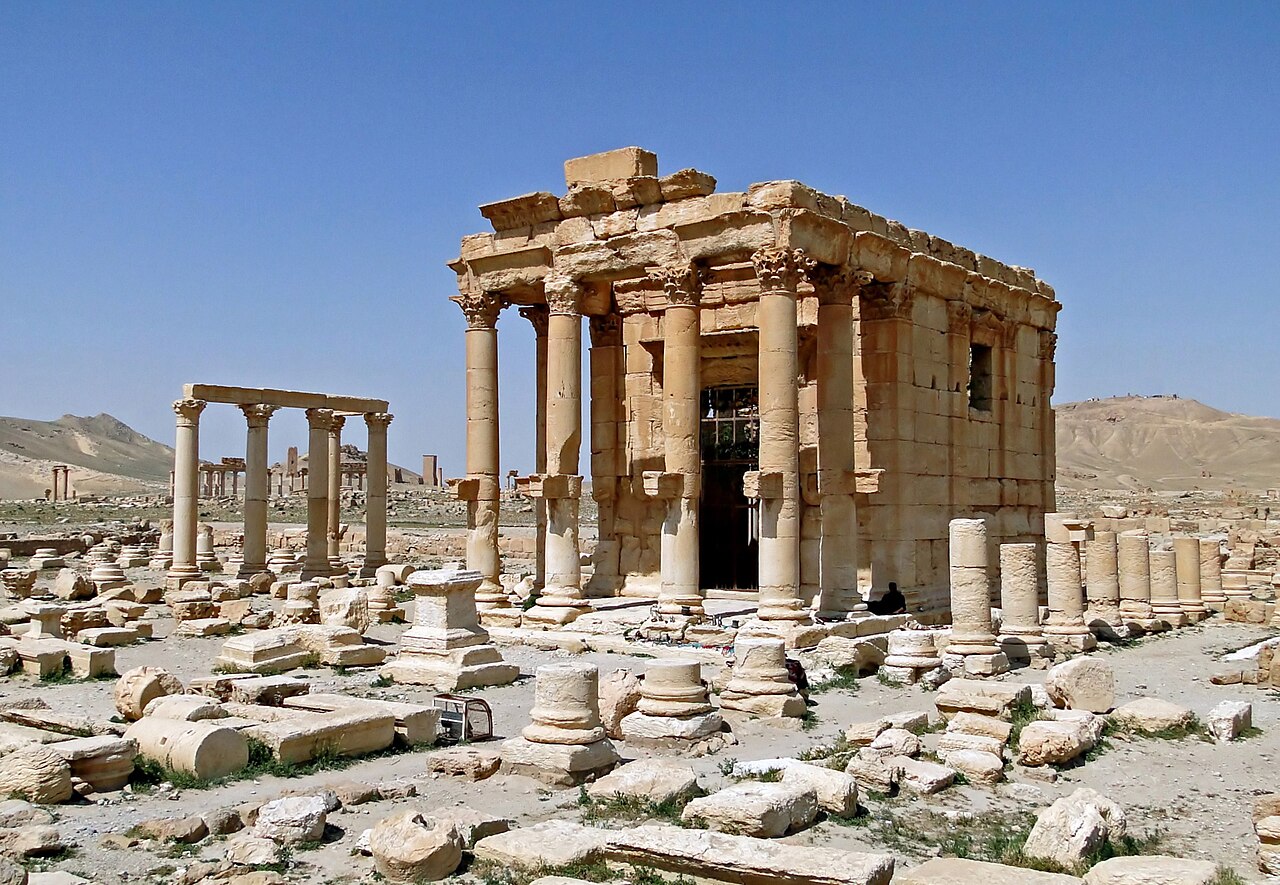
 The Temple of Baalshamin at Palmyra, Syria, photographed in 2010 before its destruction in 2015.
Image Credit:
Bernard Gagnon, CC BY-SA 3.0, via Wikimedia Commons
Lost Palmyra Lives Again Through Archives, Portraits and Ancient Tombs
More than a decade after war and deliberate destruction damaged some of Palmyra’s most famous monuments, old photographs, excavation notes and newly organized catalogs are allowing archaeologists to recover information that might otherwise have disappeared with them.
A 2026 review in the Journal of Roman Archaeology examines two major publications devoted to the Syrian city: The Ingholt Archive, a four-volume edition of records assembled by Danish archaeologist Harald Ingholt, and Palmyrene Sarcophagi, a two-volume study of the city’s funerary sculpture. Together, they demonstrate how archival archaeology can reconnect objects scattered across museums, private collections and damaged archaeological contexts.
Palmyra, situated in the Syrian desert between the eastern Mediterranean and the Euphrates, developed a distinctive culture under Roman rule. Its inhabitants adopted elements from the Graeco-Roman world while maintaining strong local Aramaic traditions. Funerary portraits are among the clearest expressions of this combination: they used broader Roman artistic conventions but were created in local workshops and served as markers of family, status and social identity.
Harald Ingholt began documenting Palmyrene sculpture during the 1920s. Over the following decades he assembled photographs, notes, transcriptions, drawings and excavation records from tombs and collections around the world. By 1981, his archive contained information on 1,506 objects. Of these, 153 had never been published and 43 can no longer be located, while many others remain inaccessible or have been destroyed.
Transferred to Aarhus University in 2012, the archive was digitized and systematically reorganized. Especially important are photographs taken during excavation, which preserve sculptures in their original tomb settings before objects were removed or the contexts themselves were damaged. Ingholt also recorded inscriptions, traces of colour, architectural measurements and details of clothing and ritual objects.
These records now have uses that Ingholt could hardly have anticipated. Historical photographs can help researchers check the provenance and authenticity of sculptures held in museum collections, compare lost architectural arrangements and provide evidence for future digital or three-dimensional reconstructions.
The second publication, Palmyrene Sarcophagi, brings together funerary material that had never previously been treated in a comprehensive catalog. The wider Palmyra Portrait Project has documented 3,976 funerary portraits on 2,902 objects, including approximately 786 sarcophagi. The new catalog organizes 452 sarcophagus objects and fragments, while its appendices record lost reliefs and sculptures known only from earlier publications.
One of its most revealing themes is the funerary banquet. Most Palmyrene sarcophagi depict the deceased reclining alongside close relatives, surrounded by vessels, food and attendants. These scenes were not simply decorative. They expressed family relationships and social hierarchy while reflecting a belief that bonds between the living and the dead continued after burial. Visitors could hold commemorative meals at tombs, while the deceased were represented as feasting in the afterlife.
The imagery also shows how Palmyra absorbed outside influences without simply copying them. Roman-style portrait busts appear beside local dress, priestly headgear, caravan scenes and traditions rooted in the ancient Near East. Among the elite, identity could be expressed through participation in banquets, priesthood and displays of wealth. Some third-century reliefs even place richly adorned women in prominent reclining positions, potentially offering clues to women’s social status.
The catalog also refines the chronology of Palmyrene sarcophagi. Twelve examples can be dated directly from foundation inscriptions. By comparing hairstyles, facial treatment, clothing, jewellery and sculptural details, researchers divide production into seven phases extending from the first century CE to 273 CE. Around 39 per cent of catalogued objects also retain a known archaeological context, allowing sculpture to be studied in relation to the architecture and decoration of individual tombs.
The review’s broader message is that archaeology does not depend on excavation alone. When monuments are destroyed or inaccessible, field notebooks, photographs, inscriptions, databases and catalogs can preserve relationships that would otherwise disappear.
For Palmyra, that role is particularly urgent. Its portraits and sarcophagi preserve nearly three centuries of information about families, beliefs and social identities. By bringing archives together with digital tools, researchers are not physically rebuilding lost tombs, but they are rebuilding the evidence needed to understand them.
Published on: 08-11-2026
Edited by: Abdulmnam Samakie
Source: Journal of Roman Archaeology