- Archaeological News
-
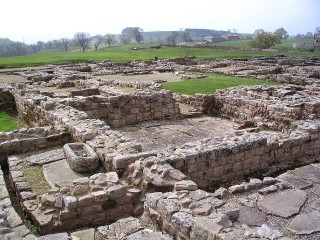 The remains of Vindolanda, a Roman fort near Hadrian’s Wall in northern England. Pottery from this site helped provide the models for reconstructed cooking vessels used in the study of plant-derived food residues.
Image Credit:
Francis, CC BY 2.0, via Wikimedia Commons
Ancient Pottery May Conceal Evidence of Plant-Based Diets
Plant foods may be significantly underrepresented in archaeological studies of ancient diets, not only because their chemical traces are difficult to preserve and identify, but also because researchers may have been looking in the wrong parts of pottery vessels. A new experimental study suggests that sampling the bases of ancient cooking pots could reveal evidence of plant consumption that conventional analytical methods have frequently overlooked.
The new study investigates how lipids from different plant foods accumulate within ceramic vessels during cooking. Lipids, a group of organic compounds that includes fats, oils and waxes, can penetrate porous pottery and remain preserved for long periods, providing valuable clues about the foods prepared by past societies.
Organic residue analysis has already helped archaeologists identify ancient dairy products, animal fats, plant oils and other food resources. However, evidence of plant consumption remains relatively scarce compared with that of animal products, despite archaeological evidence indicating that plants played an important role in past diets.
One reason for this imbalance is that most plant foods naturally contain much smaller quantities of lipids than meat. Furthermore, many plant-derived compounds are shared by different species, making it difficult to identify their precise origins. Abundant animal fats can also mask the chemical traces of plants when both types of food are prepared in the same vessel.
The new study explores another possible explanation: the location from which pottery samples are collected.
Earlier cooking experiments involving cabbage leaves and lamb meat demonstrated that lipids tended to accumulate near vessel rims. During boiling, released fats can rise to the water's surface and penetrate the surrounding ceramic walls. These findings helped establish a sampling strategy in which archaeologists frequently prioritize fragments from the upper parts of vessels.
To determine whether this pattern applies to a wider range of plant foods, researchers conducted controlled cooking experiments using reconstructed pottery based on Roman vessels from Colchester and Vindolanda in Britain.
Seven plant-based foods commonly consumed in Roman Britain were selected: turnips, carrots, lentils, fava beans, figs, dates and olive oil. Each food was prepared separately in a designated vessel. Most underwent 15 cooking cycles of 90 minutes each, representing a total of 22.5 hours of use. The date experiment was stopped earlier because the vessel developed a crack.
After cooking, ceramic samples were collected from two locations on each vessel: the base and the part of the wall corresponding to the water level. Researchers then examined the extracted lipids using gas chromatography coupled with high-resolution mass spectrometry.
The results revealed a markedly different pattern from that established by earlier experiments.
For six of the seven foods, including lentils, fava beans, figs, dates, carrots and olive oil, greater quantities of lipids were recovered from the vessel bases. The concentrations were approximately three to eighteen times higher than those recovered from samples near the water level.
Turnips were the sole exception, producing more than twice as much lipid near the water level as at the base. Researchers suggest that this behaviour may be linked to the waxy surfaces of leafy vegetables, which can release lipid compounds during boiling.
The bases of vessels used to prepare carrots, fava beans, figs and lentils also preserved a wider variety of lipid compounds. In the carrot experiment, for example, samples from the upper part of the vessel contained only fatty acids, whereas those from the base revealed several additional classes of organic compounds.
These findings suggest that different plant foods release and transfer their lipids into pottery in different ways. Factors such as the chemical composition of plants, the parts being cooked and the interactions between their compounds and the ceramic material may influence where these residues accumulate.
Although the experiments were conducted under controlled laboratory conditions and cannot reproduce centuries of archaeological degradation, they highlight a potentially significant bias in existing pottery sampling practices.
By examining both the upper and lower portions of ancient vessels and developing more targeted analytical methods, archaeologists may be able to recover a broader range of plant-derived residues. Such an approach could help reconstruct ancient diets more accurately and reveal the importance of vegetables, legumes, fruits and other plant foods that have remained largely invisible in the chemical record.
Published on: 28-11-2026
Edited by: Abdulmnam Samakie