- Archaeological News
-
 Image Credit:
Osama Shukir Muhammed Amin, CC BY-SA 4.0, via Wikimedia Commons
Image Credit:
Osama Shukir Muhammed Amin, CC BY-SA 4.0, via Wikimedia Commons
Hazar Merd Cave Reopens a Key Chapter in Zagros Prehistory
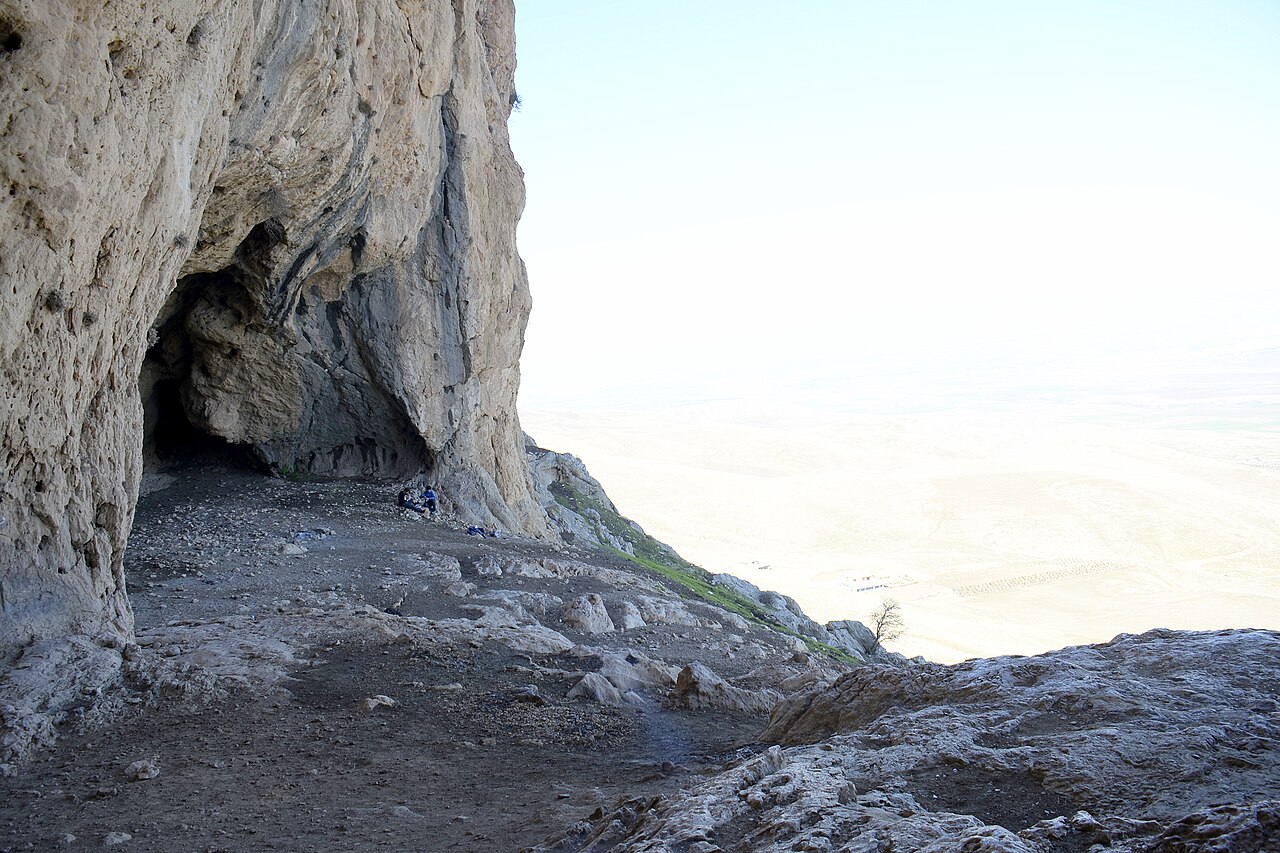
Renewed archaeological work at Hazar Merd Cave in the Kurdistan Region of Iraq is bringing fresh attention to one of the most important Palaeolithic sites in the Zagros Mountains. First excavated in 1928, the cave complex is considered the earliest documented Palaeolithic site in the Zagros and a landmark in the history of prehistoric research in the region.
Hazar Merd lies near present-day Slemani, about 178 km southeast of Shanidar Cave. Its location in the Zagros Mountains is especially significant because the region may have served both as a corridor for early modern human movement out of Africa and as part of the southeastern range of Neanderthal occupation.
The first excavations at the site were carried out nearly a century ago by Dorothy Garrod, who worked at both Zarzi and Hazar Merd in 1928. At Ashkawty Tarik, also known as Dark Cave, she documented a deep stratified sequence extending from the Bronze Age to the Middle Palaeolithic. Her work identified a disturbed upper level, a thin Upper Palaeolithic layer, and a much thicker Mousterian deposit containing hearths, burnt flint, and abundant animal remains.
The new investigations, launched in 2025, returned to Ashkawty Tarik with modern archaeological methods. The earlier excavation areas were still visible, allowing researchers to locate new trenches precisely. Three test trenches were opened in different parts of the cave, targeting both the central area and deeper Middle Palaeolithic deposits along the cave walls.
The results show that the site is richer and more complex than previously understood. In the central trench, researchers found an Upper Palaeolithic layer about 0.40 m thick, directly overlying Middle Palaeolithic deposits. This contrasts with Garrod’s earlier description of the Upper Palaeolithic level as very thin.
The Middle Palaeolithic layers produced a rich assemblage of Levallois artefacts, including points, flakes, side scrapers, and convergent scrapers. Some tools show characteristics typical of the Zagros Mousterian, while others resemble Levantine-style forms. This may suggest a more complex technological picture at the site, although further analysis is still needed.
Animal remains were also abundant, especially teeth and phalanges of wild cattle and goat species. Some bones show cut marks, offering evidence that may help reconstruct subsistence practices and the use of different areas inside the cave. The concentration of faunal remains in wall trenches may reflect structured behaviour, functional use of space, or post-depositional processes.
Future research will use a wide range of scientific methods, including luminescence dating, radiocarbon dating, sediment analysis, micromorphology, ancient sediment DNA, and ZooMS analysis of fragmentary bones. These approaches aim to build a secure chronology and clarify environmental conditions, cultural transitions, and possible population movements between about 60,000 and 40,000 years ago.
Overall, the renewed work at Hazar Merd confirms the cave’s importance for understanding the final stages of Neanderthal history and the presence of early modern humans in the Zagros. Approaching the centenary of Garrod’s original excavation, the site is once again emerging as a major reference point for Palaeolithic research in Southwest Asia.
Published on: 17-06-2026
Edited by: Abdulmnam Samakie
Source: Antiquity