- Archaeological News
-
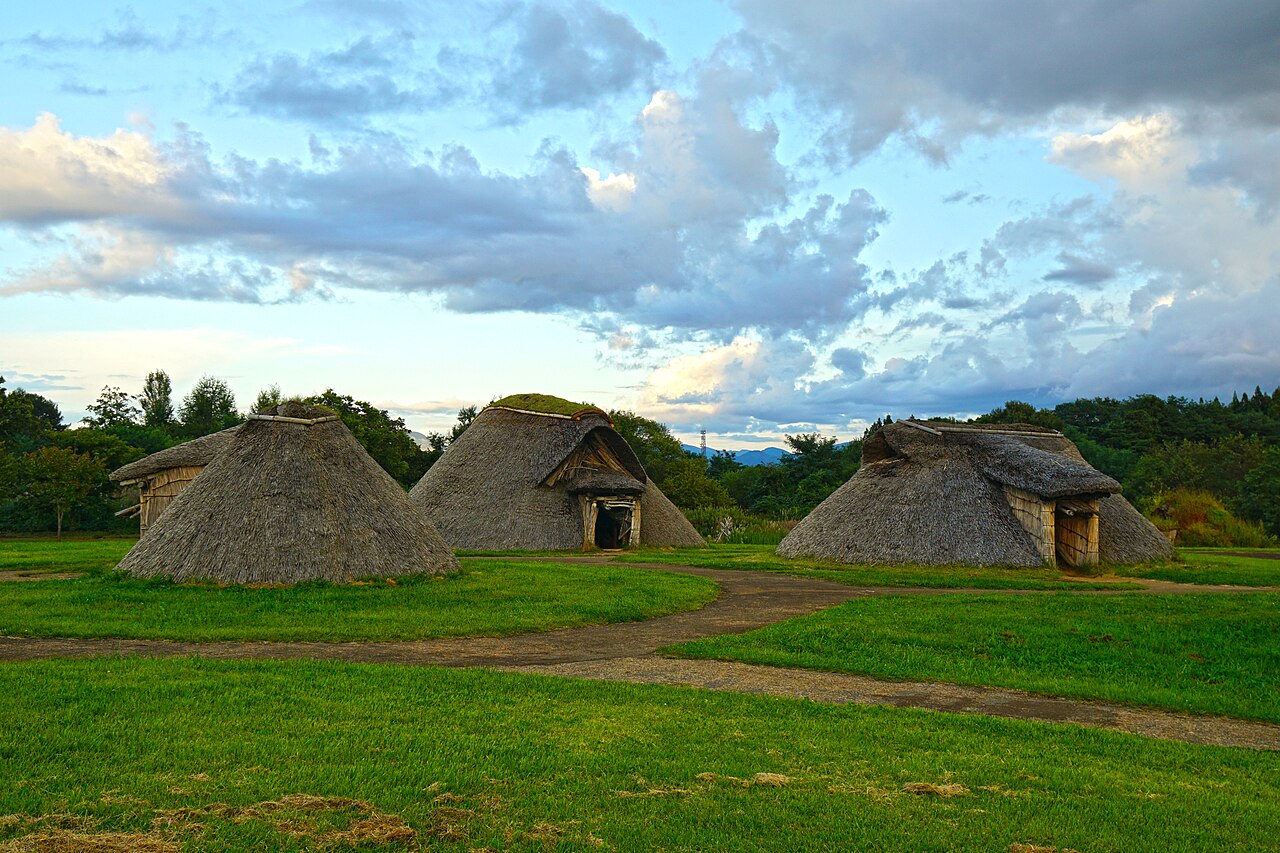
 Reconstructed Jomon-period dwellings in Aomori Prefecture, Japan.
Image Credit:
663highland, CC BY-SA 3.0, via Wikimedia Commons
Reconstructed Jomon-period dwellings in Aomori Prefecture, Japan.
Image Credit:
663highland, CC BY-SA 3.0, via Wikimedia Commons
Ancient Jomon DNA Reveals Genetic Adaptations to Ice Age Cold
A major genomic study of prehistoric hunter-gatherers from Japan has uncovered evidence that the ancestors of the Jomon developed genetic adaptations that helped them survive the extreme cold of the Last Glacial Maximum.
Researchers analysed genomes from 42 Jomon individuals from across the Japanese archipelago, including 25 newly sequenced individuals and 17 previously published genomes. The results indicate that the Jomon inherited much of their ancestry from an isolated Upper Paleolithic East Eurasian population that endured Ice Age conditions before the emergence of Jomon culture.
The Jomon were hunter-gatherers who inhabited the Japanese archipelago from around 16,000 to 3,000 years ago. Their deeper ancestors appear to have separated genetically from continental East Eurasian populations approximately 27,000 to 19,000 years ago, during the Upper Paleolithic and around the time of the Last Glacial Maximum.
This period of isolation may have contributed to the development of the distinctive Jomon genetic lineage. After the glacial period, surviving Upper Paleolithic populations in the archipelago contributed to the emergence of Jomon culture as environmental conditions became warmer.
The genomic evidence also suggests some genetic contact with populations farther north. Although the Jomon show stronger overall ancestry associated with a southern migration route into East Asia, researchers detected a subtle genetic contribution from northern Upper Paleolithic Siberian groups.
This finding is broadly consistent with archaeological evidence showing similarities between blade-based stone technologies in prehistoric Japan and those found farther north in Eurasia.
The study also provides new insight into prehistoric population changes in Hokkaido. The researchers conclude that later Hokkaido Jomon were not direct descendants of the Upper Paleolithic inhabitants of the island.
Instead, genetic evidence supports a population replacement in which Jomon groups originating in Hondo—the main Japanese islands excluding Hokkaido—moved north during the Holocene. The earlier Upper Paleolithic inhabitants of Hokkaido may therefore represent a “ghost population” that left little direct genetic ancestry in later Jomon communities.
Researchers emphasize that this finding also leaves open questions about prehistoric population movements toward the Americas. The study does not demonstrate that Upper Paleolithic inhabitants of Hokkaido contributed to the First Americans, but notes that genomic data from this earlier population have not yet been recovered.
The analysis also examined Denisovan ancestry. Jomon genomes contained Denisovan-derived genetic segments similar to those found in other East Asian populations, but researchers found no evidence for a separate episode of Denisovan interbreeding unique to the Jomon.
Instead, this ancestry was probably inherited from an earlier population shared with other East Asians before the Jomon lineage became isolated.
One of the study’s most significant findings concerns adaptation to cold environments.
The Jomon carried relatively high frequencies of genetic variants associated with nonshivering thermogenesis—the body's ability to generate heat without muscular shivering—and with the perception of cold. These include variants involving UCP1 and TRPM8.
Further analyses identified evidence of natural selection in genetic regions associated with fat storage and lipid metabolism, particularly FTO and APOA5. These genes are connected with brown adipose tissue, which can burn stored energy to generate body heat.
The findings suggest that Jomon ancestors adapted not simply by accumulating body fat, but also through biological mechanisms that allowed stored lipids to be efficiently converted into heat.
The study also identified similarities between the Jomon and Inuit in genes associated with the metabolism of fatty foods. Archaeological evidence supports this connection: residues from marine and freshwater resources have been detected in Jomon pottery dating to approximately 15,000–11,800 years ago.
Together, the genetic and archaeological evidence suggests that reliance on protein- and fat-rich aquatic resources may have complemented physiological adaptations to cold conditions.
Researchers propose that these adaptations developed gradually as Upper Paleolithic populations moved northward and faced increasingly severe climates. Some advantageous variants may have existed before migration into colder regions, while others became more common during the Last Glacial Maximum.
The study provides one of the first paleogenomic frameworks for investigating how Upper Paleolithic populations in eastern Eurasia biologically adapted to Ice Age environments, revealing a genetic legacy that continued among the later Jomon and persists, in part, among people living in Japan today.
Published on: 13-08-2026
Edited by: Abdulmnam Samakie
Source: Science Advances