- Archaeological News
-
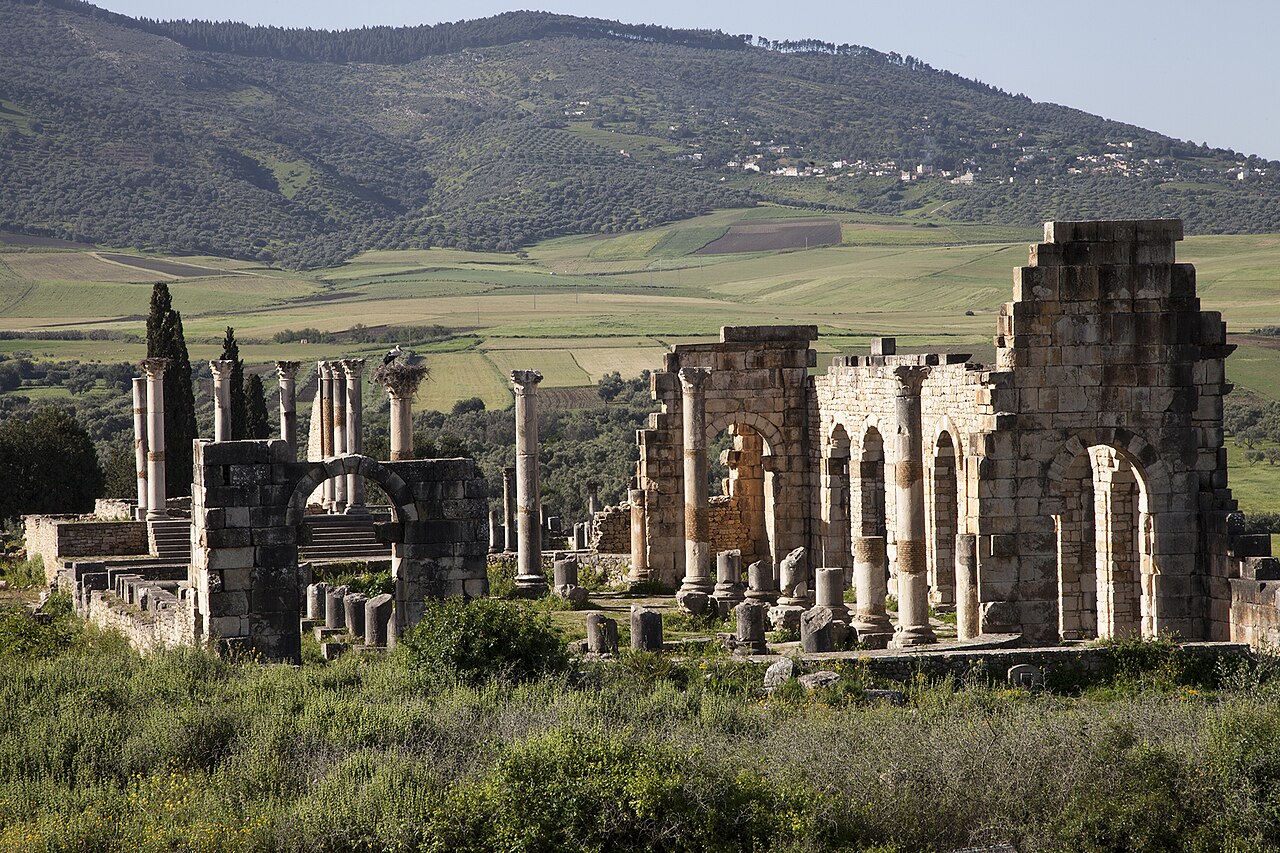
 Volubilis archaeological site, Morocco
Image Credit:
Subhros, CC BY-SA 3.0, via Wikimedia Commons
Volubilis archaeological site, Morocco
Image Credit:
Subhros, CC BY-SA 3.0, via Wikimedia Commons
Medieval Pottery Reveals a Local Ceramic Industry at Volubilis
A new archaeometric study of pottery from Walīla, the medieval settlement that developed at Roman Volubilis in northern Morocco, has revealed a sophisticated local ceramic industry that relied on several nearby clay sources and deliberately varied its recipes according to the intended use of each vessel.
The research presents the first comprehensive scientific analysis of a representative assemblage of wheelmade and handmade ceramics from early medieval Morocco. Researchers examined 153 pottery sherds dating mainly from the late seventh to the late ninth century, combining petrographic analysis with chemical testing of both ceramics and clay collected around the site.
Walīla was an important settlement during the centuries following the end of Roman rule. By the seventh and eighth centuries, it had developed into an agricultural centre, and during the late eighth century it briefly became associated with the early Idrisid state.
Recent excavations have identified several early medieval pottery kilns at the site. Workshops in one area contained at least four small kilns dating to the seventh and eighth centuries, while another kiln was uncovered outside the former Roman walls. These discoveries provided researchers with a rare opportunity to compare ceramics from consumption areas directly with pottery associated with production contexts.
The results indicate that pottery used at Walīla was overwhelmingly produced locally for the town’s inhabitants. Chemical differences point to the exploitation of at least five clay sources, while comparisons with clay sampled around the site support a local origin for several major groups.
Potters did not simply use whatever clay was available. Instead, they appear to have deliberately selected and modified raw materials according to the function of the vessels they intended to make.
Handmade cooking pots were generally produced from clay with relatively low calcium and high alumina contents. This material was more resistant to heat, making it suitable for vessels repeatedly exposed to fire.
Potters further improved these cooking wares by adding abundant grog—crushed fragments of previously fired pottery—to the clay. This strengthened their thermal properties and reduced the risk of damage during repeated heating and cooling. The vessels may have been fired at relatively low temperatures, possibly in open fires rather than formal kilns.
Wheelmade tableware followed a different technological tradition. Fine, highly calcareous clays were preferred for bowls and other serving vessels, and these ceramics were probably fired at higher temperatures in kilns. The clay facilitated wheel shaping while producing stronger finished vessels.
Similar calcareous clays were also used for storage jars, smaller jars and wheelmade cooking vessels. However, potters modified their properties by adding different organic or mineral tempers according to the intended function.
Large storage jars, for example, were made tougher through thicker walls and the addition of grog. Wheelmade cooking pots contained abundant mineral temper that improved resistance to thermal shock.
The study therefore reveals considerable technological knowledge among early medieval craftspeople at Walīla. Rather than following a single ceramic recipe, they understood how different clays and added materials could alter the behaviour and durability of finished vessels.
Most pottery appears to have circulated within the local economy, but a small number of finds demonstrate that Walīla was not completely isolated from wider exchange networks.
Two handmade cooking pots probably originated elsewhere in northern Morocco. More significantly, two amphorae were made from low-calcareous clay resembling Nile alluvium, indicating occasional long-distance connections with Egypt and Mediterranean exchange of liquids during the late seventh and eighth centuries.
The presence of these imports contrasts with the overwhelmingly local character of the ceramic assemblage. Rather than depending heavily on imported pottery, Walīla appears to have supplied most of its own needs through local workshops while participating selectively in broader regional and Mediterranean networks.
The study offers a new picture of everyday craft production in early Islamic Morocco. It shows that local potters possessed detailed knowledge of their raw materials and deliberately adapted ceramic recipes to cooking, storage, transport and serving requirements.
By examining ordinary unglazed pottery rather than focusing only on decorated or glazed wares, the research also provides a clearer view of the economic and technological foundations of everyday urban life in medieval North Africa.
Published on: 18-08-2026
Edited by: Abdulmnam Samakie