- Archaeological News
-
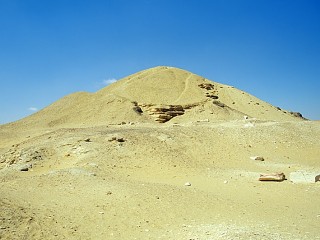 Image Credit: Roland Unger, CC BY-SA 3.0, via Wikimedia Commons
Six Ancient Cities Still Missing from the Archaeological Map
Despite major advances in archaeology, several prominent ancient cities described in historical texts have never been located. Their existence is known through inscriptions and records, yet their precise locations remain unknown—sometimes complicated by looting that removed evidence without revealing sites. Here are six notable examples whose whereabouts are still a mystery:
Irisagrig (Iraq): Thousands of cuneiform tablets appearing on the antiquities market reveal a city that flourished about 4,000 years ago. Texts describe temples, festivals, royal palaces, and even specialized caretakers for lions. Scholars believe the site was looted in the early 2000s, but its location has not been disclosed.
Itjtawy (Egypt): Founded as a royal capital during the Middle Kingdom, Itjtawy served as Egypt’s administrative center for centuries. Although never excavated, it is thought to lie near Lisht, where royal burials from the period are concentrated.
Akkad (Iraq): Capital of the Akkadian Empire, which once stretched from the Persian Gulf to Anatolia, Akkad was a major political and religious center. Ancient sources note its destruction or abandonment, but archaeologists have yet to identify its site.
Al-Yahudu (Babylonia): Known from tablets documenting a community of exiled Judeans within the Babylonian Empire, Al-Yahudu preserves rare evidence of cultural continuity in exile. Like Irisagrig, its records surfaced through looting, leaving the city’s location unknown.
Waššukanni (Upper Mesopotamia): The capital of the Mitanni Empire, Waššukanni played a central role in Near Eastern politics during the Late Bronze Age. Despite extensive research, its location—possibly in northeastern Syria—has not been confirmed.
Thinis (Egypt): An early political center linked to the formation of the Egyptian state, Thinis later became a provincial capital. It is believed to have been near Abydos, where elite burials from the same era are found, but the city itself remains undiscovered.
These cases highlight how much of the ancient world still lies hidden, underscoring the challenges of looting, landscape change, and the limits of current archaeological knowledge.
Published on: 27-12-2025
Edited by: Abdulmnam Samakie
Source: Live Science