- Arabic Coffee, a Symbol of Generosity
-
Arabic Coffee, a Symbol of Generosity
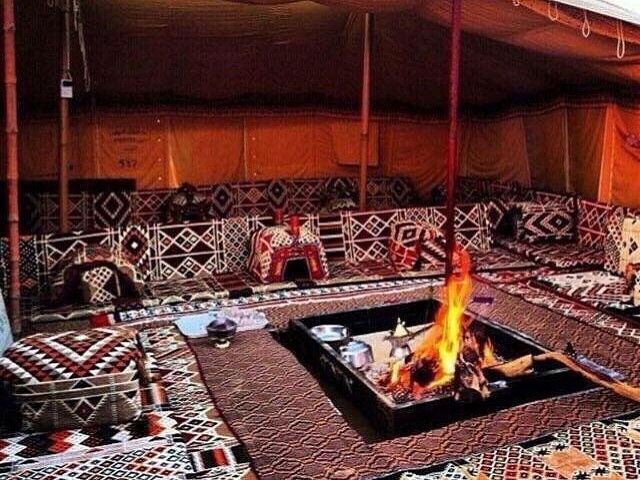
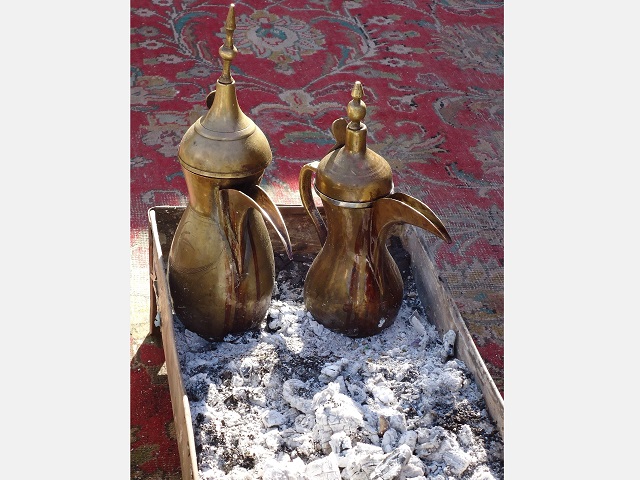
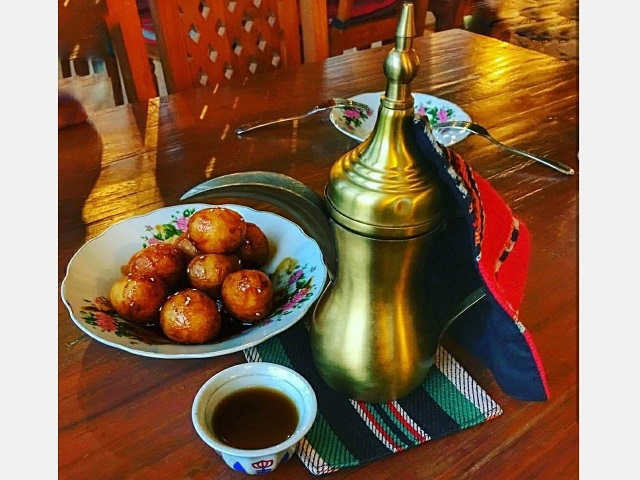
Serving Arabic coffee is an integral part of the traditions of hospitality in Arab societies in general and the Gulf in particular, as it is considered a festive tradition that expresses generosity and a warm reception. Arabic coffee is prepared in front of the guests, as this begins with selecting coffee beans that are lightly roasted in a shallow pan over the fire, then placed in a copper mortar and pounded with a copper pestle as well.
After that, the ground coffee is placed in a large copper coffee pot, water is added to it and the pot is placed on the fire; Then, once the brewing is done, the coffee is poured into a smaller pot and then poured into small cups. Coffee is served first for the most important or the oldest guest, filling a quarter of the cup, and can then be refilled.
The knowledge and traditions of Arabic coffee are transmitted within the family through observation and practice. Young family members also accompany the elderly to the market to learn how to choose the best coffee beans.
Arabic Coffee, a Symbol of Generosity was inscribed in 2024 on the UNESCO Representative List of the Intangible Cultural Heritage of Humanity in Jordan, Oman, Qatar, Saudi Arabia, UAE.
 by Canbel, CC BY-SA 4.0, via Wikimedia Commons
by Elph, Public domain, via Wikimedia Commons
by Wikiemirati, CC BY-SA 4.0, via Wikimedia Commons
by Canbel, CC BY-SA 4.0, via Wikimedia Commons
by Elph, Public domain, via Wikimedia Commons
by Wikiemirati, CC BY-SA 4.0, via Wikimedia Commons


Arabic Coffee, a Symbol of Generosity
Date of Inscription
2024
- See also
-
Al-Mansaf in Jordan, a Festive Banquet and its Social and Cultural Meanings Al-Mihrass Tree: Knowledge, Skills and Rituals Associated with it Arabic Calligraphy: Knowledge, Skills and Practices Arabic Kohl As-Samer in Jordan Bisht (men’s Abaa): Skills and Practices Cultural Space of the Bedu in Petra and Wadi Rum Date Palm, Knowledge, Skills, Traditions and Practices Henna: Rituals, Aesthetic and Social Practices The Zaffa in the Traditional Wedding Al ‘azi, Elegy, Processional March and Poetry Al-Ayyala, a Traditional Performing Art of the Sultanate of Oman and the United Arab Emirates Al-Bar’ah, Music and Dance of Oman Dhofari Valleys Al-Khanjar, Craft Skills and Social Practices Al-Razfa, a Traditional Performing Art Al-Taghrooda, Traditional Bedouin Chanted Poetry in the United Arab Emirates and the Sultanate of Oman Alheda’a, Oral Traditions of Calling Camel Flocks Camel Racing, a Social Practice and a Festive Heritage Associated with Camels Harees dish: Know-How, Skills and Practices Horse and Camel Ardhah Majlis, a Cultural and Social Space Oman Youth Sail Training Ship (Safinat Shabab Oman) Programme for Peace and Sustainable Cultural Dialogue Falconry, a Living Human Heritage Traditional Weaving of Al Sadu Al-Qatt Al-Asiri, Female Traditional Interior Wall Decoration in Asir Alardah Alnajdiyah, Dance, Drumming and Poetry in Saudi Arabia Almezmar, Drumming and Dancing with Sticks Arts, Skills and Practices Associated with Engraving on Metals (Gold, Silver and Copper) Cultural Practices Related to Taif Roses Knowledge and Practices Related to Cultivating Khawlani Coffee Beans Semsemiah: Instrument Crafting and Playing Al Aflaj, Traditional Irrigation Network System in the UAE, Oral Traditions, Knowledge and Skills of Construction, Maintenance and Equitable Water Distribution Al Ahalla, a Living Performing Art in the United Arab Emirates Al Azi, Art of Performing Praise, Pride and Fortitude Poetry Al Sadu, Traditional Weaving Skills in the United Arab Emirates Al Talli, Traditional Embroidery Skills in the United Arab Emirates Safeguarding Programme for Al Sadu, Traditional Weaving Skills in the United Arab Emirates
- Related Links